
Plant
Acorn Spiderhead
Serruria balanocephalaAcorn spiderheads cling to rocky sandstone ridges throughout the Langeberg mountains, flourishing in nutrient-poor acidic soils. Fine, needle-divided foliage helps channel mountain mist directly down toward the root zone while reducing water loss during dry summer spells. Adult shrubs perish in periodic wildfires, relying on native ants to bury their nutrient-rich seeds safely underground until post-fire rains trigger renewed germination.
FynbosWildflowerEndemic
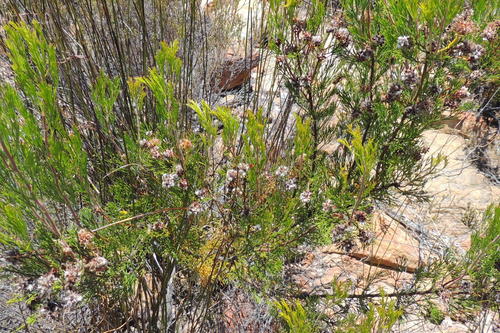
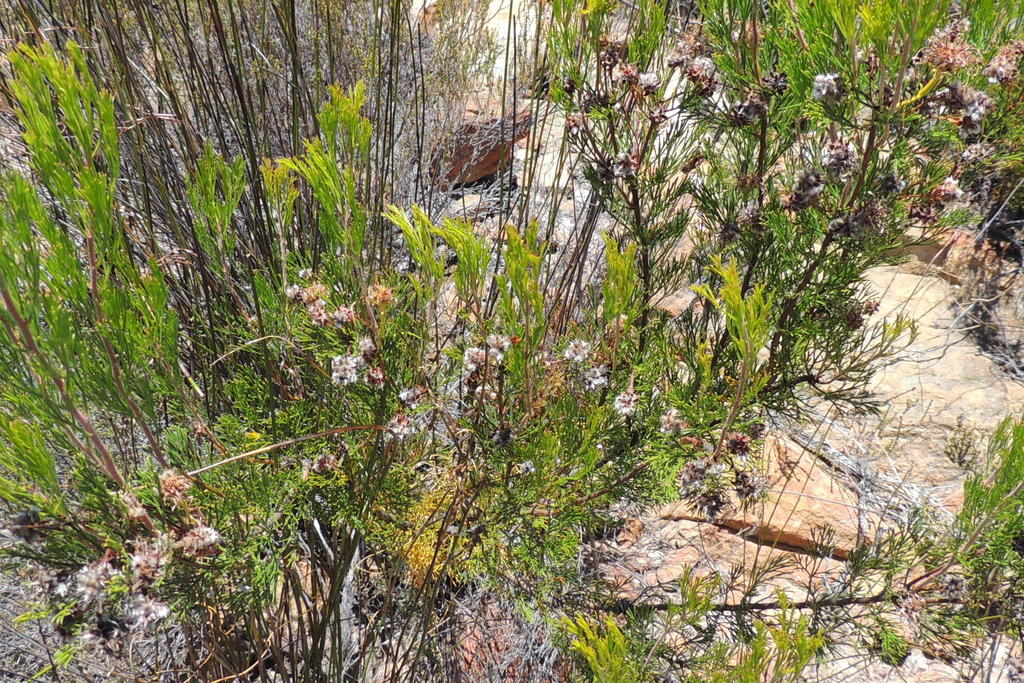
—observations
—countries
—peak records
Least ConcernConservation statusIUCN Red List categoriesLCNTVUENCREWEXLeast ConcernRed List categories, explained →
Diet & preyAutotrophic (photosynthetic)
Predators
- Chacma baboon
- Klipspringer
- Cape spiny mouse
ThreatsInappropriate fire frequencies and invasive alien pine spread
HabitatsMontane sandstone fynbos slopes and ridges
Life span10–25 years
Classification
- FamilyProteaceae
- SpeciesSerruria balanocephala
Range data is not available yet.
Interaction riskLow
- Low
- Moderate
- High
- Very high
- Why interaction risk is low
- Safe to observe at a normal distance.
Responsible observation
- Trail Etiquette: Stay on designated hiking paths in the Langeberg to protect fragile montane fynbos.
- Flowering Window: Search for the acorn-like floral clusters between late August and December.
- Fire Ecology: Leave burnt landscapes undisturbed so buried seed banks can sprout naturally.
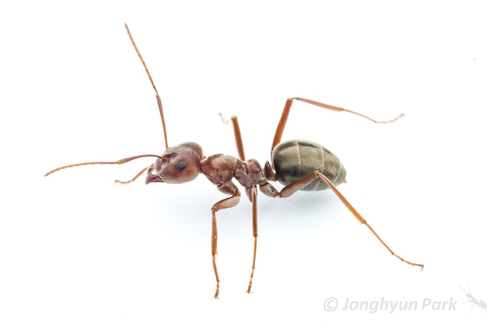
Symbiont (c) Jonghyun Park, some rights reserved (CC BY), uploaded by Jonghyun Park · cc-by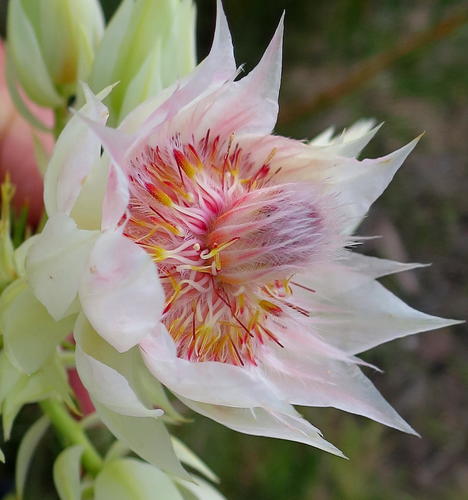
Close Relative no rights reserved, uploaded by Di Turner · cc0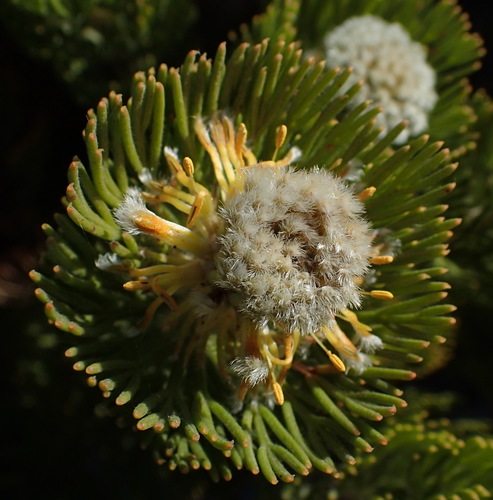
Close Relative (c) Nicola van Berkel, some rights reserved (CC BY-SA) · cc-by-sa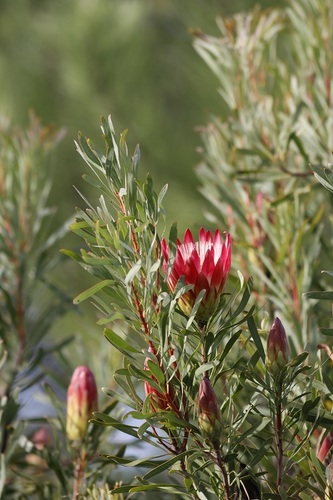
Same Family (c) Karen Eichholz, some rights reserved (CC BY), uploaded by Karen Eichholz · cc-by
Help improve the field guideSomething wrong?
Checking your Fauna account…Report a name, category, or profile issue for review.