
Plant · GBIF taxon 3994082
Common Myrrh
Commiphora myrrhaAlso known as Somali Myrrh, Herabol Myrrh, Myrrh Tree
Common Myrrh grows as a rugged, spiny shrub or small tree adapted to the sun-baked drylands of the Horn of Africa and the Arabian Peninsula. Its knotted branches bear small leaves that drop during dry periods to conserve water, while sharp thorns protect it from desert herbivores. When the outer bark is fissured or wounded, the trunk exudes a pale gum-resin that hardens into aromatic reddish-brown droplets.
AridAromaticSpiny
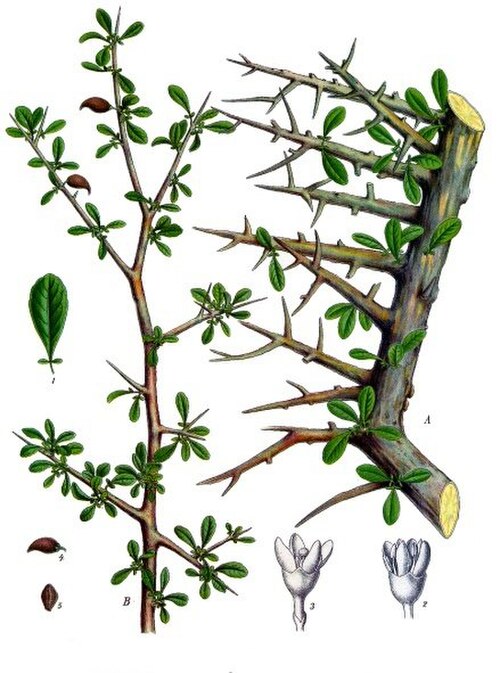
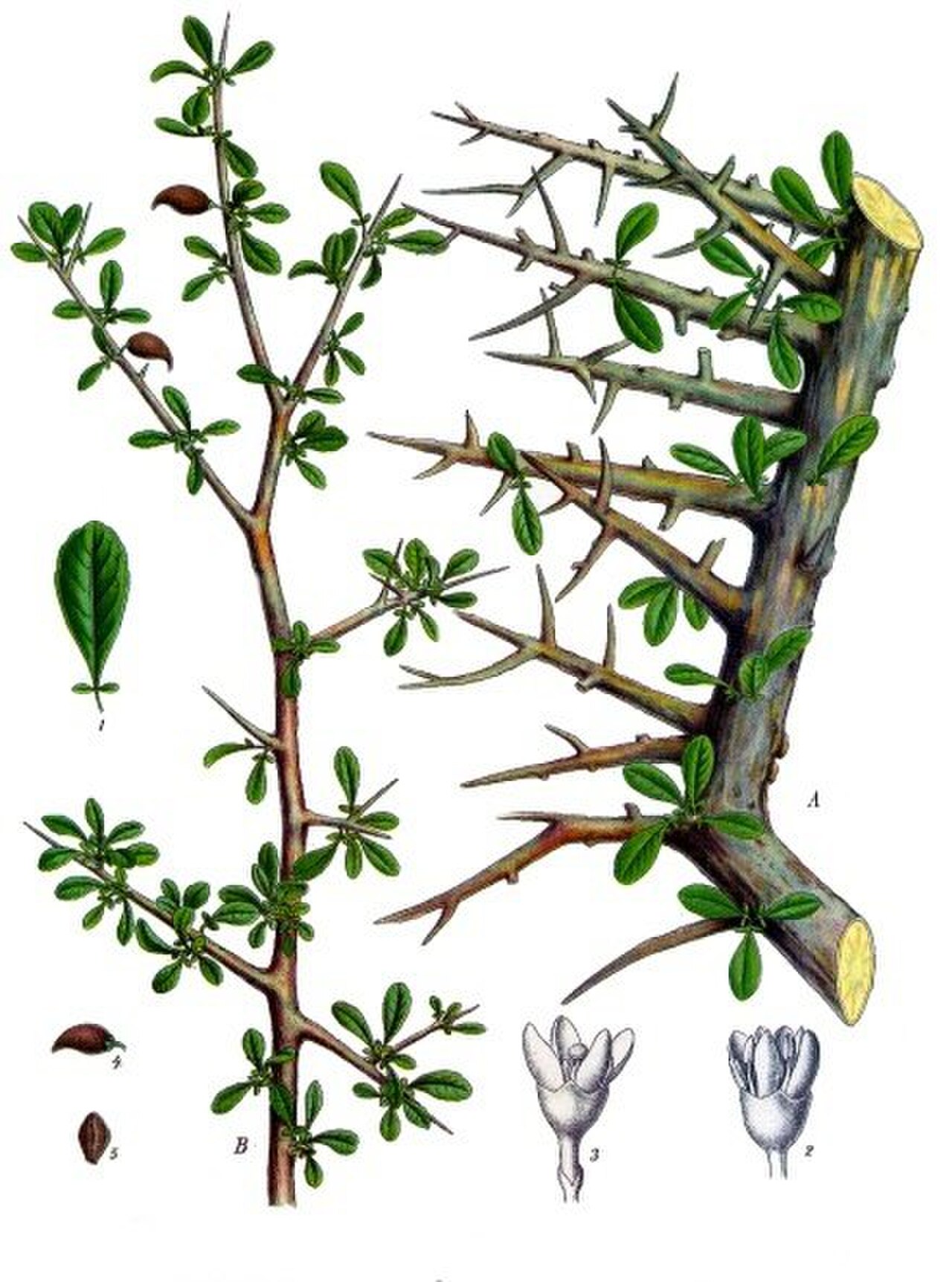
Licensed referenceFranz Eugen Köhler, Köhler's Medizinal-Pflanzen / Public domain · cc0
—observations
—countries
—peak records
Not EvaluatedConservation statusIUCN Red List categoriesLCNTVUENCREWEXNot Evaluated — not placed on the risk ladderRed List categories, explained →
Diet & prey
- Autotrophic
Predators
Not available
ThreatsOverharvesting of resin and habitat degradation
HabitatsArid scrublands and rocky desert slopes
Life span50–100 years
Size / weightNot available
Classification
- FamilyBurseraceae
- SpeciesCommiphora myrrha
Range data is not available yet.
Interaction riskLow
- Low
- Moderate
- High
- Very high
- Why interaction risk is low
- Safe to observe at a normal distance.
Responsible observation
- Observation: Look for papery peeling bark and sharp terminal spines on the knotted branches.
- Identification: Crushed leaves and stem bark release a distinctive bitter, spicy scent.
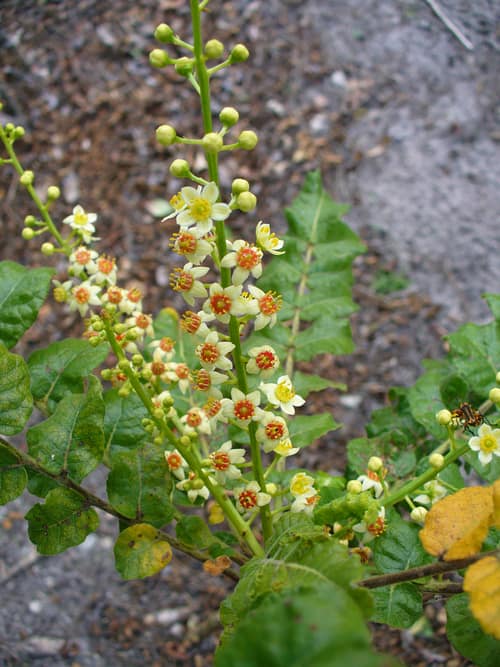
Resin Producer (c) scott.zona, some rights reserved (CC BY) · cc-by Image unavailable
Close Relative 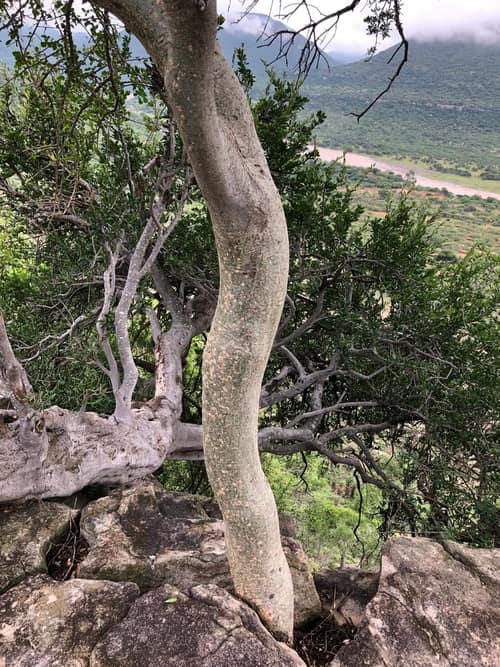
Close Relative (c) Sunčana Bradley, some rights reserved (CC BY), uploaded by Sunčana Bradley · cc-by
Help improve the field guideSomething wrong?
Checking your Fauna account…Report a name, category, or profile issue for review.