
Plant
Zygophyllum Qatarense
Tetraena qatarensisAlso known as Qatar Bean Caper, Harm
Thriving across the hyper-arid gravel plains and coastal margins of Eastern Arabia, this dwarf shrub serves as a vital ecological anchor in desert communities. Its fleshy, succulent leaflets store scarce moisture and can be shed in prolonged droughts, leaving green photosynthetic stems that sustain the plant until rainfall returns. Small yellow-to-white blossoms attract native solitary bees and hoverflies, making it an essential nectar oasis in barren desert landscapes.
SucculentDesertSalt-tolerant
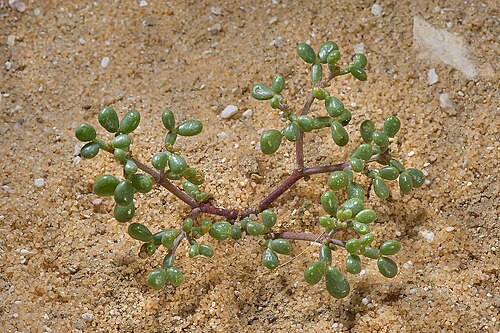
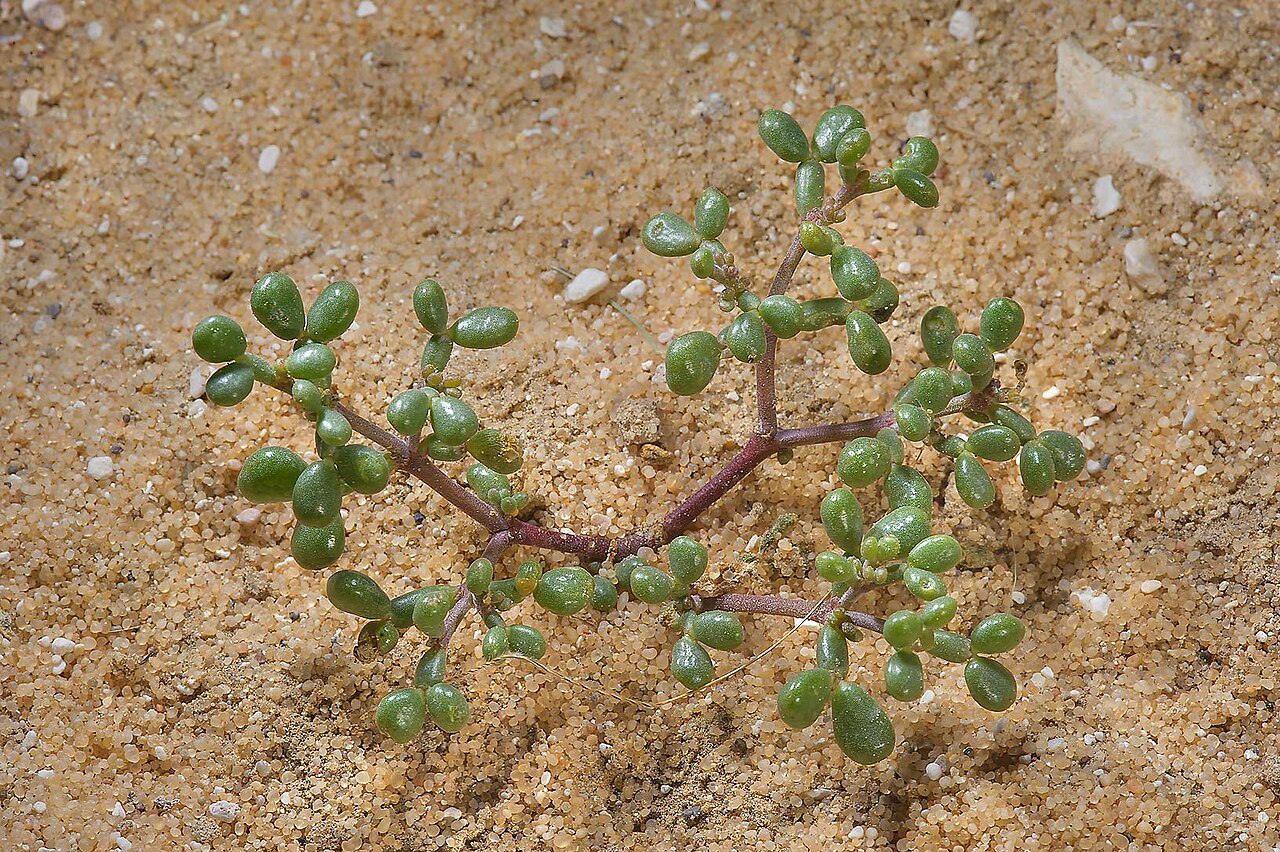
—observations
—countries
—peak records
Not EvaluatedConservation statusIUCN Red List categoriesLCNTVUENCREWEXNot Evaluated — not placed on the risk ladderRed List categories, explained →
Diet & preySunlight, Water, Soil minerals
Predators
- Dromedary camel
- Cape hare
- Goats
ThreatsOvergrazing by domestic livestock, off-road vehicle disturbance, and coastal development
HabitatsArid gravel plains, coastal sabkha edges, and rocky desert slopes
Life span5–15 years
Classification
- OrderZygophyllales
- FamilyZygophyllaceae
- GenusTetraena
- SpeciesTetraena qatarensis
Range data is not available yet.
Interaction riskLow
- Low
- Moderate
- High
- Very high
- Why interaction risk is low
- Safe to observe at a normal distance.
Responsible observation
- Footing: Watch your step on loose gravel and fragile desert crusts while observing.
- Identification: Look for fleshy, cylindrical twin leaflets on woody, branching stems.
- Conservation: Avoid crushing fragile desert shrubs with vehicles or off-trail hiking.
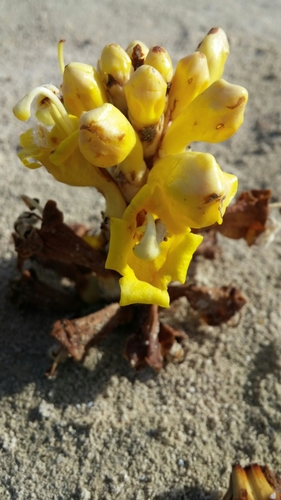
Parasite (c) Riley Pollom, some rights reserved (CC BY), uploaded by Riley Pollom · cc-by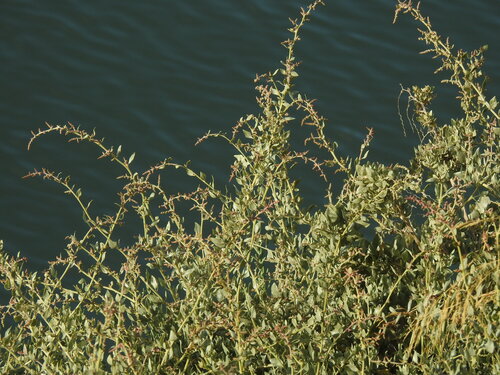
Neighbor (c) Duarte Frade, some rights reserved (CC BY) · cc-by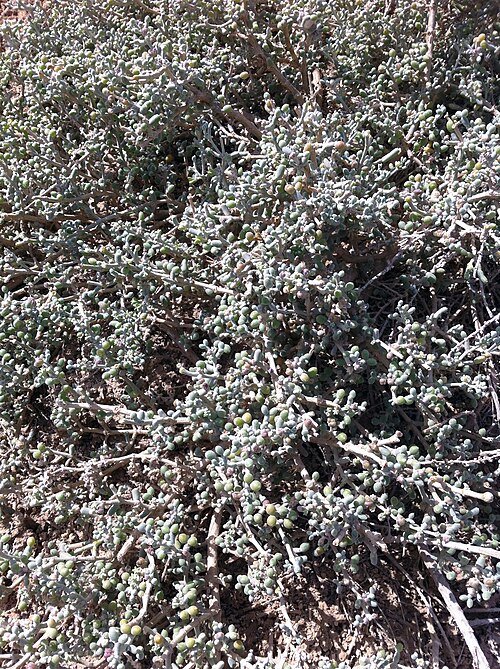
Close Relative MurielBendel / CC BY-SA 4.0 · cc-by-sa Image unavailable
Close Relative
Help improve the field guideSomething wrong?
Checking your Fauna account…Report a name, category, or profile issue for review.