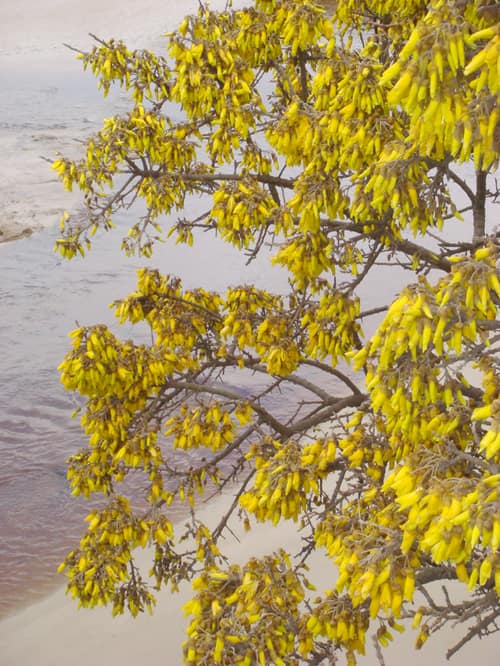
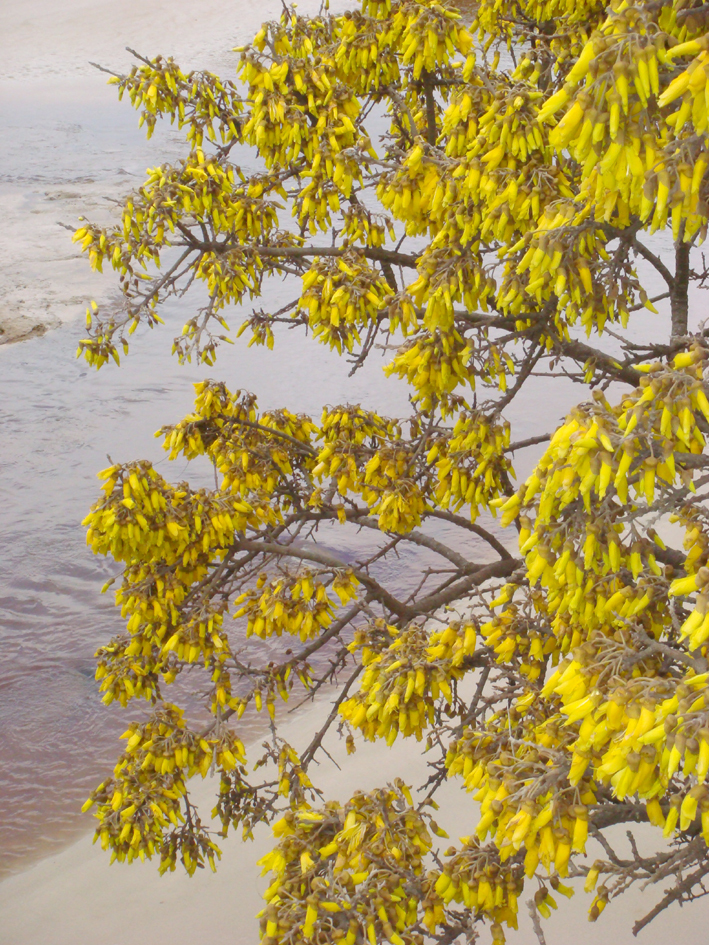
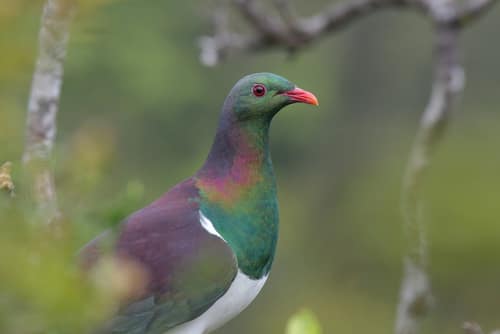
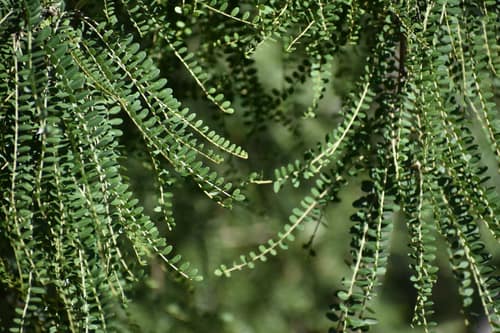
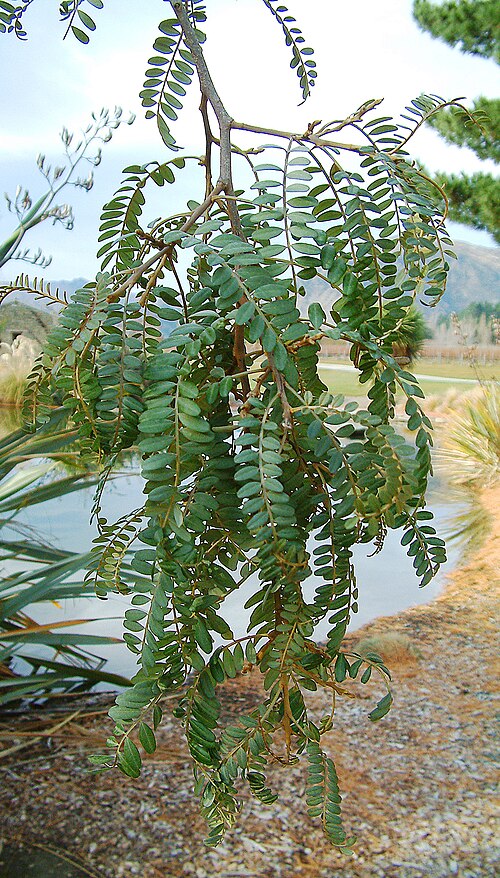
Coastal kōwhai illuminates northern New Zealand shorelines and coastal forests each spring with rich, pendulous clusters of brilliant yellow pea-like blooms. Unlike several closely related species, it skips a tangled, divaricating juvenile phase and grows directly into an upright, broad-canopied tree clad in closely spaced leaflets. Its copious nectar serves as a vital early-season energy source for native honeyeaters like the tūī and korimako, which inadvertently pollinate the flowers as they probe each blossom.
ThreatsHabitat clearance, browsing by invasive possums and goats, and fungal leaf spot
HabitatsCoastal cliffs, lowland forest margins, estuaries, and limestone outcrops
Life span50–100 years
Classification
FamilyFabaceae
SpeciesSophora chathamica
Range & activity
Range data is not available yet.
Safe observation
Interaction riskHigh
Low
Moderate
High
Very high
Why interaction risk is high
Seeds and foliage contain toxic quinolizidine alkaloids; do not ingest any plant parts.
Why it is dangerous
All parts, especially the hard seeds, contain the quinolizidine alkaloid cytisine, causing severe nausea, vomiting, dizziness, and dangerous respiratory depression if ingested.
How to recognize a risky encounter
Look for glossy dark green pinnate leaves, prominent four-winged seed pods, and clusters of tubular, drooping golden flowers.
What to do
Do not chew or swallow seeds or foliage, and ensure small children and pets do not mouth fallen pods.
Responsible observation
Seasonal Timing: Visit between August and October to witness peak blossoming and high bird activity.
Identification Clue: Examine leaves for neatly overlapping leaflets without stalks to confirm identity.
Seed Safety: Wash hands after handling the hard, segmented seedpods, and keep them away from pets.