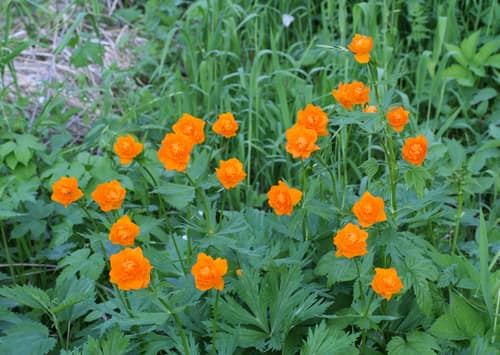
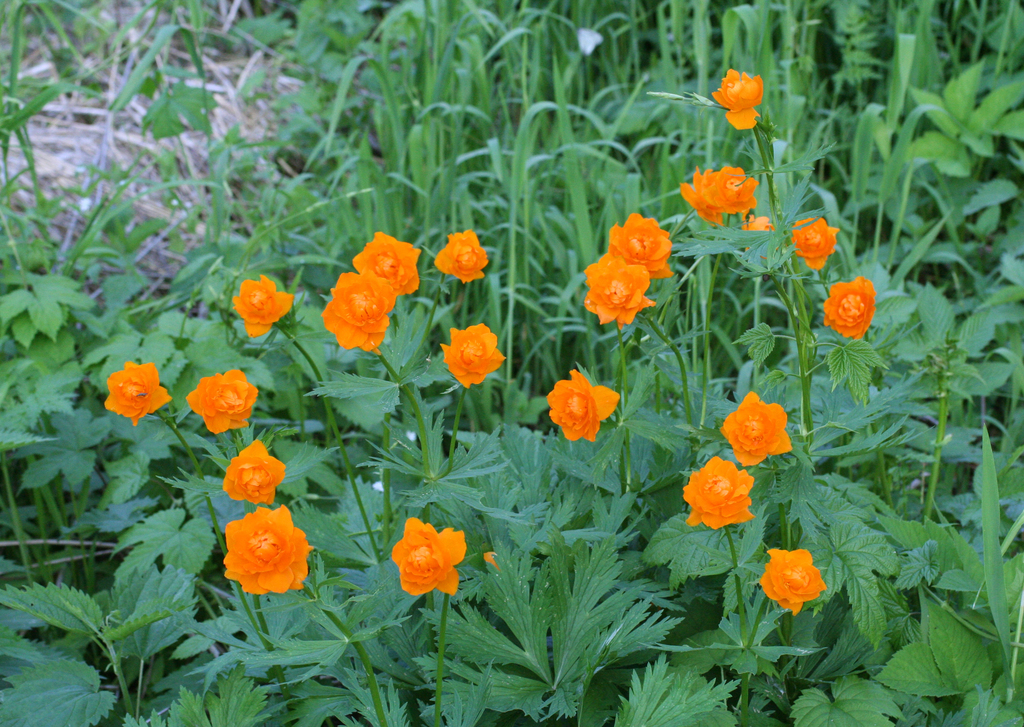
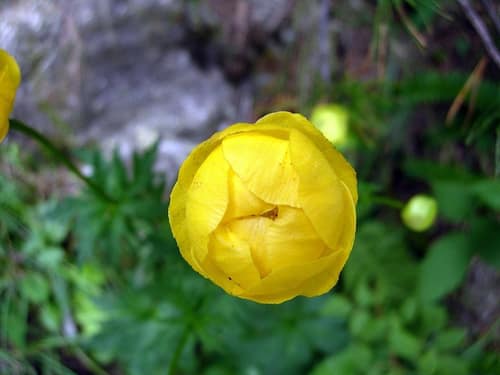
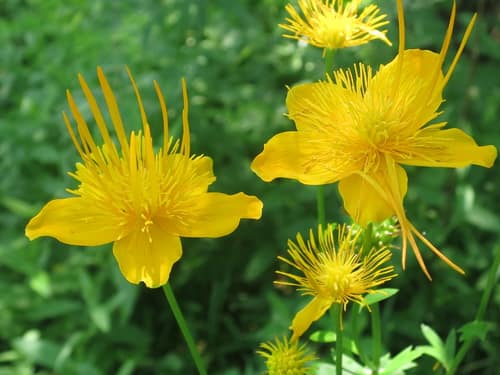
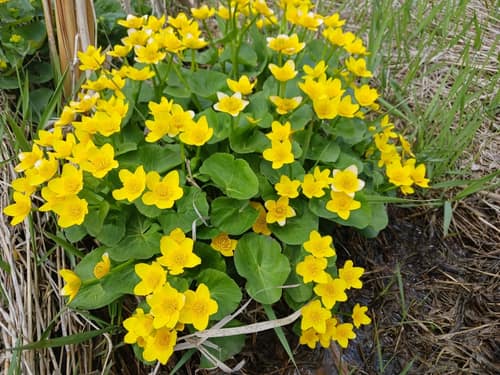
Asian globeflowers brighten damp subalpine meadows and forest edges with vivid, bowl-shaped orange blooms throughout late spring and early summer. Their petals curve inward to form a protective globe over delicate central stamens, shielding pollen from mountain rain and cold winds. Highly prized in cold-climate gardens, these herbaceous perennials play a vital role in high-latitude wetland ecosystems by attracting early-season pollinators like bumblebees and hoverflies.
Contains protoanemonin; toxic if ingested. Do not consume any part of the plant.
Why it is dangerous
Contains protoanemonin, an acrid chemical compound released when plant tissue is damaged, causing oral blistering, salivation, and severe gastrointestinal upset if chewed or swallowed.
How to recognize a risky encounter
Recognized by its bright orange spherical flowers sitting atop deeply lobed, palmately divided dark green foliage.
What to do
Wear gloves when handling crushed stems or dividing clumps, and keep small children and pets away from the foliage.
Responsible observation
Optimal Viewing: Look for vibrant orange blooms along mountain streams and boggy meadows in early summer.
Garden Use: Plant in rich, consistently damp soil in full sun or partial shade for spring color.