
Plant
Halocnemum strobilaceum
Halocnemum strobilaceumHalocnemum strobilaceum is a hardy, succulent halophytic dwarf shrub uniquely adapted to hypersaline environments where few other vascular plants survive. Its articulated, flesh-filled branches bear dense clusters of tiny, cone-like sterile lateral shoots that help minimize water loss while storing accumulated salts. As an essential pioneer engineer of inland and coastal salt flats, it stabilizes loose saline sand and creates microhabitats that shelter specialized desert and shore organisms.
HalophyteSucculentShrub
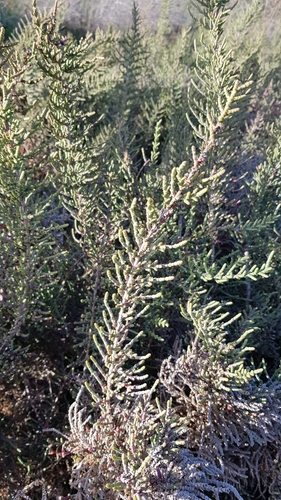
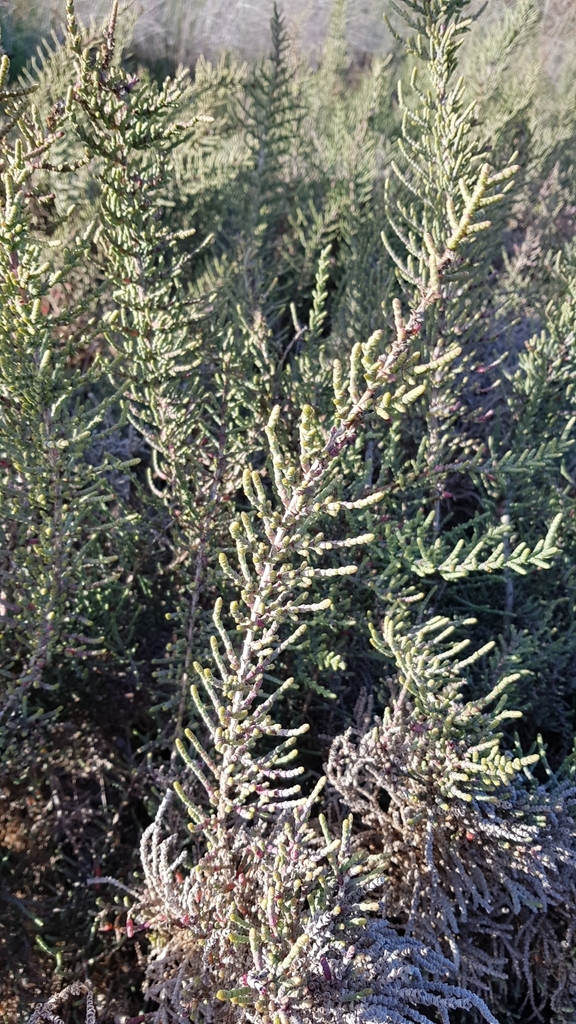
—observations
—countries
—peak records
Least ConcernConservation statusIUCN Red List categoriesLCNTVUENCREWEXLeast ConcernRed List categories, explained →
Diet & preyAutotrophic (photosynthetic)
Predators
- Dromedary Camel
- Goat
- Seed-eating beetles
ThreatsCoastal development, agricultural land reclamation, and altered hydrological regimes
HabitatsCoastal salt marshes, inland salt flats, sabkhas, and alkali desert sinks
Life span10–25 years
Classification
- FamilyAmaranthaceae
- SpeciesHalocnemum strobilaceum
Range data is not available yet.
Interaction riskLow
- Low
- Moderate
- High
- Very high
- Why interaction risk is low
- Safe to observe at a normal distance.
Responsible observation
- Observing Form: Inspect the tiny, bead-like sterile buds along the woody branches that give the plant its characteristic cone-like appearance.
- Habitat Care: Tread carefully on surrounding salt crusts to avoid trampling sensitive soil biocrusts and fragile emerging seedlings.
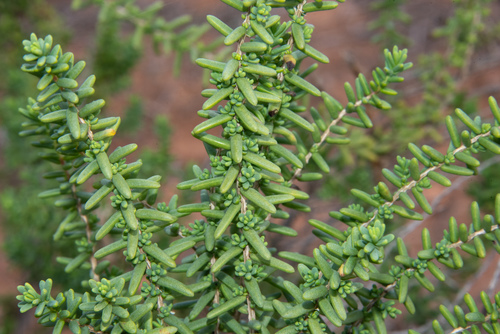
Ecological Neighbor (c) Don Loarie, some rights reserved (CC BY), uploaded by Don Loarie · cc-by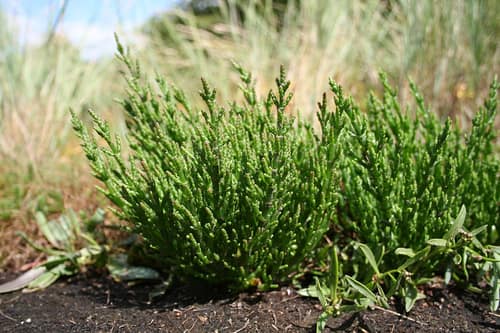
Same Family Marco Schmidt [1] / CC BY-SA 2.5 · cc-by-sa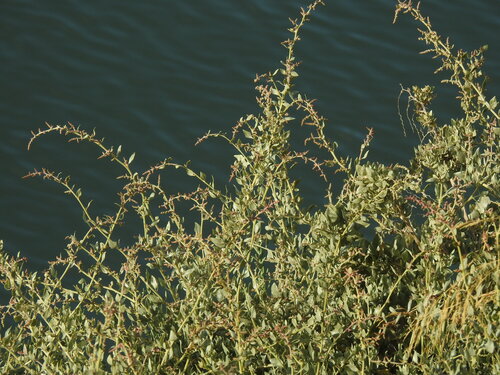
Same Family (c) Duarte Frade, some rights reserved (CC BY) · cc-by
Help improve the field guideSomething wrong?
Checking your Fauna account…Report a name, category, or profile issue for review.