
Flower · GBIF taxon 3618936
Mandevilla boliviensis
Mandevilla boliviensisAlso known as White Mandevilla, White Dipladenia
White mandevilla is a twining woody vine renowned for producing clusters of pure white, trumpet-shaped blossoms highlighted by bright yellow throats. In its native tropical rain forests, it ascends through forest margins and canopy clearings to capture sunlight above the understory. Like many members of the dogbane family, the plant exudes a sticky white latex from injured stems that serves as a chemical defense against chewing insects.
VineFloweringTropical
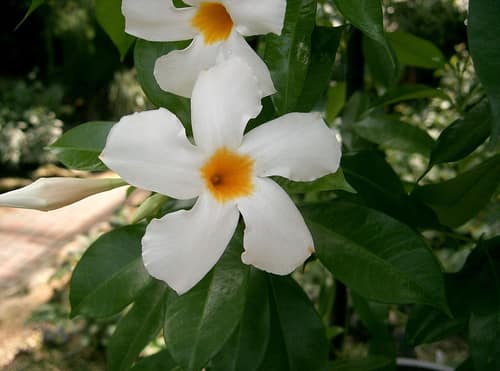
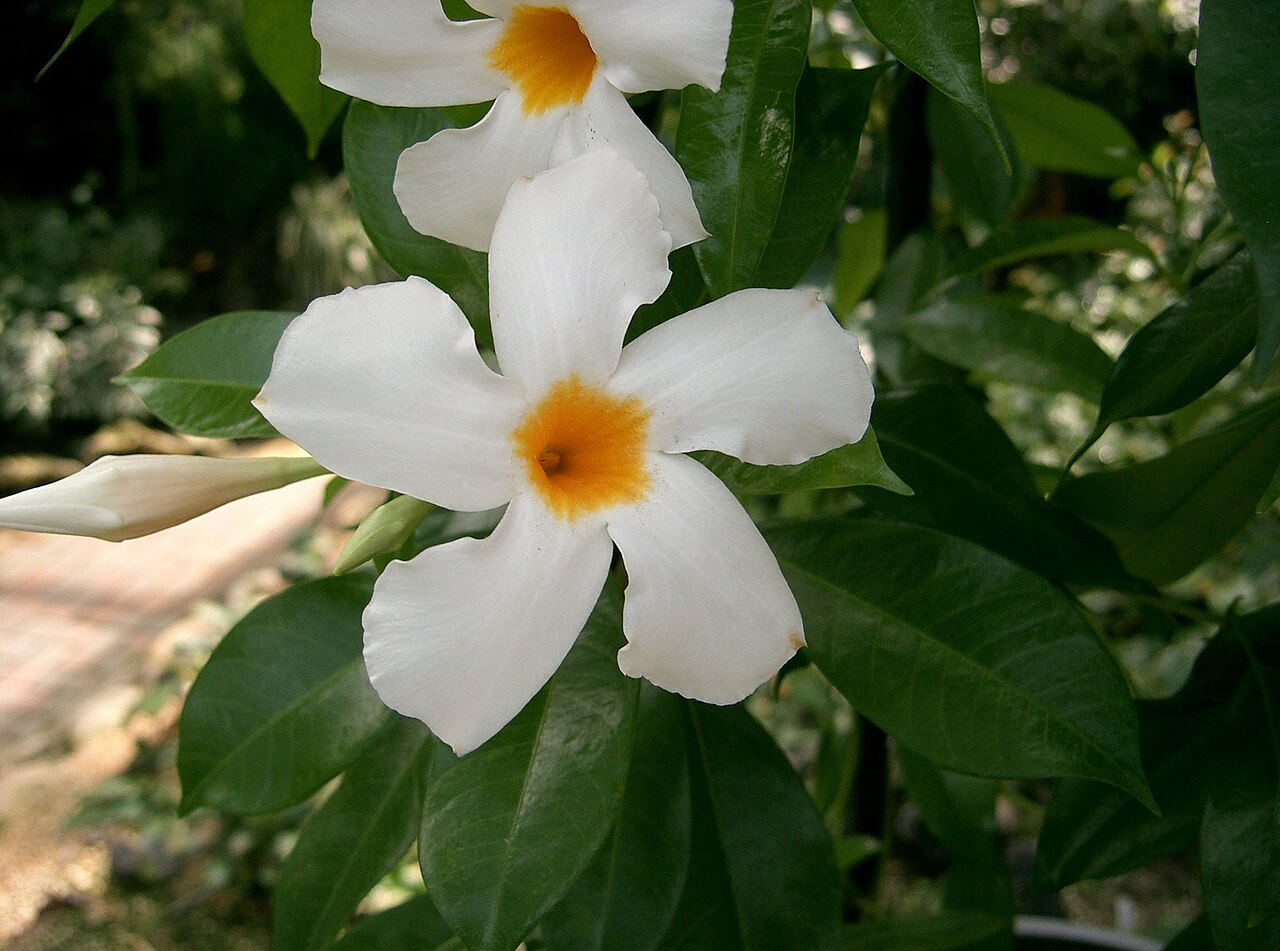
Licensed referenceKENPEI / CC BY-SA 3.0 · cc-by-sa
—observations
—countries
—peak records
Not EvaluatedConservation statusIUCN Red List categoriesLCNTVUENCREWEXNot Evaluated — not placed on the risk ladderRed List categories, explained →
Diet & prey
- Autotrophic (photosynthetic)
Predators
- Spider mites
- Aphids
- Mealybugs
ThreatsDeforestation, agricultural expansion
HabitatsTropical moist forests, premontane rain forests, forest edges
Life spanPerennial (10–20 years)
Size / weightNot available
Classification
- OrderGentianales
- FamilyApocynaceae
- GenusMandevilla
- SpeciesMandevilla boliviensis
Range data is not available yet.
Interaction riskHigh
- Low
- Moderate
- High
- Very high
- Why interaction risk is high
- Milky latex irritates sensitive skin and causes digestive distress if eaten; toxic to dogs and cats.
- Why it is dangerous
- Contains latex sap rich in caustic resins and mild cardiac glycosides that irritate skin, inflame eyes, and induce vomiting if ingested.
- How to recognize a risky encounter
- Look for glossy elliptic leaves, white trumpet flowers with yellow throats, and white sap bleeding quickly from damaged stems.
- What to do
- Wear protective gloves when pruning, and thoroughly wash with soap and water if sap contacts skin.
Responsible observation
- Trellising: Provide sturdy support or netting to help twining stems climb upward without crowding nearby plants.
- Pruning: Wear gardening gloves when trimming back stems to prevent sticky milky sap from touching bare skin.
- Cultivation: Situate in bright, filtered sunlight with well-draining soil to encourage continuous blooming cycles.
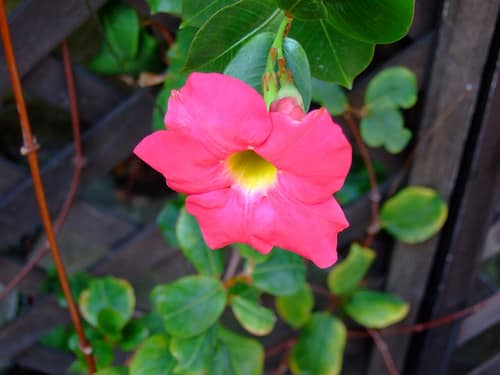
Same Genus 日:Jnn / CC BY 2.1 jp · cc-by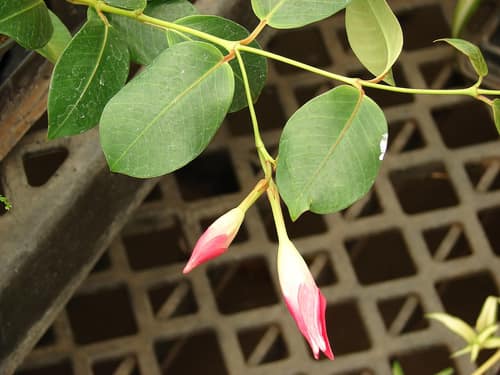
Same Genus Forest & Kim Starr / CC BY 3.0 · cc-by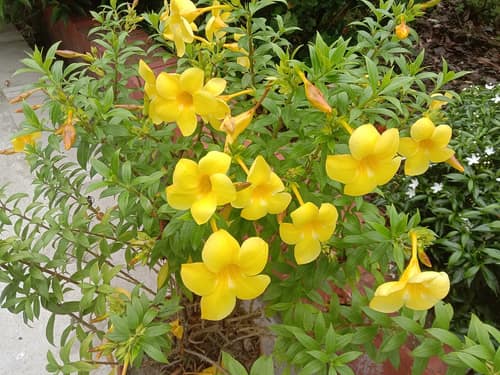
Same Family Billjones94 / CC BY-SA 4.0 · cc-by-sa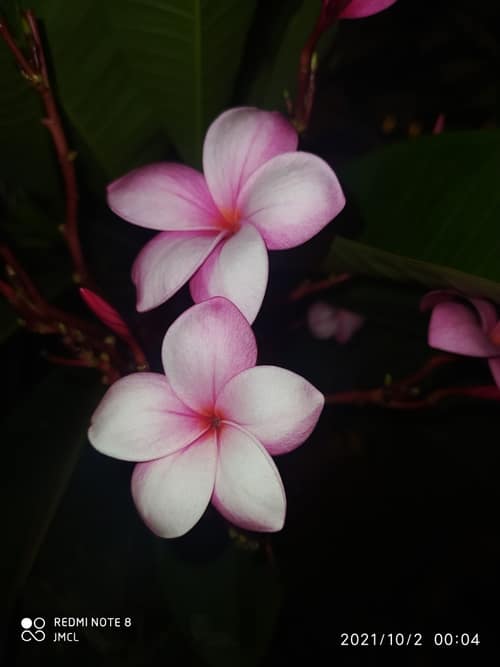
Same Family (c) Cabanillas Lopez Jesus Miguel, some rights reserved (CC BY-SA), uploaded by Cabanillas Lopez Jesus Miguel · cc-by-sa
Help improve the field guideSomething wrong?
Checking your Fauna account…Report a name, category, or profile issue for review.