
Plant
Hoya multiflora
Hoya multifloraAlso known as Shooting Star Hoya, Wax Plant, Porcelain Flower, Arrowhead Hoya
Shooting star hoya grows as a bushy, upright to semi-scandent epiphytic shrub rather than a twining vine like most of its relatives. It produces dense umbels of arrow-shaped blossoms with reflexed yellow and white petals that create the striking impression of miniature comets hurtling through the humid forest canopy. In native primary forests, these blossoms exude droplets of sweet nectar that attract a variety of nocturnal moths and diurnal insect pollinators.
EpiphyteFloweringTropical
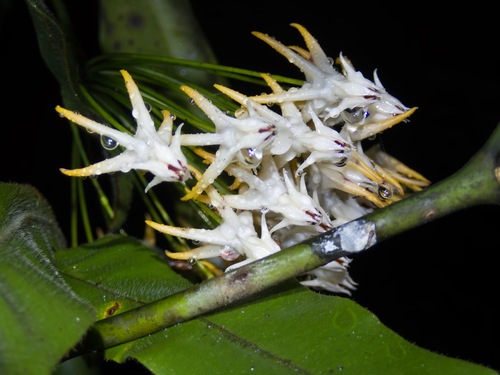
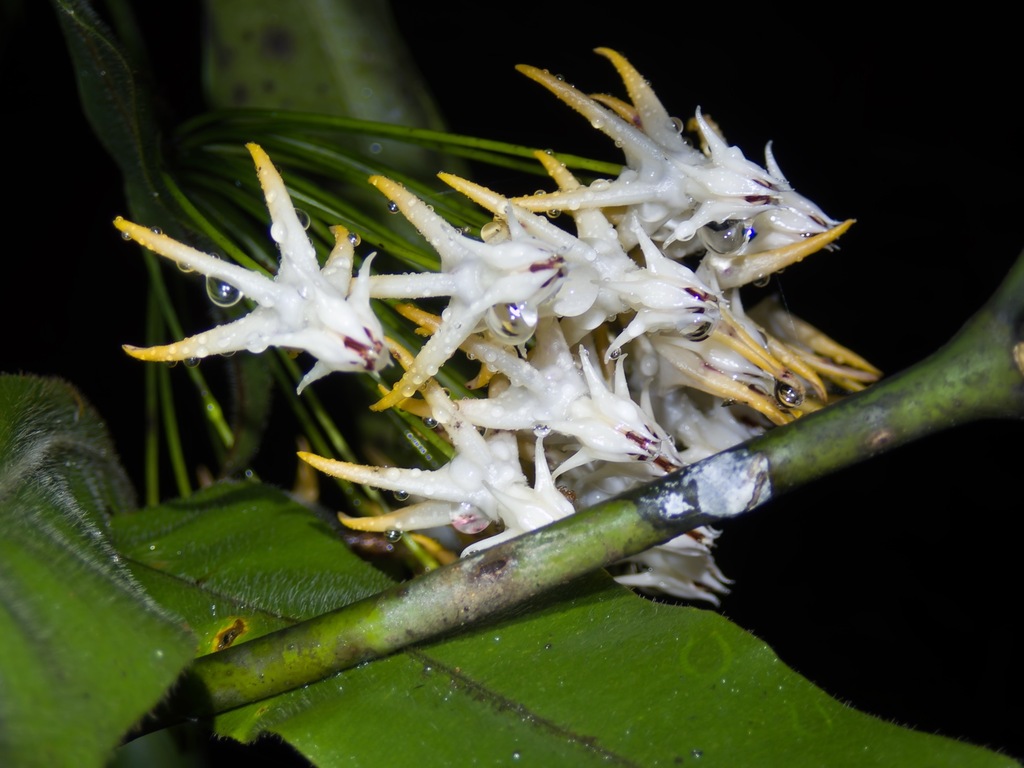
—observations
—countries
—peak records
Not EvaluatedConservation statusIUCN Red List categoriesLCNTVUENCREWEXNot Evaluated — not placed on the risk ladderRed List categories, explained →
Diet & preyAutotrophic (photosynthetic)
Predators
- Sap-feeding scale insects
- Mealybugs
- Spider mites
ThreatsHabitat loss from deforestation and commercial overcollection for horticulture
HabitatsTropical moist lowland forests and premontane evergreen forests
Life span10 to 30 years
Classification
- FamilyApocynaceae
- SpeciesHoya multiflora
Range data is not available yet.
Interaction riskLow
- Low
- Moderate
- High
- Very high
- Why interaction risk is low
- Safe to observe at a normal distance.
Responsible observation
- Observation Timing: Inspect blooms in the evening when nectar secretion and fragrance peak.
- Habitat Scouting: Look for it perched in shaded tree forks along humid forest trails.
- Field Etiquette: Avoid disturbing wild plants or collecting cuttings from protected forests.
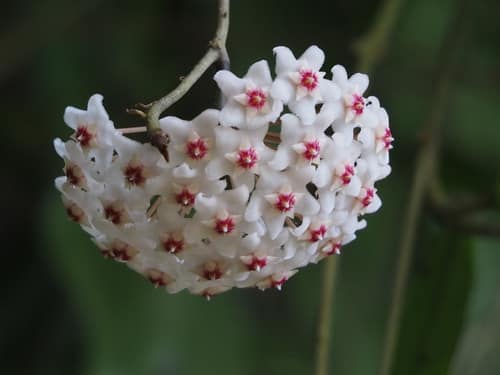
Close Relative no rights reserved, uploaded by 葉子 · cc0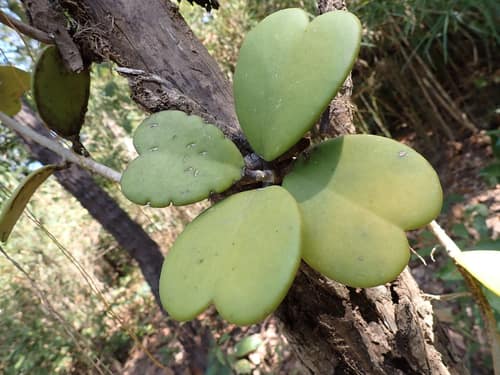
Close Relative (c) luluchouette, some rights reserved (CC BY) · cc-by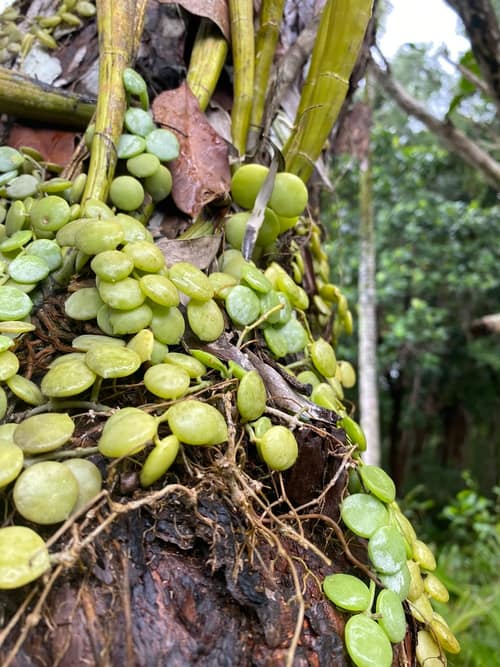
Same Family (c) Greg Tasney, some rights reserved (CC BY-SA), uploaded by Greg Tasney · cc-by-sa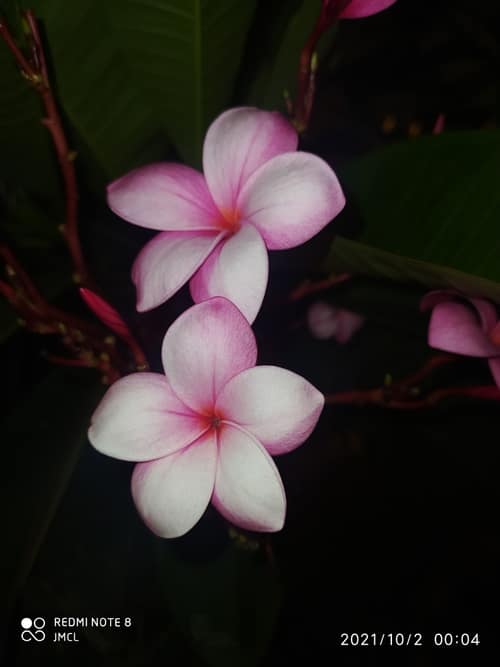
Same Family (c) Cabanillas Lopez Jesus Miguel, some rights reserved (CC BY-SA), uploaded by Cabanillas Lopez Jesus Miguel · cc-by-sa
Help improve the field guideSomething wrong?
Checking your Fauna account…Report a name, category, or profile issue for review.