Also known as Methuselah's Beard Lichen, Old Man's Beard, Long Beard Lichen
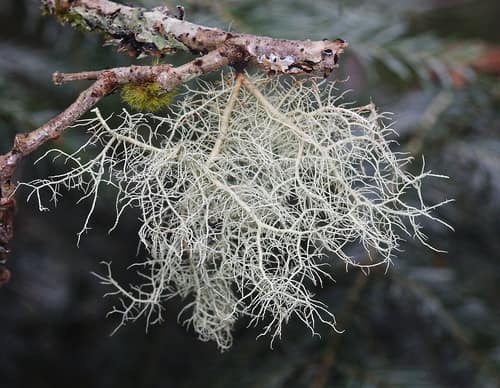
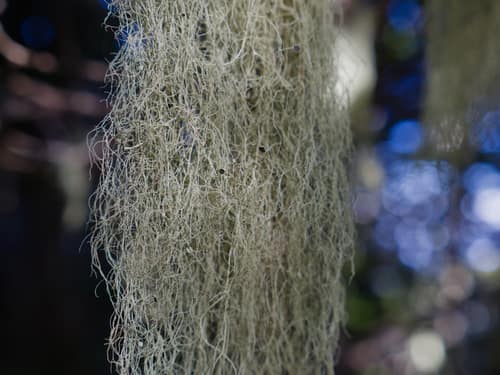
Methuselah's beard lichen drapes from the high canopy of mature temperate rainforests in long, pale green pendants that can reach several meters in length. As a slow-growing symbiosis between an ascomycete fungus and a green alga, it absorbs moisture and nutrients directly from mist and airborne particles rather than from its host tree. Because its porous thallus readily absorbs airborne pollutants like sulfur dioxide, it serves as a sensitive bioindicator of pristine air quality and intact old-growth ecosystems.
EpiphyticSlow-GrowingAncient Woodland
—observations
—countries
—peak records
Not EvaluatedConservation statusIUCN Red List categoriesLCNTVUENCREWEXNot Evaluated — not placed on the risk ladderRed List categories, explained →
Key facts
Diet & prey
Photosynthetic (via green algal photobionts)
Predators
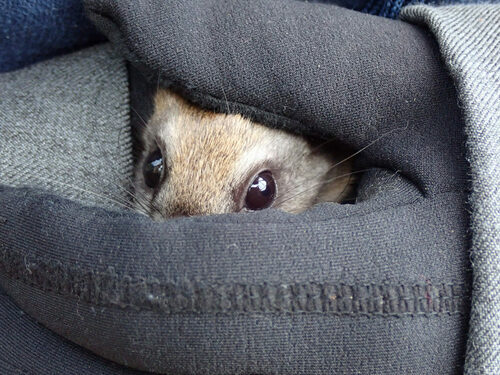
Northern flying squirrel
Black-tailed deer
Tree snails
ThreatsAir pollution, commercial clear-cutting, and forest fragmentation
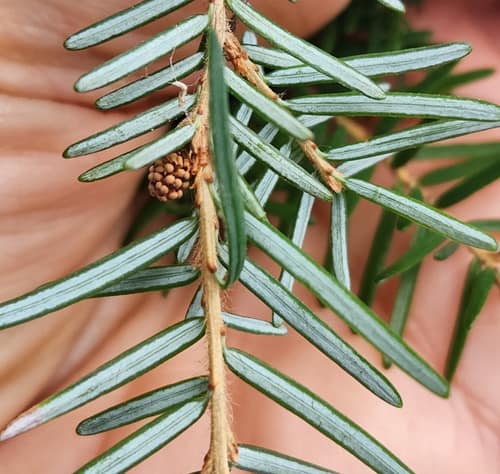
HabitatsHumid old-growth conifer canopies and boreal rainforests
Life spanPerennial (decades to over a century)
Size / weightNot available
Classification
FamilyParmeliaceae
SpeciesDolichousnea longissima
Range & activity
Range data is not available yet.
Safe observation
Interaction riskHigh
Low
Moderate
High
Very high
Why interaction risk is high
Contains usnic acid, which can cause severe liver damage if swallowed; never ingest wild fungi or lichens.
Why it is dangerous
Contains high concentrations of usnic acid, an organic compound that acts as a potent hepatotoxin capable of causing acute liver failure and severe gastrointestinal distress when ingested.
How to recognize a risky encounter
Forms exceptionally long, pale yellowish-green hanging cords with dense, perpendicular lateral branchlets resembling a fine comb.
What to do
Completely safe to touch and photograph, but avoid foraging for folk remedies and keep fallen strands away from curious pets.
What to notice
Look for remarkably long, unbranching central elastic cords adorned with comb-like side fibrils hanging in old conifer groves.
Support conservation
Observe dangling epiphytes from ground level without shaking branches or taking souvenirs from fragile forest stands.
Responsible observation
Canopy Search: Scan the mid-to-upper boughs of old-growth conifers where humidity and light levels stay balanced.
Leave in Place: Avoid pulling strands from bark, as fragments take decades to regenerate and disperse primarily by wind.