
Fungus
Laetiporus huroniensis
Laetiporus huroniensisAlso known as Huronian Chicken of the Woods, Hemlock Chicken Mushroom, Great Lakes Chicken of the Woods
Vibrant yellow and bright orange shelf-like brackets overlap in dense clusters along decaying hemlock trunks. This specialized polypore plays a vital ecological role breaking down heartwood in mature Great Lakes conifer forests. Unlike hardwood-dwelling relatives, it relies heavily on old-growth eastern hemlock stands to fruit during late summer and autumn.
PolyporeWood-DecayConifer-Associated


—observations
—countries
—peak records
Not EvaluatedConservation statusIUCN Red List categoriesLCNTVUENCREWEXNot Evaluated — not placed on the risk ladderRed List categories, explained →
Diet & preyHemlock wood, Dead conifer timber
Predators
- Fungus gnats
- Beetles
- Slugs
ThreatsHabitat loss, logging of old-growth hemlocks
HabitatsOld-growth conifer forests, hemlock stands
Life spanPerennial mycelium; fruiting bodies last weeks
Classification
- FamilyLaetiporaceae
- SpeciesLaetiporus huroniensis
Range data is not available yet.
Interaction riskHigh
- Low
- Moderate
- High
- Very high
- Why interaction risk is high
- Causes gastrointestinal distress if ingested. Many edible mushrooms have toxic look-alikes; never eat wild fungi based on app identification alone.
- Why it is dangerous
- Ingestion causes significant gastrointestinal upset including vomiting and diarrhea due to toxic compounds absorbed from conifer wood.
- How to recognize a risky encounter
- Look for bright yellow and orange overlapping shelf brackets growing directly on eastern hemlock wood in Great Lakes forests.
- What to do
- Enjoy observing and photographing the vibrant brackets from a safe distance without harvesting.
Responsible observation
- Habitat Spotting: Look on decaying eastern hemlock logs in undisturbed old-growth forests during late summer.
- Host Identification: Note the host tree species carefully, as substrate is critical for distinguishing this bracket fungus.
- Photography Focus: Capture the vivid cap colors alongside the yellow pore surface underneath for clear documentation.
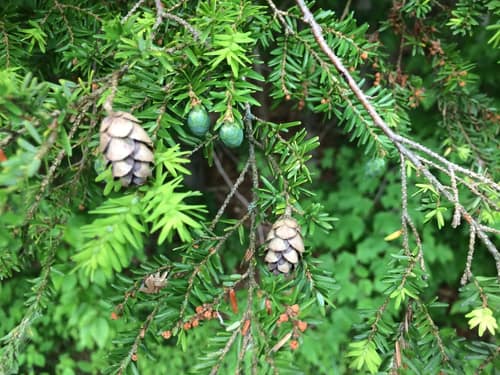
Host Plant (c) Ian Manning, some rights reserved (CC BY), uploaded by Ian Manning · cc-by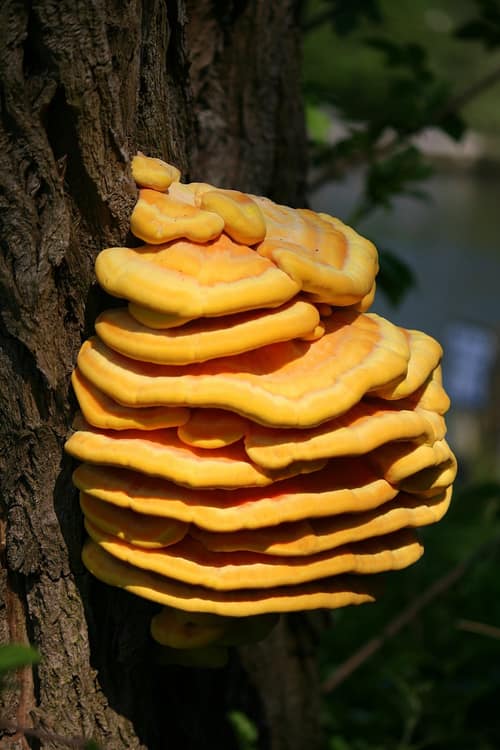
Close Relative Rror / CC BY-SA 3.0 · cc-by-sa
Close Relative This image was created by user Nathan Wilson (nathan) at Mushroom Observer, a source for mycological images.You can contact this user here. / CC BY-SA 3.0 · cc-by-sa
Help improve the field guideSomething wrong?
Checking your Fauna account…Report a name, category, or profile issue for review.