
Fungus · GBIF taxon 3354645
Violet Gray Bolete
Tylopilus plumbeoviolaceusAlso known as Violet-Grey Bolete
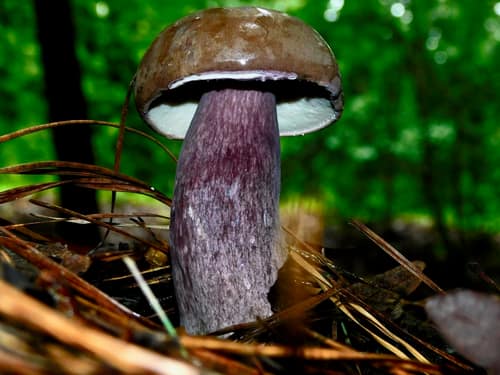
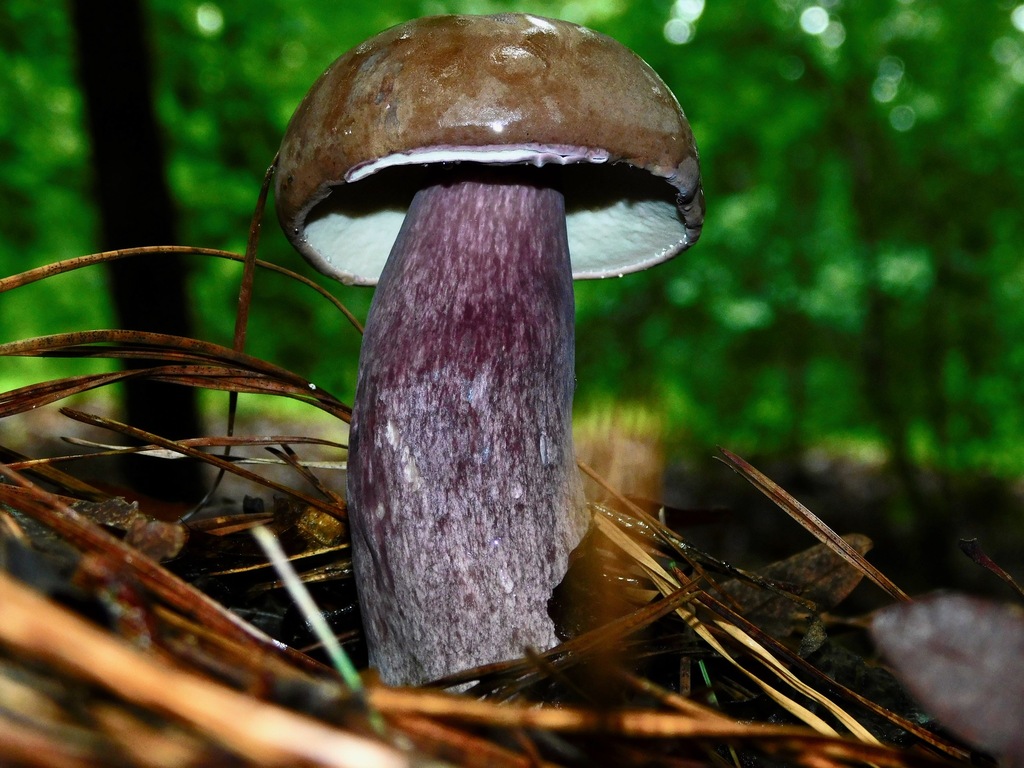
Violet Gray Boletes emerge from woodland soil in late summer, displaying deep violet caps and stems when young that gradually fade to rich leather brown with age. Their pore surface starts stark white before maturing to a soft pink as spores develop, while the basal mycelium remains bright white. These mycorrhizal fungi form essential underground partnerships with broadleaf trees, particularly oak and beech.
FungusMycorrhizalForest Floor
 1 / 7
1 / 7—observations
—countries
—peak records
Least ConcernConservation statusIUCN Red List categoriesLCNTVUENCREWEXLeast ConcernRed List categories, explained →
Diet & prey
- Mycorrhizal
Predators
- Fungus gnats
- Slugs
- Squirrels
ThreatsHabitat destruction and clear-cutting
HabitatsDeciduous and mixed forests, especially near oak and beech
Life spanFruit bodies last 1–2 weeks; mycelium lives for years
Size / weightNot available
Classification
- OrderBoletales
- FamilyBoletaceae
- GenusTylopilus
- SpeciesTylopilus plumbeoviolaceus
Range data is not available yet.
Interaction riskLow
- Low
- Moderate
- High
- Very high
- Why interaction risk is low
- Many wild mushrooms have toxic look-alikes; never consume wild fungi based on identification apps.
Responsible observation
- Pore Check: Look closely at the underside pores, which shift from bright white to pale pinkish tan as spores mature.
- Stem Inspection: Observe the smooth violet stem, which lacks the prominent raised netting pattern seen in some related boletes.
- Spore Print: Take a spore print on white paper to confirm the characteristic pinkish brown spore deposit.
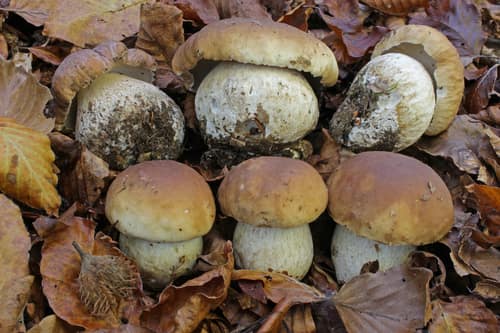
Look-Alike (c) Davide Puddu, some rights reserved (CC BY), uploaded by Davide Puddu · cc-by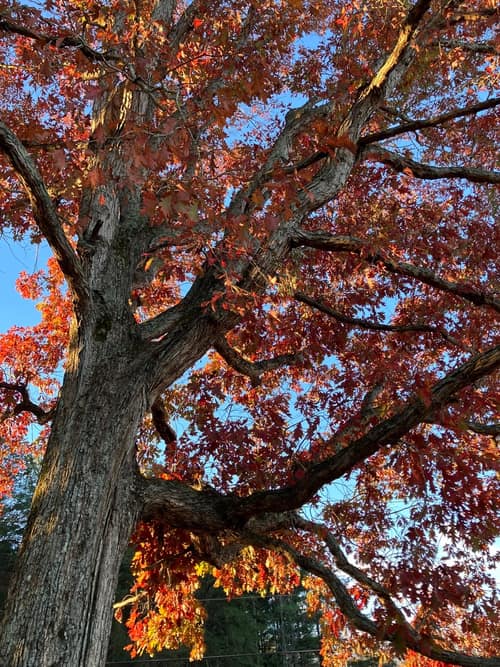
Host Plant (c) Alicia Ballard, some rights reserved (CC BY) · cc-by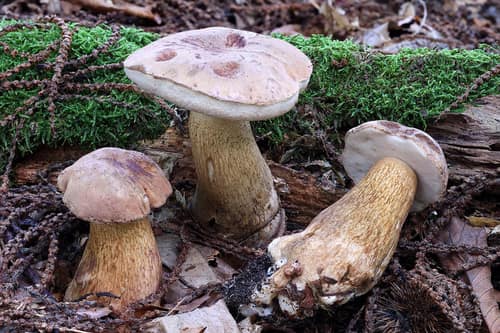
Close Relative (c) Daniel Ghyselinck, some rights reserved (CC BY), uploaded by Daniel Ghyselinck · cc-by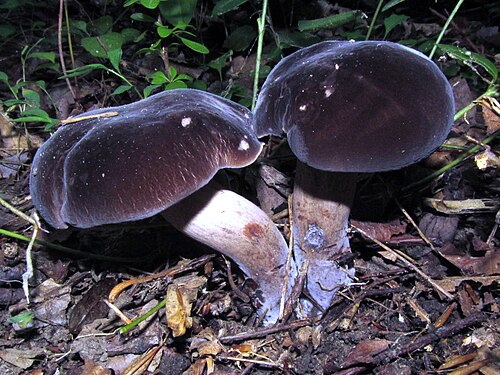
Close Relative This image was created by user Martin Livezey (MLivezey) at Mushroom Observer, a source for mycological images.You can contact this user here. / CC BY-SA 3.0 · cc-by-sa
Keep collecting in Fauna
Found in Collections
Species set Pro
Fungi Forager
Violet Gray Bolete is found in this collection. Identify it in Fauna to fill this slot and continue your progress.
Unlock to track progress
Help improve the field guideSomething wrong?
Checking your Fauna account…Report a name, category, or profile issue for review.