
Fungus
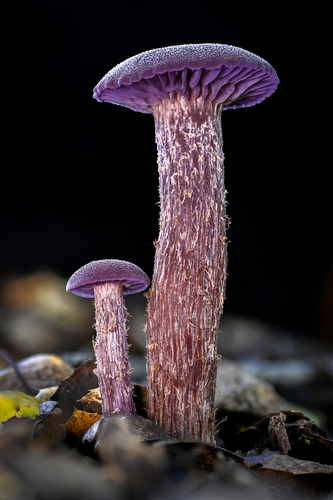
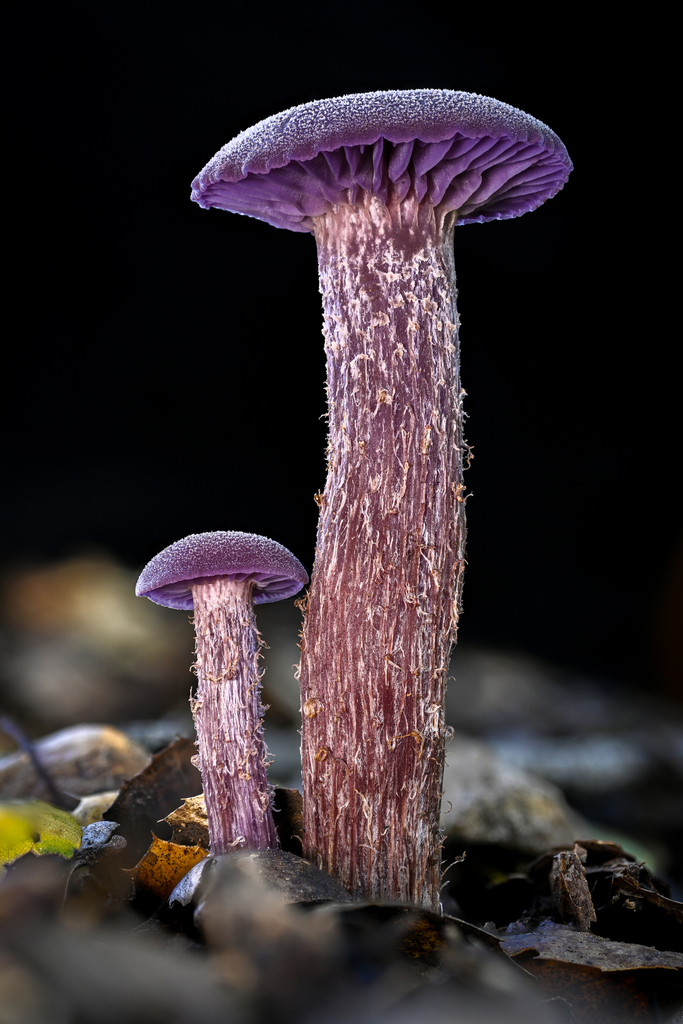
Western Amethyst Laccaria
Laccaria amethysteo-occidentalisAlso known as Western Amethyst Deceiver
Western Amethyst Laccaria displays a striking deep violet to purplish cap and gills when fresh, fading to a dull grayish-tan as the mushroom dries out. This mycorrhizal fungus forms vital symbiotic partnerships with conifers across western North America, especially pine and Douglas-fir. Mushrooms emerge singly or in scattered groups among needle duff following cool autumn rains.
PurpleMycorrhizalForest Floor
—observations
—countries
—peak records
Least ConcernConservation statusIUCN Red List categoriesLCNTVUENCREWEXLeast ConcernRed List categories, explained →
Diet & preyMycorrhizal
Predators
- Slugs
- Fungus gnat larvae
- Tree squirrels
ThreatsDeforestation, severe wildfire, soil compaction
HabitatsConiferous forests, pine needle duff, montane woodlands
Life spanPerennial underground mycelium; fruiting bodies last 1 to 2 weeks
Classification
- FamilyHydnangiaceae
- SpeciesLaccaria amethysteo-occidentalis
Range data is not available yet.
Interaction riskLow
- Low
- Moderate
- High
- Very high
- Why interaction risk is low
- Many wild mushrooms have toxic look-alikes; never eat wild fungi based on app identification alone.
Responsible observation
- Check moisture levels: Fresh specimens show vivid purple tones that turn tan as caps dry.
- Inspect the gills: Look for broad, deep purple gills attached to a fibrous stem.
- Search under conifers: Scan needle duff around pine and fir trees after autumn rains.
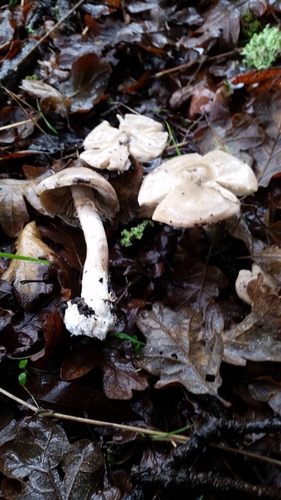
Toxic Look-Alike (c) Alex, some rights reserved (CC BY), uploaded by Alex · cc-by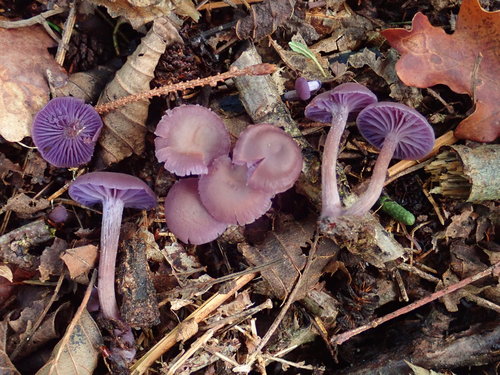
Close Relative (c) Christian Berg, some rights reserved (CC BY), uploaded by Christian Berg · cc-by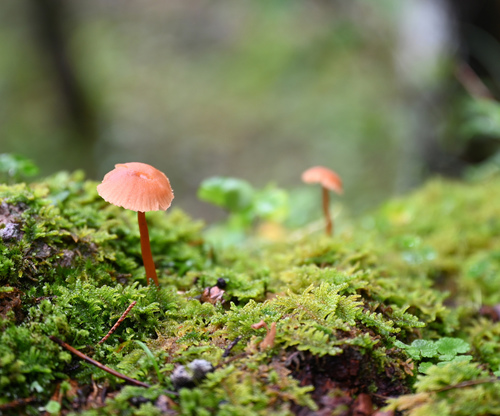
Close Relative (c) danygl, some rights reserved (CC BY) · cc-by Image unavailable
Close Relative
Help improve the field guideSomething wrong?
Checking your Fauna account…Report a name, category, or profile issue for review.