
Fungus
Yellow-gilled Gymnopilus
Gymnopilus luteofoliusAlso known as Purple Gym
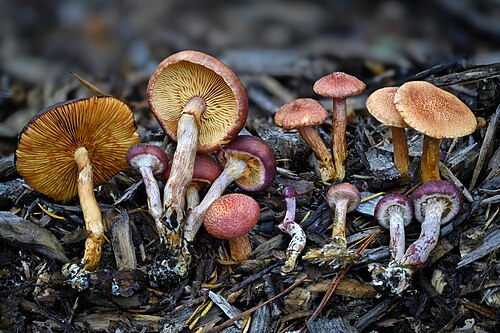
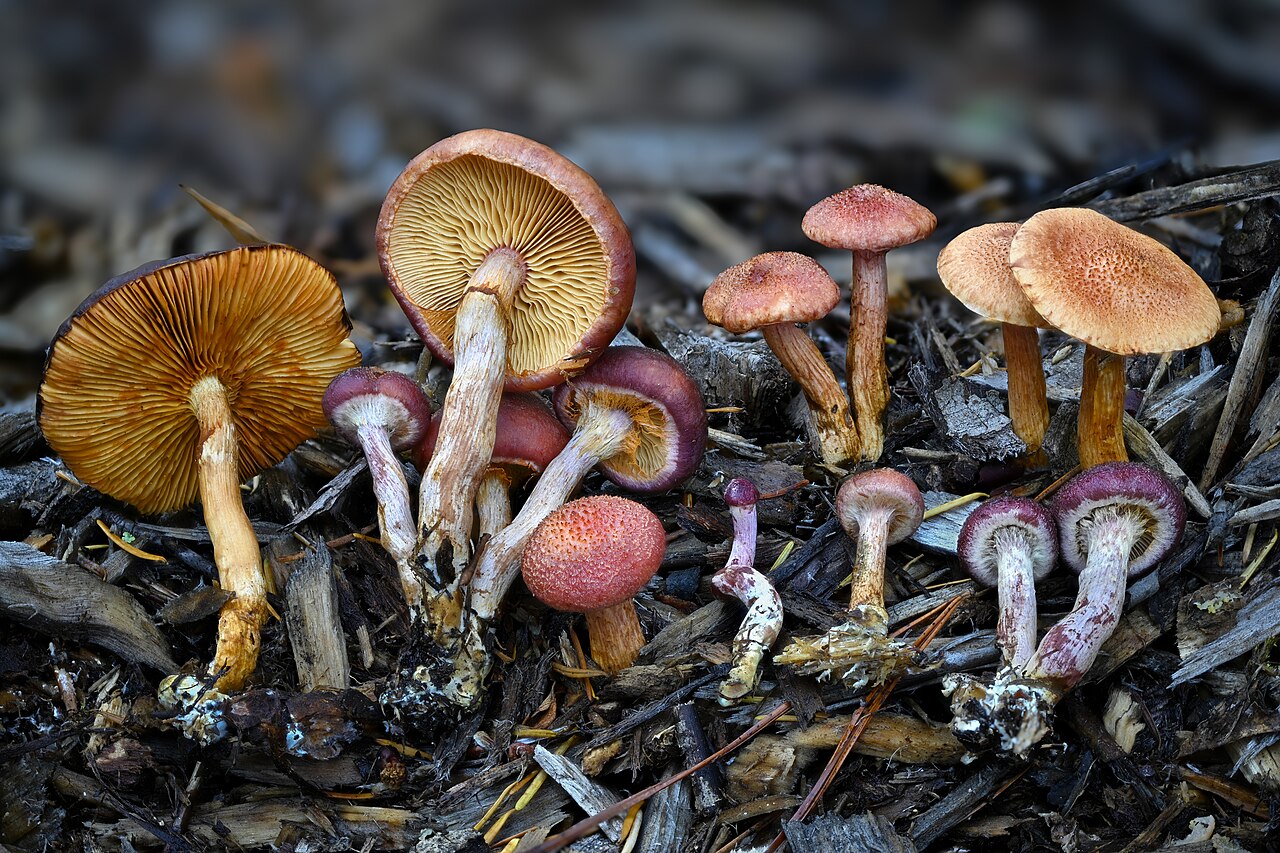
Yellow-gilled Gymnopilus sprouts in dense clusters or solitary mounds directly from dead conifers, hardwood logs, and wood-chip beds across North America. Young caps show vibrant reddish-purple to vinaceous scales that gradually part to reveal a warm yellow background as the mushroom expands. As a saprobic decomposer, it plays a vital forest role breaking down stubborn lignins and recycling organic carbon back into forest soils.
Wood-DecayingForest FungusSpore-Bearing
—observations
—countries
—peak records
Not EvaluatedConservation statusIUCN Red List categoriesLCNTVUENCREWEXNot Evaluated — not placed on the risk ladderRed List categories, explained →
Diet & preyDecaying conifer wood, Decaying hardwood, Lignin and cellulose
Predators
- Fungus gnat larvae
- Slugs
- Springtails
ThreatsIntensive forest clearing and wholesale removal of coarse woody debris
HabitatsConiferous and hardwood forests, decaying logs, stumps, and landscaping mulch
Life spanFruiting bodies persist 1–2 weeks; mycelium survives for years
Classification
- OrderAgaricales
- FamilyHymenogastraceae
- GenusGymnopilus
- SpeciesGymnopilus luteofolius
Range data is not available yet.
Interaction riskHigh
- Low
- Moderate
- High
- Very high
- Why interaction risk is high
- Contains neuroactive toxins; many edible mushrooms have toxic look-alikes, so never eat wild fungi based on app identification alone.
- Why it is dangerous
- Contains psilocybin and related compounds that cause severe sensory distortion, nausea, dizziness, and dangerous psychological distress.
- How to recognize a risky encounter
- Recognize it by reddish-purple fibrous cap scales, bright yellow gills, bitter flesh, and rusty orange spores.
- What to do
- Completely safe to observe and photograph on logs; strictly avoid ingestion.
Responsible observation
- Spore Printing: Place a mature cap gill-down on paper to reveal the diagnostic rusty orange spore print.
- Habitat Scouting: Inspect rotting conifer logs and moist wood-chip piles after heavy seasonal rains.
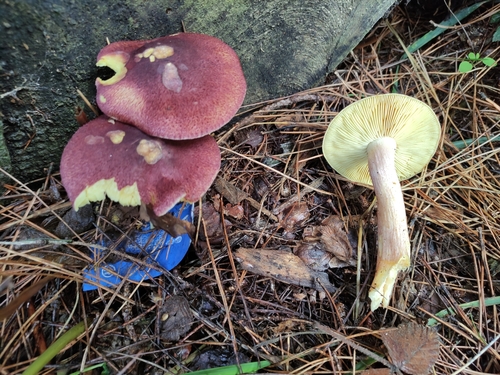
Look-alike (c) Rodolfo Orlandi, some rights reserved (CC BY) · cc-by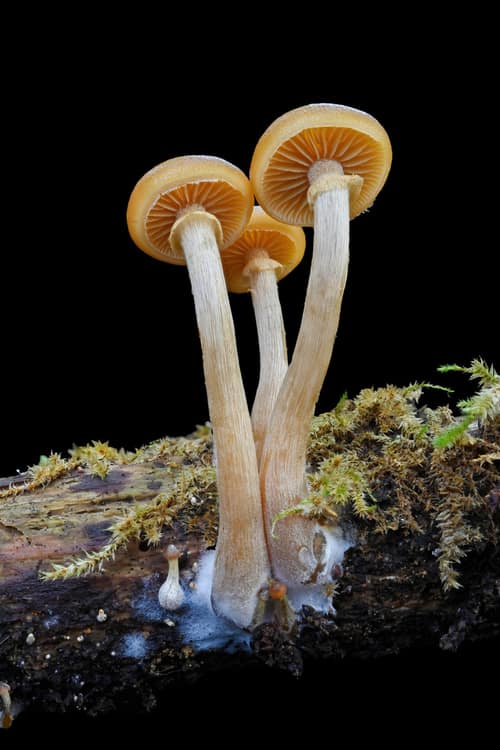
Deadly Look-alike (c) Alan Rockefeller, some rights reserved (CC BY), uploaded by Alan Rockefeller · cc-by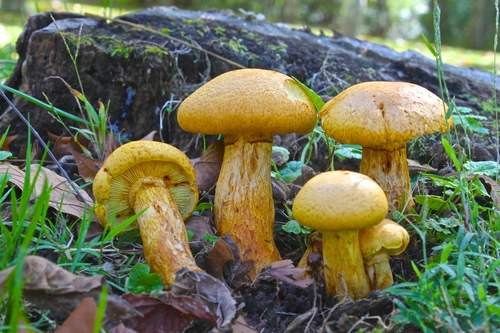
Close Relative (c) Fluff Berger, some rights reserved (CC BY-SA), uploaded by Fluff Berger · cc-by-sa
Help improve the field guideSomething wrong?
Checking your Fauna account…Report a name, category, or profile issue for review.