
Plant · GBIF taxon 3191227
Rosy Sundew
Drosera spatulataAlso known as Spoon-leaved Sundew, Spatulate-leaved Sundew
Rosy sundews lure unsuspecting insects onto spoon-shaped leaf rosettes glistening with sticky, ruby-red glandular tentacles. Once prey becomes glued to the droplets, nearby tentacles bend inward to ensnare the insect and secrete digestive enzymes. These compact perennials thrive in nutrient-poor bogs and damp seepages across East Asia and Australasia.
CarnivorousGlisteningRosette
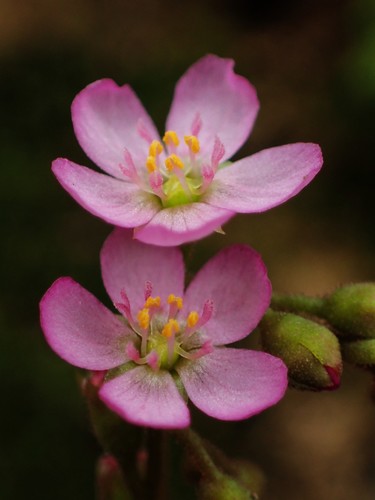
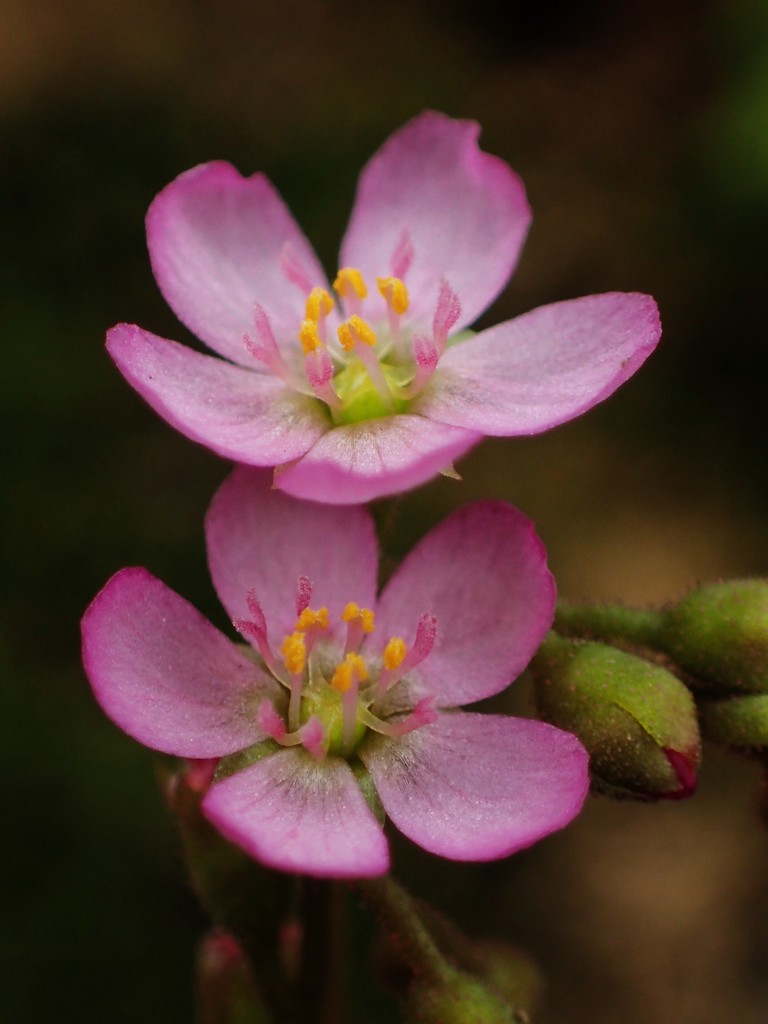
—observations
—countries
—peak records
Least ConcernConservation statusIUCN Red List categoriesLCNTVUENCREWEXLeast ConcernRed List categories, explained →
Diet & prey
- Fungus gnats
- Springtails
- Small flies
Predators
- Aphids
- Caterpillars
- Snails
ThreatsWetland drainage, habitat loss, illegal collection
HabitatsBogs, wet heathlands, damp sandy seepages
Life spanPerennial (5–10+ years)
Classification
- OrderCaryophyllales
- FamilyDroseraceae
- GenusDrosera
- SpeciesDrosera spatulata
Range data is not available yet.
Interaction riskLow
- Low
- Moderate
- High
- Very high
- Why interaction risk is low
- Safe to observe at a normal distance.
Responsible observation
- Look for dew: Examine rosettes under bright sunlight to see glowing, ruby-red glandular tentacles tipped with sticky mucilage droplets.
- Mind the soil: Avoid stepping on fragile bog mats and wet seepages where tiny wild rosettes grow.
- Observe flowers: Look for small pink or white five-petaled blossoms perched atop tall stems high above the sticky trap leaves.
 Image unavailable
Habitat Companion 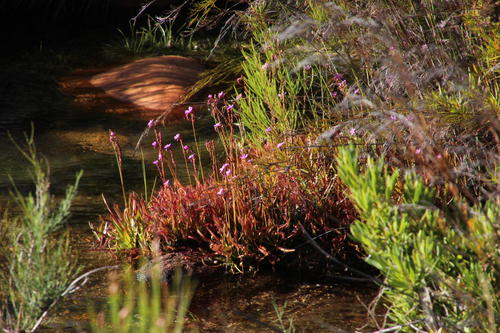
Close Relative (c) Tony Rebelo, some rights reserved (CC BY-SA), uploaded by Tony Rebelo · cc-by-sa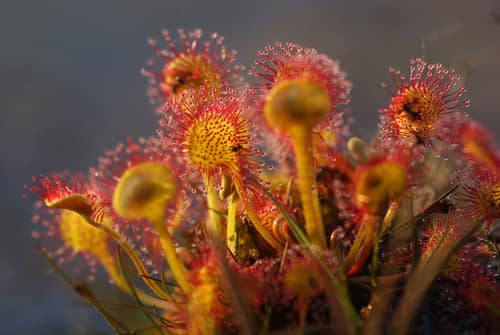
Close Relative (c) Sylvain Montagner, some rights reserved (CC BY), uploaded by Sylvain Montagner · cc-bySympatric Relative
Help improve the field guideSomething wrong?
Checking your Fauna account…Report a name, category, or profile issue for review.