
Plant · GBIF taxon 3190653
Tree-of-heaven
Ailanthus altissimaAlso known as Ailanthus Tree, Stinking Sumac, Chinese Sumac, Copal Tree
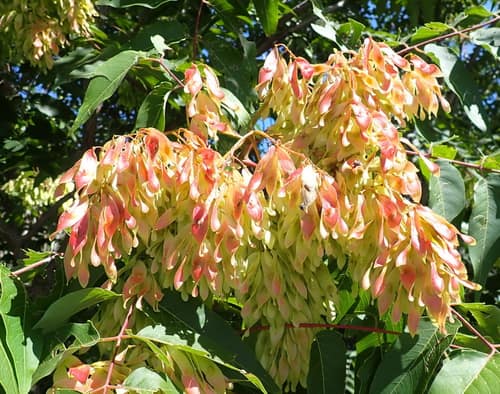
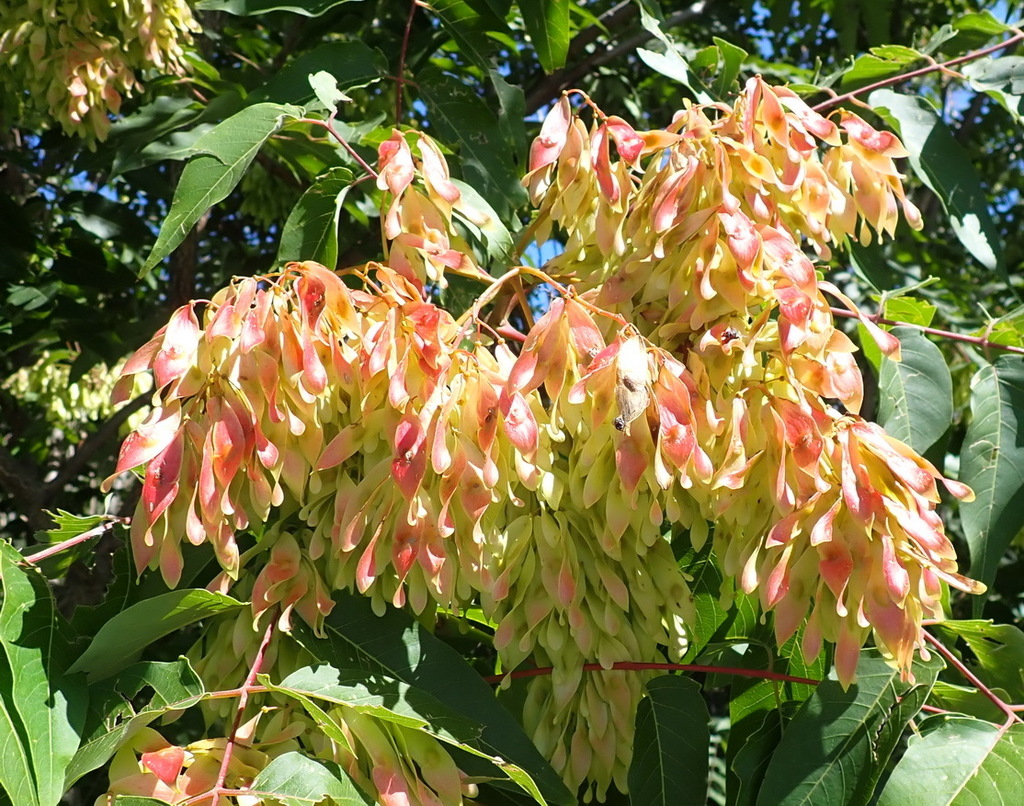
Tree-of-heaven sprouts rapidly in disturbed soil, urban gaps, and forest edges, quickly outcompeting native flora with dense foliage and toxic root secretions. Its large compound leaves emit a strong, unpleasant scent resembling rancid peanut butter when crushed, making it easy to distinguish from native look-alikes. In late summer, female trees produce clusters of papery winged seeds that turn brilliant shades of red and orange before scattering on the wind.
InvasiveFast-GrowingDeciduous
 1 / 7
1 / 7—observations
—countries
—peak records
Least ConcernConservation statusIUCN Red List categoriesLCNTVUENCREWEXLeast ConcernRed List categories, explained →
Diet & prey
- Photosynthetic
Predators
- Spotted Lanternfly
- Ailanthus Webworm Moth
- Verticillium Wilt Fungus
ThreatsHerbicides, mechanical removal, biological control research
HabitatsDisturbed urban areas, roadsides, forest edges, riverbanks
Life span30–70 years
Size / weightNot available
Classification
- OrderSapindales
- FamilySimaroubaceae
- GenusAilanthus
- SpeciesAilanthus altissima
Range data is not available yet.
Interaction riskLow
- Low
- Moderate
- High
- Very high
- Why interaction risk is low
- Plant sap can cause skin irritation; wear gloves and protective clothing when cutting branches.
- Why it is dangerous
- Sap contains plant toxins that can cause severe contact dermatitis and irritation to sensitive skin.
- How to recognize a risky encounter
- Recognized by its large compound leaves with small, gland-tipped lobes near the leaflet bases and a sharp, foul odor.
- What to do
- Wear protective gloves, long sleeves, and eye protection when clearing branches, and wash skin promptly if sap contacts it.
Responsible observation
- Identification: Look for smooth grey bark resembling cantaloupe skin and glandular teeth at the base of leaflets.
- Invasive Control: Avoid cutting down mature trees without applying systemic herbicides, as stumps vigorously sprout roots.
- Pest Monitoring: Inspect trunks during summer, as this tree is the primary host for the invasive spotted lanternfly.
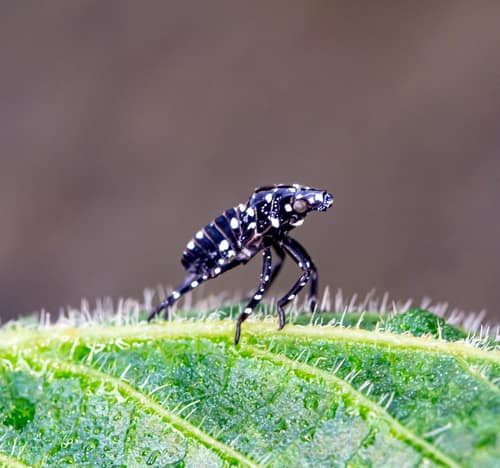
Primary Host (c) WanderingMogwai, some rights reserved (CC BY-SA) · cc-by-sa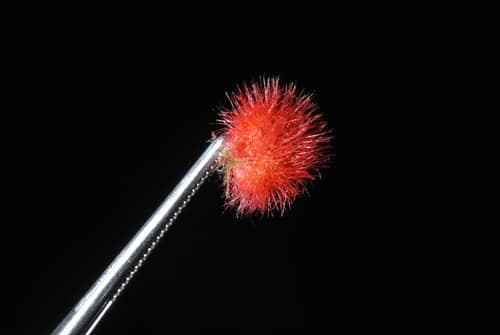
Look-alike Native (c) Douglas Goldman, some rights reserved (CC BY-SA), uploaded by Douglas Goldman · cc-by-sa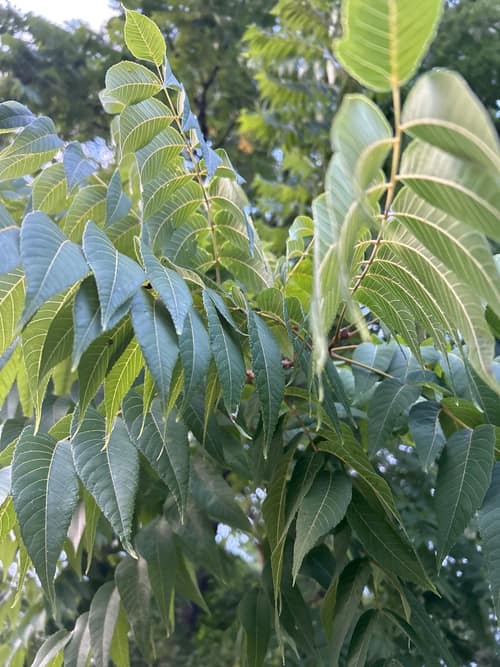
Look-alike Native (c) SalamiRaptor, some rights reserved (CC BY-SA), uploaded by SalamiRaptor · cc-by-sa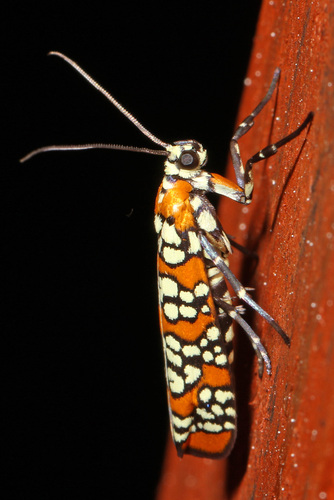
Herbivore (c) Judy Gallagher, some rights reserved (CC BY) · cc-by
Help improve the field guideSomething wrong?
Checking your Fauna account…Report a name, category, or profile issue for review.