
Plant
Bottlebrush Buckeye
Aesculus parvifloraAlso known as Small-Flowered Buckeye, Bottlebrush
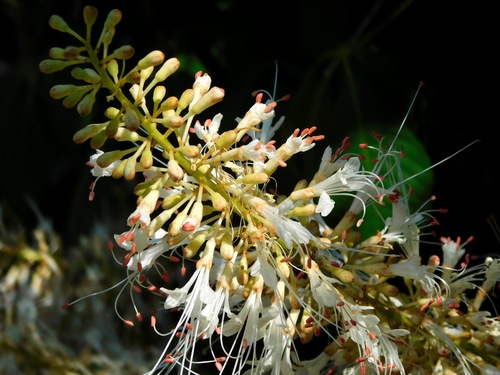
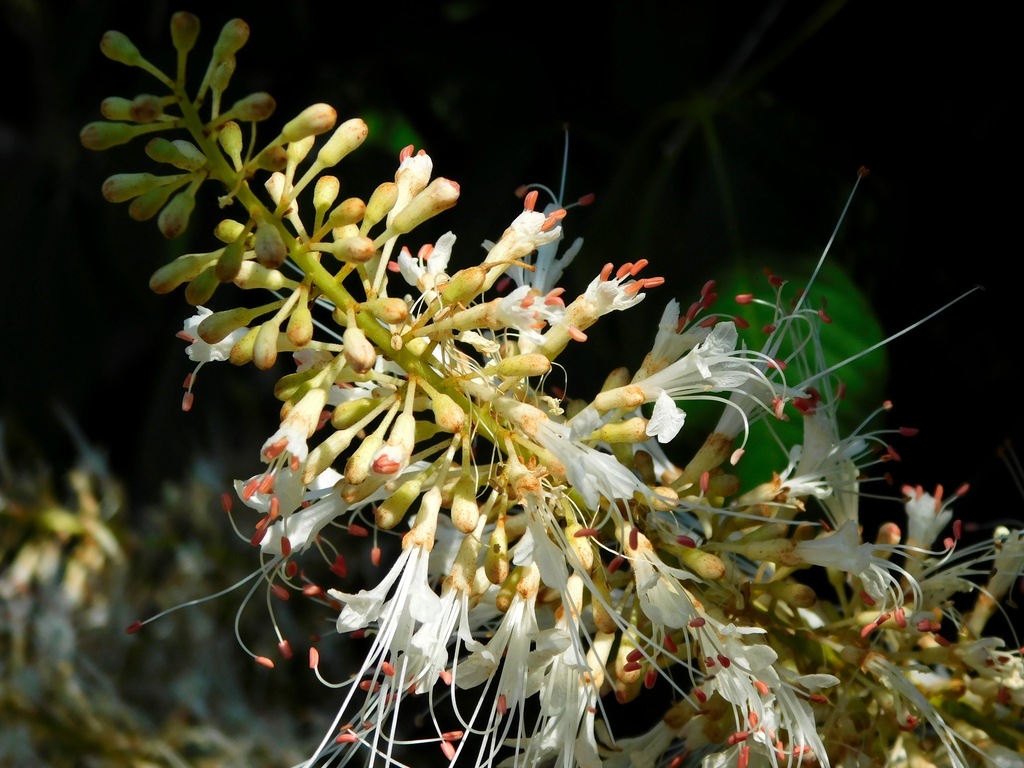
Bottlebrush buckeye spreads via vigorous underground suckers to form massive, multi-stemmed colonies in shaded forest understories. In midsummer, it sends up spectacular cylindrical spikes of feathery white blossoms with protruding pinkish-red stamens that attract butterflies and hummingbirds. By autumn, the palmate foliage turns buttery yellow, dropping to expose smooth, pear-shaped seed capsules containing glossy brown nuts.
DeciduousFloweringUnderstory
—observations
—countries
—peak records
Least ConcernConservation statusIUCN Red List categoriesLCNTVUENCREWEXLeast ConcernRed List categories, explained →
Diet & preySunlight, Water, Soil nutrients
Predators
- White-tailed Deer
- Buckeye Leaf Pit Gall Mite
- Japanese Beetle
ThreatsHabitat fragmentation, logging, and invasive understory plants
HabitatsMesic deciduous forests, bluffs, riverbanks, and shaded ravines
Life span50–100 years
Classification
- OrderSapindales
- FamilySapindaceae
- GenusAesculus
- SpeciesAesculus parviflora
Range data is not available yet.
Interaction riskHigh
- Low
- Moderate
- High
- Very high
- Why interaction risk is high
- Seeds and leaves contain toxic saponins; never ingest any part and keep away from pets.
- Why it is dangerous
- Contains toxic saponins, notably aescin, and aesculin glycosides that cause severe vomiting, diarrhea, tremors, and muscle weakness if ingested.
- How to recognize a risky encounter
- Recognizable by palmately compound leaves with 5 to 7 leaflets and erect, bottle-brush-like white flower spikes up to 30 cm long.
- What to do
- Admire the flowers and foliage visually; never consume the nuts and prevent pets or livestock from browsing the twigs or fallen seeds.
Responsible observation
- Flowering Season: Look for showy upright white flower spikes from late June through July.
- Colony Growth: Notice how low branches root upon touching soil to form wide thickets.
- Pet Safety: Keep dogs away from fallen buckeye nuts, which cause severe toxicity.
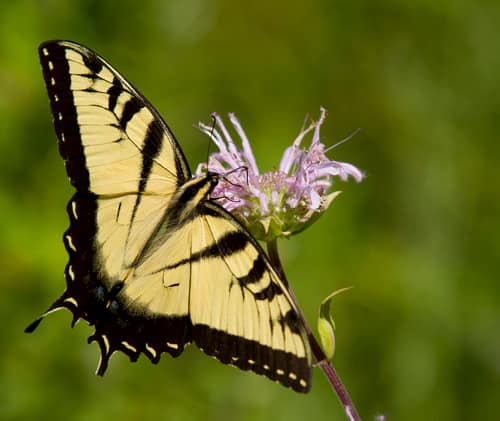
Pollinator "Eastern Tiger Swallowtail" by ShenandoahNPS is marked with Public Domain Mark 1.0. To view the terms, visit https://creativecommons.org/publicdomain/mark/1.0/. · cc0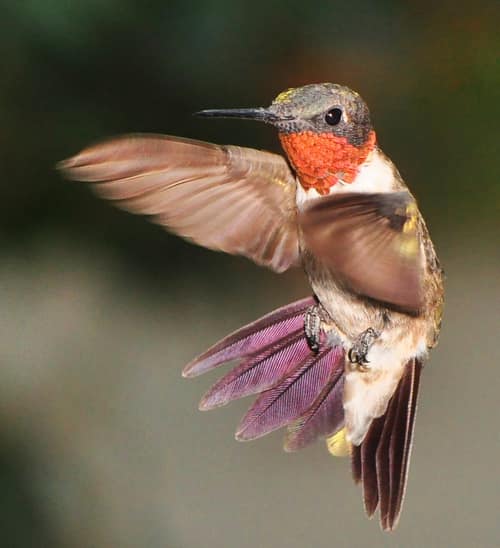
Pollinator jeffreyw / CC BY 2.0 · cc-by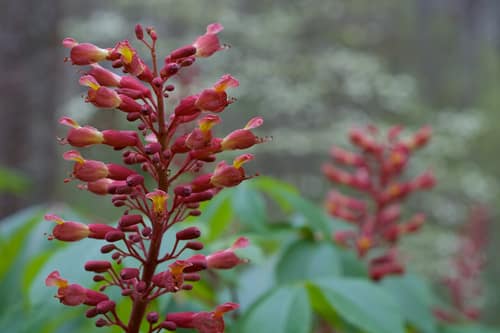
Close Relative Eric Hunt / CC BY-SA 4.0 · cc-by-sa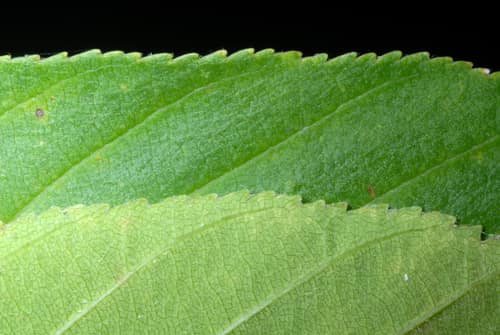
Close Relative (c) Douglas Goldman, some rights reserved (CC BY-SA), uploaded by Douglas Goldman · cc-by-sa
Help improve the field guideSomething wrong?
Checking your Fauna account…Report a name, category, or profile issue for review.