
Plant · GBIF taxon 3189813
California Buckeye
Aesculus californicaAlso known as California Horse-chestnut
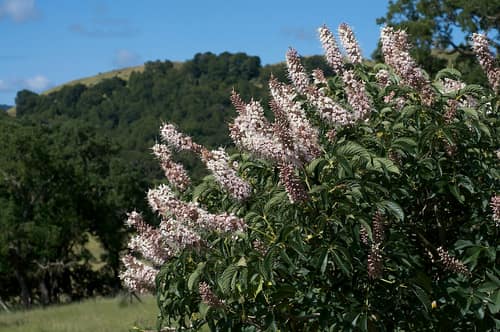
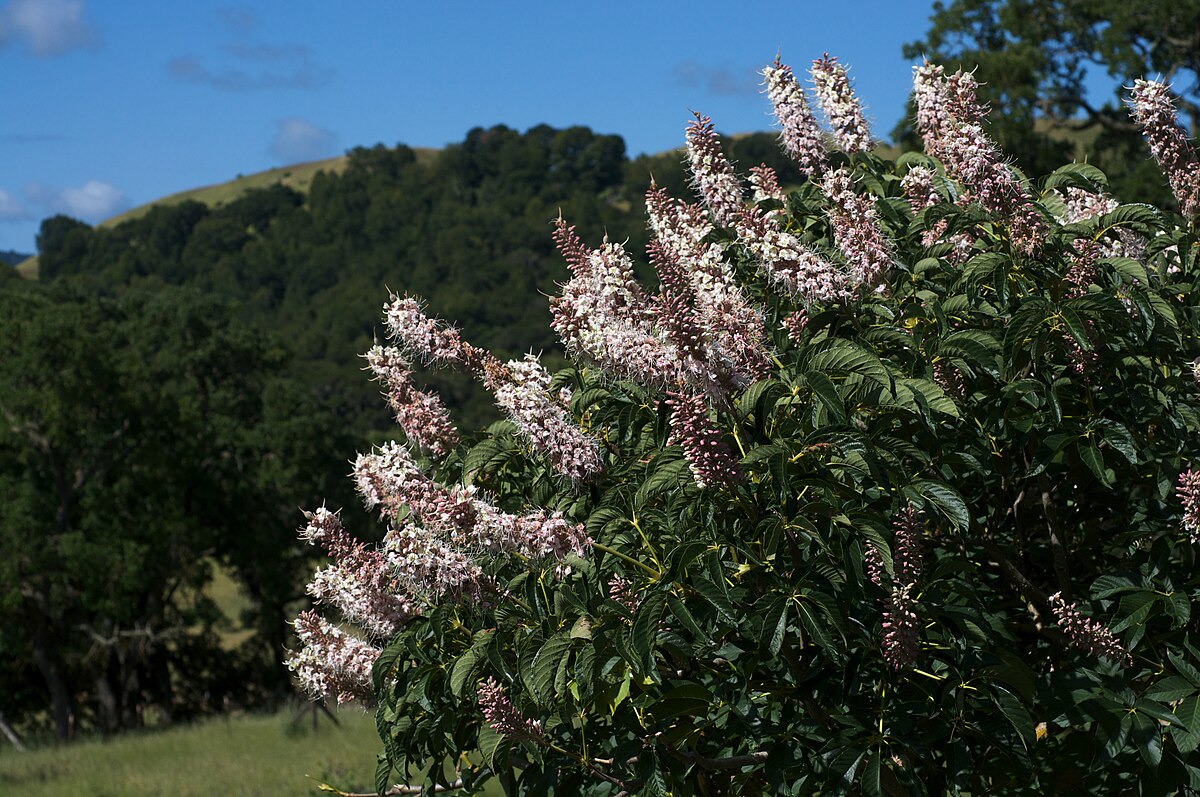
California buckeye is a broad-crowned tree with smooth gray bark, palmately compound leaves, and upright columns of cream to pinkish flowers. It often drops its leaves during summer drought, a normal strategy that can make healthy trees appear dormant.
Drought DeciduousFlowering TreePalmate Leaves
—observations
—countries
—peak records
Least ConcernConservation statusIUCN Red List categoriesLCNTVUENCREWEXLeast ConcernRed List categories, explained →
Diet & prey
- Photosynthetic; roots draw on seasonal soil moisture and stored reserves
Predators
- Deer
- Squirrels
- Leaf-feeding insects
ThreatsLand conversion, altered fire, prolonged drought, root damage, and poor seedling establishment
HabitatsDry slopes, canyons, stream terraces, oak woodland, chaparral margins, and foothills
Life spanMany decades; mature trees may persist well beyond a century
Size / weightNot available
Classification
- OrderSapindales
- FamilySapindaceae
- GenusAesculus
- SpeciesAesculus californica
Range data is not available yet.
Interaction riskHigh
- Low
- Moderate
- High
- Very high
- Why interaction risk is high
- All plant parts contain toxic glycosides and should not be ingested by people, pets, or livestock.
- Why it is dangerous
- Seeds, leaves, bark, and other tissues contain glycosides that can cause weakness, vomiting, neurologic signs, and poisoning.
- How to recognize a risky encounter
- Recognize the palmate leaves, smooth gray trunk, upright flower clusters, and large glossy brown seeds.
- What to do
- Never taste plant material; keep fallen seeds away from children, pets, horses, and other livestock.
Responsible observation
- Identify: Count five to seven leaflets radiating from one point.
- Season: Expect natural leaf drop during hot dry weather.
- Leave: Do not collect or taste any fallen plant material.
Help improve the field guideSomething wrong?
Checking your Fauna account…Report a name, category, or profile issue for review.