
Plant
Tutsan
Hypericum androsaemumAlso known as Sweet-amber, Shrubby St. John's Wort
Tutsan brightens damp woodland understories with saucer-shaped, buttercup-yellow blossoms crowned by fluffy tufts of stamens. Its broad, aromatic leaves sit opposite along winged stems and give off a distinctive sweet, camphor-like fragrance when crushed. Unlike most members of its genus that produce dry seed capsules, it yields fleshy, berry-like fruits that mature from scarlet red to glossy purplish-black by autumn.
WoodlandFloweringShrub
—observations
—countries
—peak records
Least ConcernConservation statusIUCN Red List categoriesLCNTVUENCREWEXLeast ConcernRed List categories, explained →
Diet & preyAutotrophic (photosynthesis)
Predators
- St. John's Wort Beetle
- Chrysolina quadrigemina
ThreatsDeforestation in parts of its native range; managed as an invasive weed where introduced
HabitatsDamp deciduous woodlands, shady riverbanks, hedgerows, and rocky forest margins
Life span10–20 years
Classification
- OrderMalpighiales
- FamilyHypericaceae
- GenusHypericum
- SpeciesHypericum androsaemum
Range data is not available yet.
Interaction riskHigh
- Low
- Moderate
- High
- Very high
- Why interaction risk is high
- Berries induce nausea if eaten, and wild berries have toxic look-alikes; never eat wild fruit.
- Why it is dangerous
- Contains hypericin and related polyphenolic compounds that cause gastrointestinal irritation, vomiting, and diarrhea if berries are swallowed.
- How to recognize a risky encounter
- Look for slightly woody, two-winged reddish stems with stalkless oval leaves and glossy berry-like capsules that shift from red to black.
- What to do
- Enjoy the flowers and foliage visually, and ensure children and pets do not consume the berries.
Responsible observation
- Foliage scent: Gently brush the leaves to release their sweet, amber resin aroma.
- Fruit observation: Watch the seed capsules transition through green, scarlet, and midnight black.
- Garden care: Deadhead spent flowers in non-native regions to prevent invasive spread into native woods.
 Image unavailable
Predator 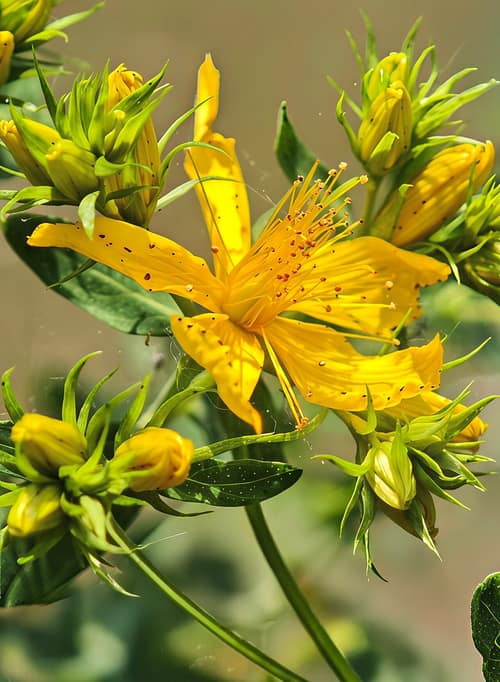
Close Relative Didier Descouens / CC BY-SA 4.0 · cc-by-saClose Relative
Help improve the field guideSomething wrong?
Checking your Fauna account…Report a name, category, or profile issue for review.