
Plant
Malabar Melastome
Melastoma malabathricumAlso known as Indian Rhododendron, Singapore Rhododendron, Planter's Rhododendron, Senduduk
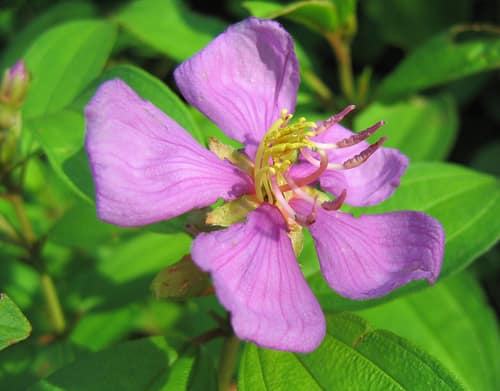
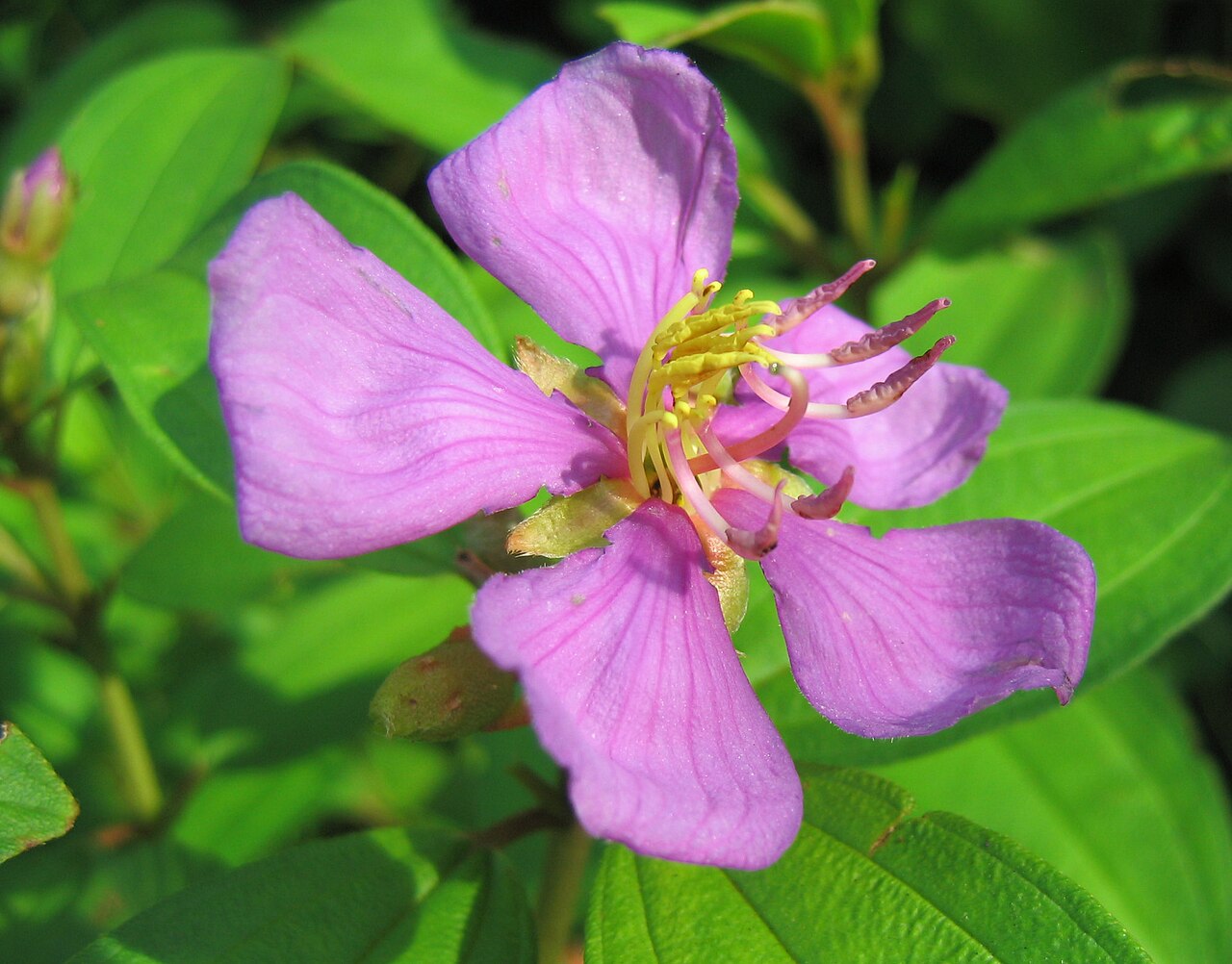
Thriving in acidic soils and sunny tropical margins, this vigorous evergreen shrub is celebrated for its showy mauve flowers that feature prominent, claw-like yellow and purple stamens. Carpenter bees visit the blossoms to extract pollen via buzz pollination, creating rapid sonic vibrations that release pollen from specialized pore-bearing anthers. Soft, dark purple fruits break open irregularly when ripe, revealing a sweet pulp packed with tiny seeds that readily stain the mouths of frugivorous birds and mammals.
FloweringShrubTropical
—observations
—countries
—peak records
Least ConcernConservation statusIUCN Red List categoriesLCNTVUENCREWEXLeast ConcernRed List categories, explained →
Diet & preyPhotosynthetic
Predators
- Caterpillars
- Grasshoppers
- Browsing deer
ThreatsWeed eradication programs outside native range, extreme freeze events
HabitatsTropical grasslands, open woodlands, forest margins, disturbed roadsides
Life span5–15 years
Classification
- FamilyMelastomataceae
- SpeciesMelastoma malabathricum
Range data is not available yet.
Interaction riskLow
- Low
- Moderate
- High
- Very high
- Why interaction risk is low
- Wild berries have toxic look-alikes; never eat based on app identification alone.
Responsible observation
- Floral Anatomy: Examine the two distinct sets of stamens adapted specifically for buzz pollination by large bees.
- Habitat Spotting: Look for vibrant pinkish-purple blooms along sunny roadsides, forest clearings, and damp pastures.
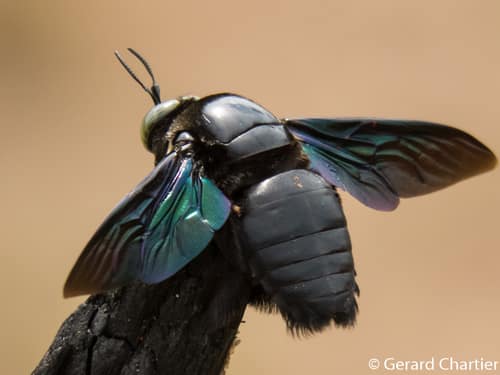
Pollinator (c) Gerard Chartier, some rights reserved (CC BY) · cc-by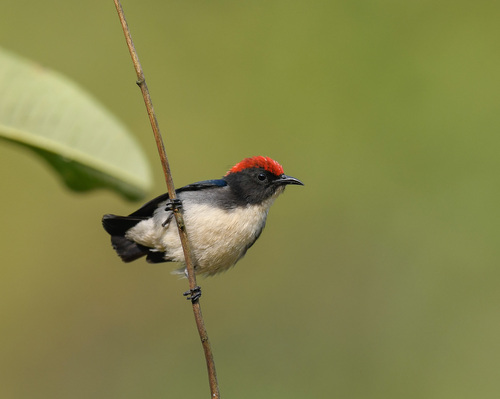
Seed Disperser (c) Rejoice Gassah, some rights reserved (CC BY) · cc-by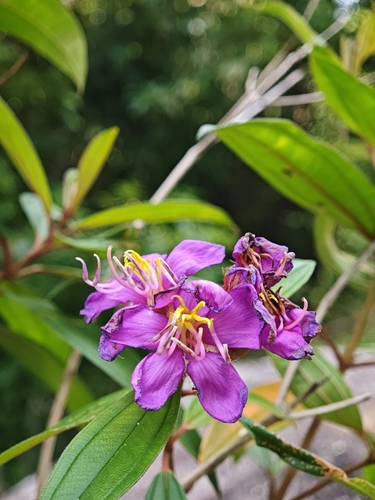
Close Relative (c) Sarka Masova, some rights reserved (CC BY) · cc-by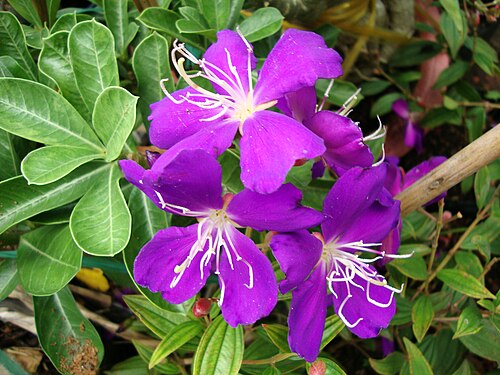
Same Family Prenn / CC BY-SA 3.0 · cc-by-sa
Help improve the field guideSomething wrong?
Checking your Fauna account…Report a name, category, or profile issue for review.