
Plant
Woolly Teatree
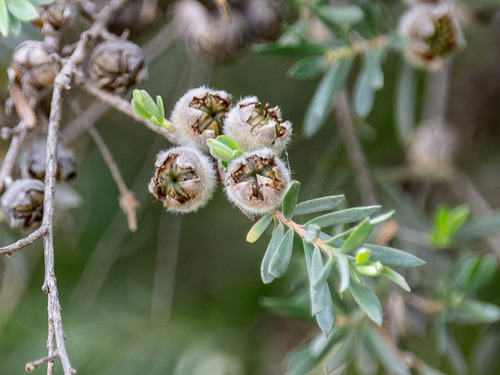
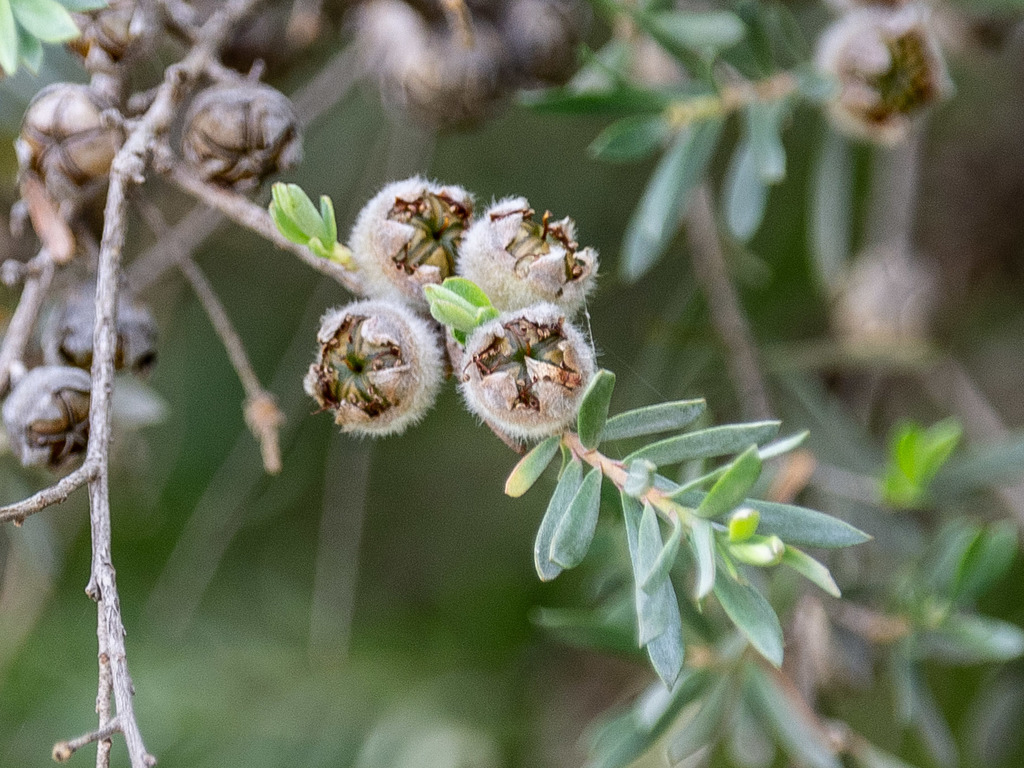
Leptospermum lanigerumWoolly teatrees form dense, aromatic thickets along creeks and waterlogged heaths, their young stems and oval grey-green leaves cloaked in fine, silvery hairs. In spring and early summer, masses of five-petaled white flowers open along the branches, drawing native bees, jewel beetles, and nectar-feeding flies. Woody, woolly-coated seed capsules remain tightly closed on the twigs until drying out or opening after fire to release tiny seeds onto bare, damp soil.
EvergreenFloweringRiparian
—observations
—countries
—peak records
Least ConcernConservation statusIUCN Red List categoriesLCNTVUENCREWEXLeast ConcernRed List categories, explained →
Diet & preySunlight, Water, Soil nutrients
Predators
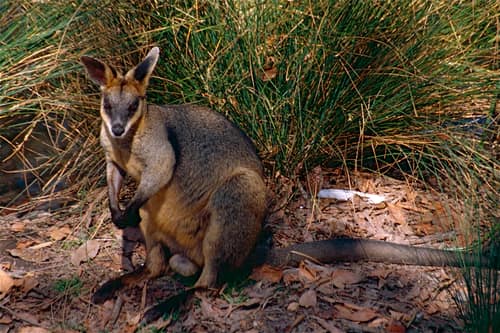
- Swamp Wallaby
- Common Brushtail Possum
- Leaf-eating Beetles
ThreatsLand clearing, wetland drainage, altered fire regimes, and myrtle rust
HabitatsMoist coastal heaths, riverbanks, riparian scrub, woodlands, and montane grassland fringes across southeastern Australia
Life span20–50 years
Classification
- OrderMyrtales
- FamilyMyrtaceae
- GenusLeptospermum
- SpeciesLeptospermum lanigerum
Range data is not available yet.
Interaction riskLow
- Low
- Moderate
- High
- Very high
- Why interaction risk is low
- Safe to observe at a normal distance.
Responsible observation
- Foliage Check: Look closely at new shoots and leaf undersides for the fine, silvery hairs that give the shrub its name.
- Fruit ID: Spot the woody, five-valved seed capsules covered in dense woolly hairs, which persist on branches long after flowering.
- Pollinator Watch: Visit on warm spring or summer mornings to see native bees, beetles, and hoverflies feeding at the white blossoms.
Browser (c) Bernard DUPONT, some rights reserved (CC BY-SA) · cc-by-sa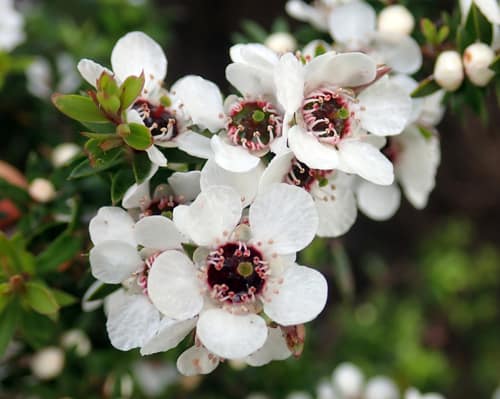
Close Relative no rights reserved, uploaded by Peter de Lange · cc0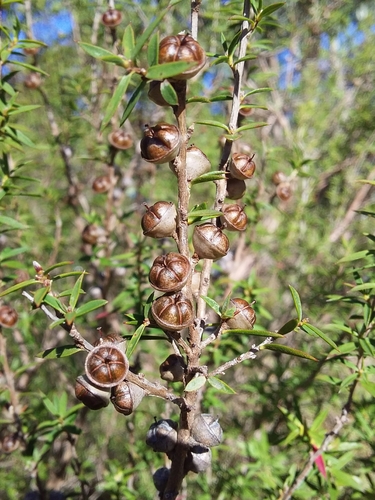
Close Relative no rights reserved, uploaded by insiderelic · cc0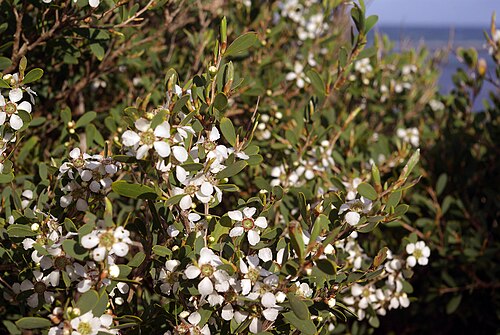
Close Relative Stephen Bain / CC BY-SA 3.0 · cc-by-sa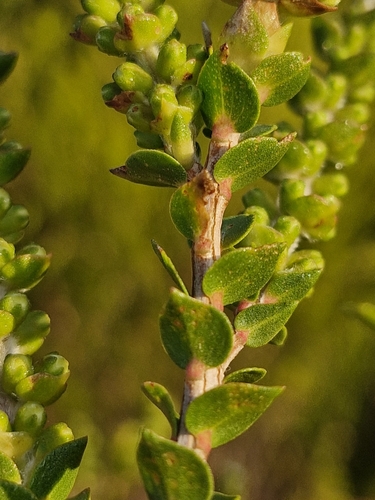
Same Family (c) ronavery, some rights reserved (CC BY), uploaded by ronavery · cc-by
Help improve the field guideSomething wrong?
Checking your Fauna account…Report a name, category, or profile issue for review.