
Plant · GBIF taxon 3176787
Tasmanian Blue Gum
Eucalyptus globulusAlso known as Southern Blue Gum, Blue Gum, Tasmanian Bluegum
Tasmanian blue gums dominate southeastern Australian coastal forests, towering up to 70 meters while shedding long, papery strips of bark that expose smooth pastel trunks below. Juvenile foliage emerges as square-stemmed, silver-blue leaves coated in a powdery wax, shifting into dark green, sickle-shaped leaves on mature branches. Beyond its native home, this fast-growing tree shapes timber forestry worldwide while posing severe wildfire hazards due to high concentrations of aromatic leaf oils.
EvergreenFast-GrowingAromatic
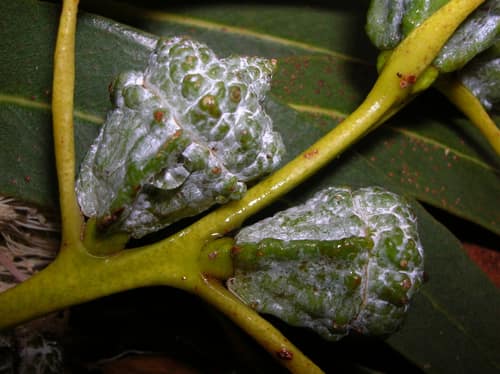
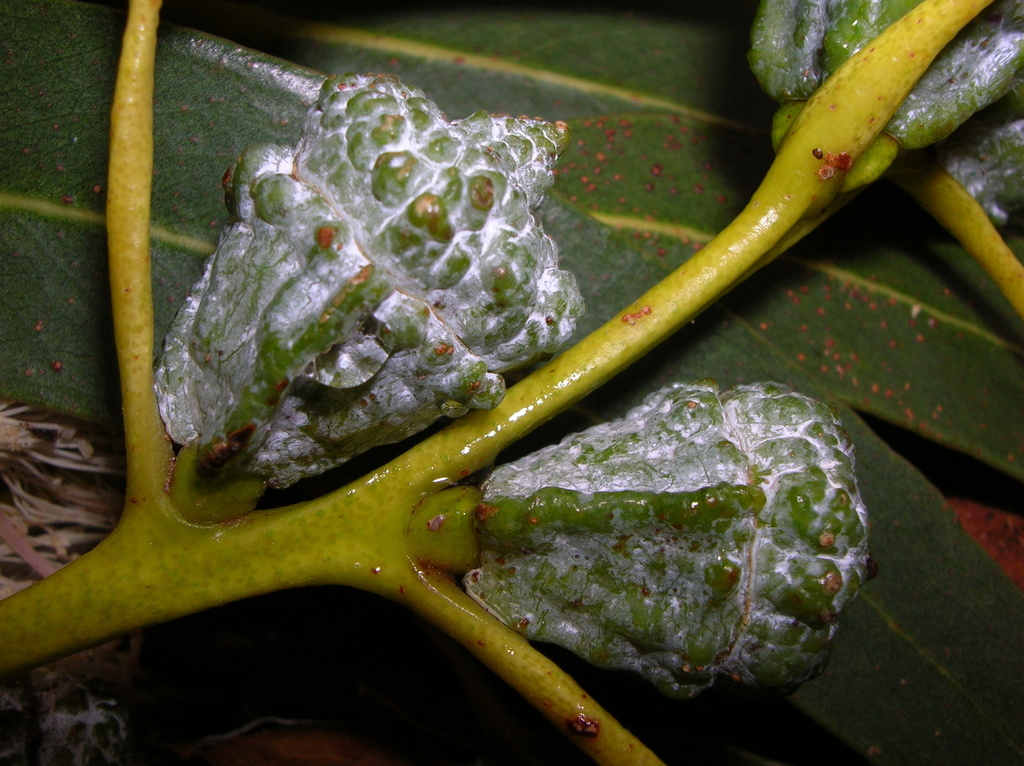
—observations
—countries
—peak records
Least ConcernConservation statusIUCN Red List categoriesLCNTVUENCREWEXLeast ConcernRed List categories, explained →
Diet & prey
- Sunlight
- Soil Minerals
- Water
Predators
- Koala
- Eucalyptus Longhorned Borer
- Blue Gum Psyllid
ThreatsSevere wildfires, climate stress, invasive pests, habitat clearance
HabitatsCoastal woodlands, wet sclerophyll forests, temperate plantations
Life span100–400 years
Size / weightNot available
Classification
- OrderMyrtales
- FamilyMyrtaceae
- GenusEucalyptus
- SpeciesEucalyptus globulus
Range data is not available yet.
Interaction riskHigh
- Low
- Moderate
- High
- Very high
- Why interaction risk is high
- Leaves and concentrated oils are toxic to pets and humans if ingested; observe foliage without consuming.
- Why it is dangerous
- Leaves and concentrated extracts contain toxic terpene compounds like eucalyptol, causing nausea, vomiting, and neurological distress if ingested.
- How to recognize a risky encounter
- Look for peeling bark ribbons, square juvenile stems with waxy blue-grey leaves, and a intense eucalyptus scent when crushed.
- What to do
- Do not chew leaves or ingest raw plant oils, and maintain distance from heavy branches in high wind conditions.
Responsible observation
- Snag Hazard: Stand clear of mature trees during high winds, as heavy limbs can drop suddenly without warning.
- Leaf Fragrance: Crush fallen dry leaves between your fingers to experience the powerful, medicinal eucalyptus scent.
- Fire Awareness: Avoid planting near homes in dry fire zones because volatile canopy oils ignite easily.
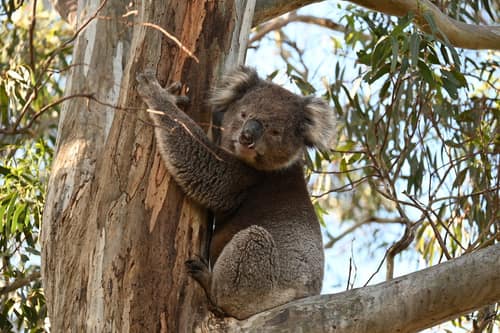
Primary Herbivore (c) jraus, some rights reserved (CC BY-SA) · cc-by-sa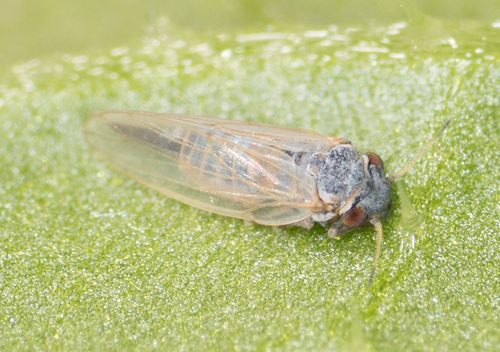
Insect Parasite no rights reserved, uploaded by Jesse Rorabaugh · cc0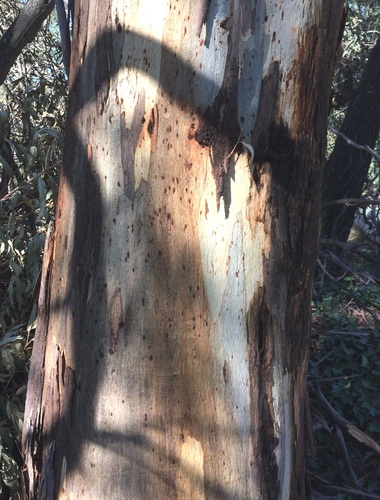
Close Relative (c) Geekstreet, some rights reserved (CC BY-SA) · cc-by-sa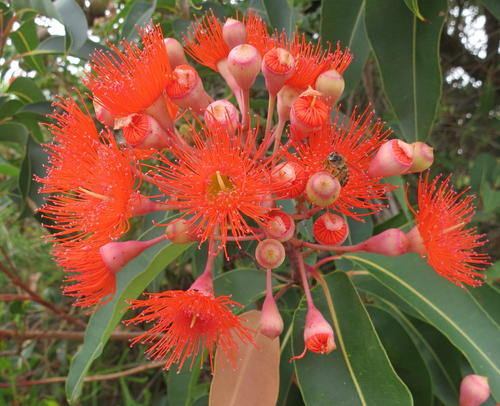
Tribe Relative no rights reserved, uploaded by Di Turner · cc0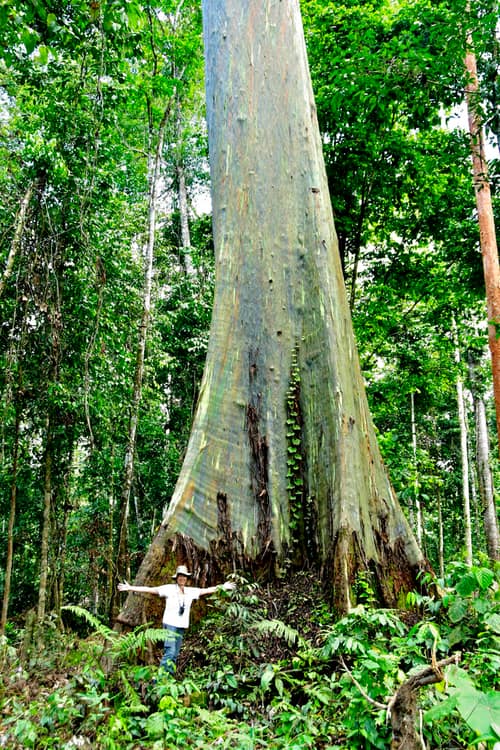
Close Relative (c) garywwilson, some rights reserved (CC BY), uploaded by garywwilson · cc-by
Help improve the field guideSomething wrong?
Checking your Fauna account…Report a name, category, or profile issue for review.