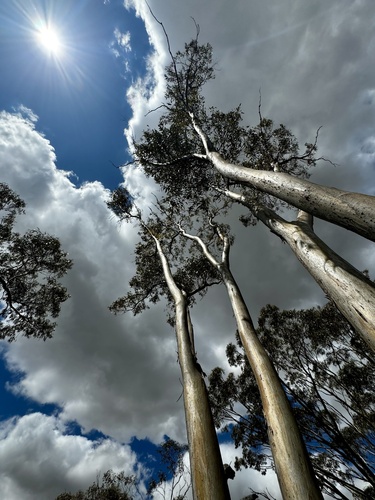
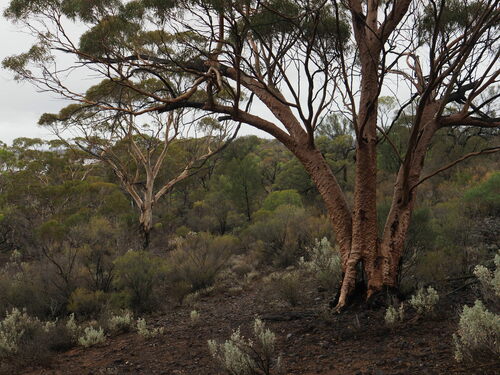
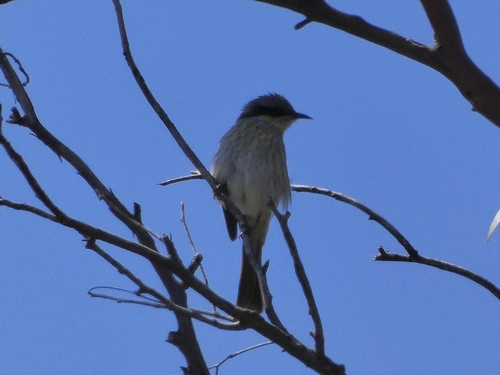
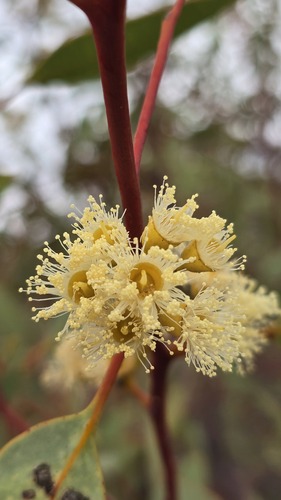
Boongul stands out across the semi-arid interior of southwest Western Australia with its smooth, powdery white to pinkish-grey bark and distinct glaucous young branchlets. During spring and early summer, clusters of pale yellow blossoms emerge from long-beaked buds, providing vital nectar resources for native desert bees, wasps, and honeyeaters. Depending on soil depth and rainfall, it forms either a slender single-stemmed mallet tree or a multi-stemmed mallee capable of surviving prolonged droughts.
Foliage contains aromatic oils toxic to humans and pets if ingested; observe without chewing or tasting.
Why it is dangerous
Eucalyptus foliage contains concentrated essential oils, primarily eucalyptol, which cause nausea, vomiting, lethargy, and respiratory distress in pets and humans if eaten.
How to recognize a risky encounter
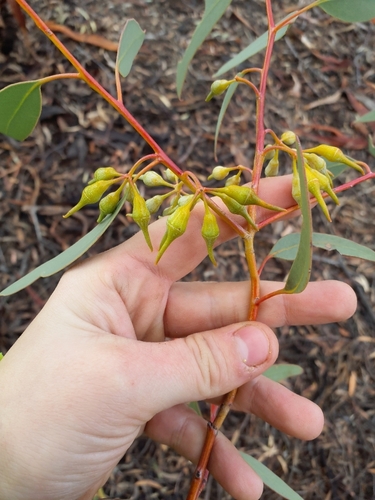
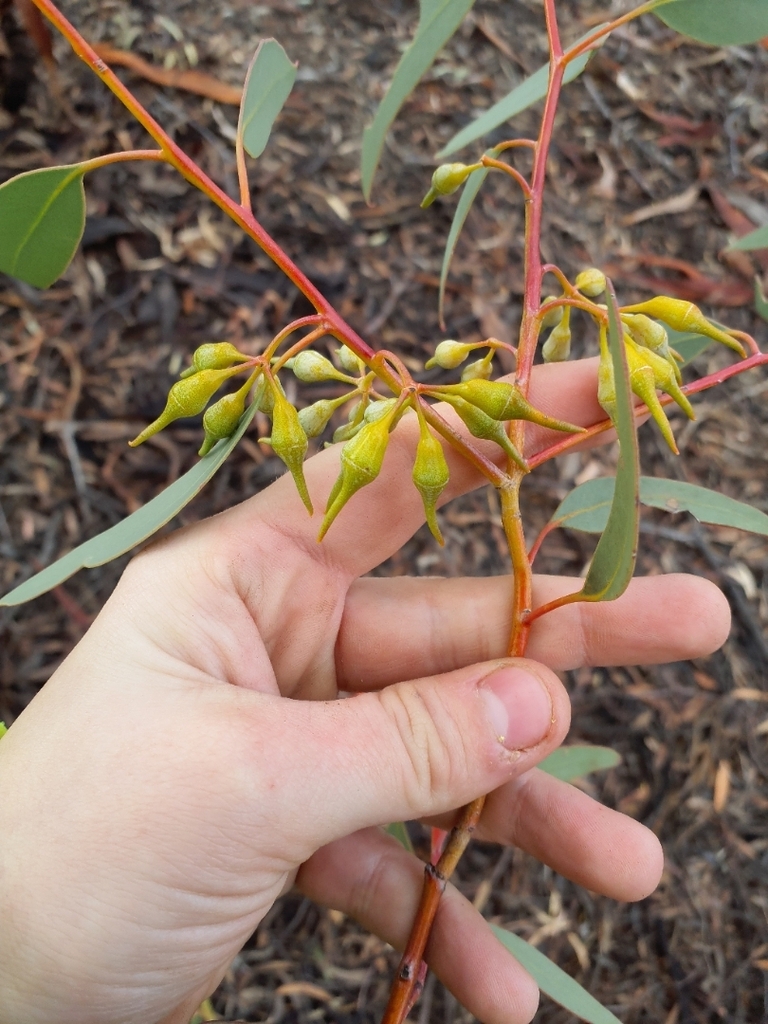
Look for smooth pale bark, powdery bluish-grey twigs, and elongated, horn-shaped flower bud caps arranged in clusters of seven.
What to do
Examine foliage and bark visually from the trail, and prevent domestic dogs or horses from chewing fallen leaves.
Responsible observation
Bud Inspection: Examine the long, beaked flower bud caps that distinguish this tree from nearby look-alikes.
Bird Observation: Scan flowering canopies quietly for nomadic honeyeaters drawn to the copious nectar.
Root Etiquette: Keep vehicles and heavy foot traffic off dry root zones to prevent soil compaction.