
Plant · GBIF taxon 3172291
Garden Privet
Ligustrum ovalifoliumAlso known as California Privet, Korean Privet, Oval-leaved Privet
Garden privet forms dense, hardy thickets with thick, glossy, oval leaves that remain on the branches through mild winters. In midsummer, terminal spikes of heavily scented cream-white flowers bloom, attracting bees before transforming into clusters of dark purple-black berries. Widely planted as a fast-growing hedge, it frequently escapes cultivated gardens into nearby woodland borders.
Semi-evergreenHedge PlantInvasive Tendency
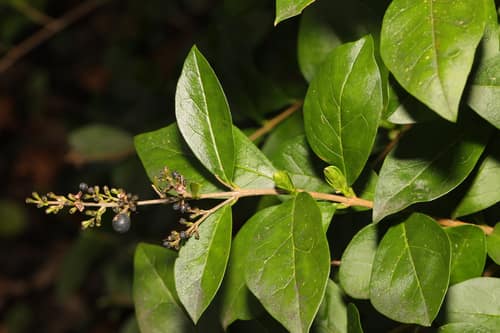
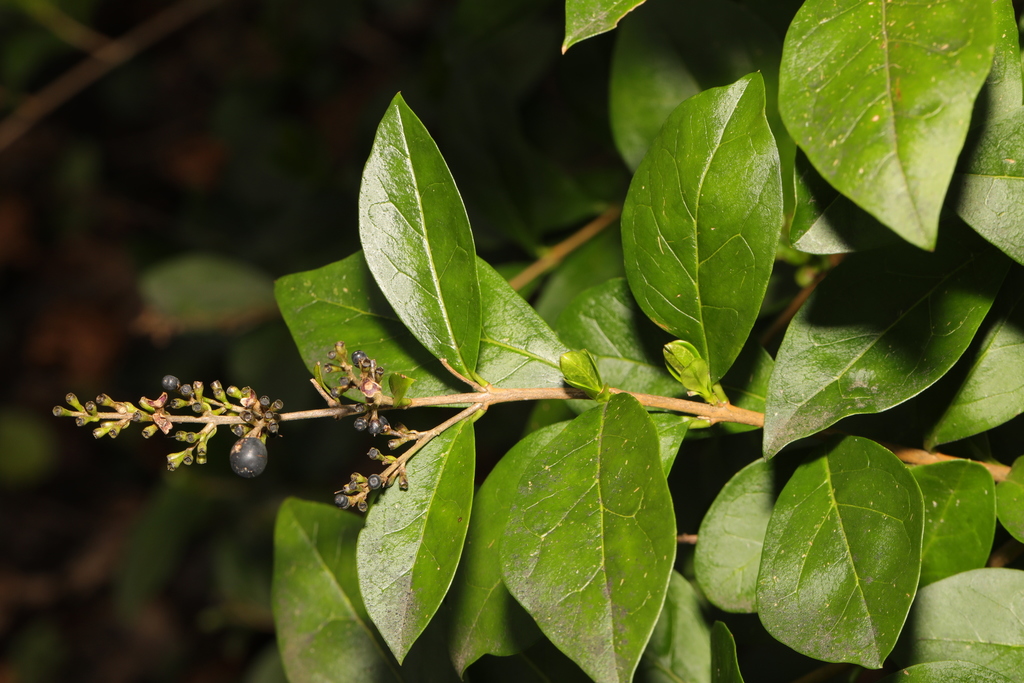
—observations
—countries
—peak records
Least ConcernConservation statusIUCN Red List categoriesLCNTVUENCREWEXLeast ConcernRed List categories, explained →
Diet & prey
- Autotrophic (Photosynthetic)
Predators
- Thrips
- Privet hawk-moth caterpillars
- Scale insects
ThreatsSevere pruning, root competition, invasive species eradication efforts
HabitatsGardens, hedgerows, urban margins, woodland edges
Life span30–50 years
Classification
- OrderLamiales
- FamilyOleaceae
- GenusLigustrum
- SpeciesLigustrum ovalifolium
Range data is not available yet.
Interaction riskHigh
- Low
- Moderate
- High
- Very high
- Why interaction risk is high
- Leaves and berries are toxic if ingested, and wild berries have dangerous look-alikes; do not ingest.
- Why it is dangerous
- Contains terpenoid glycosides like ligustrin that trigger nausea, severe vomiting, and colic when consumed by humans or pets.
- How to recognize a risky encounter
- Look for dark glossy oval leaves set opposite each other on smooth stems, with heavy panicles of creamy white summer flowers.
- What to do
- Wear gardening gloves during heavy trimming to avoid sap irritation, and keep small children away from mature berries.
Responsible observation
- Pruning Strategy: Shear in late spring after flowering to encourage dense foliage without suppressing future blooms.
- Containment: Remove wild volunteers near natural areas to prevent this plant from spreading into native forests.
- Wildlife Watching: Observe pollinating bees and flies visiting summer flower heads from a comfortable distance.
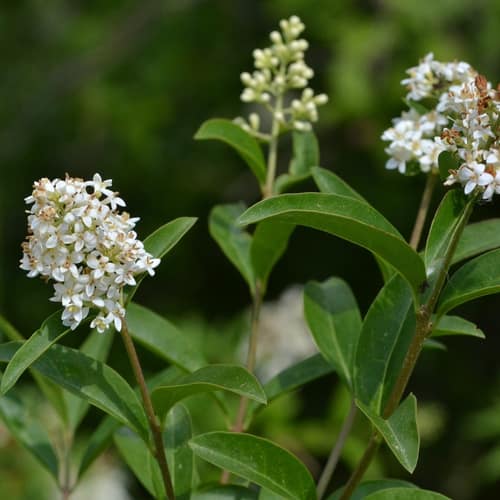
Close Relative (c) Petr Harant, some rights reserved (CC BY), uploaded by Petr Harant · cc-by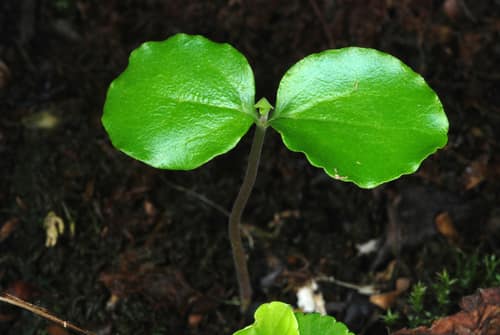
Close Relative (c) Douglas Goldman, some rights reserved (CC BY-SA), uploaded by Douglas Goldman · cc-by-sa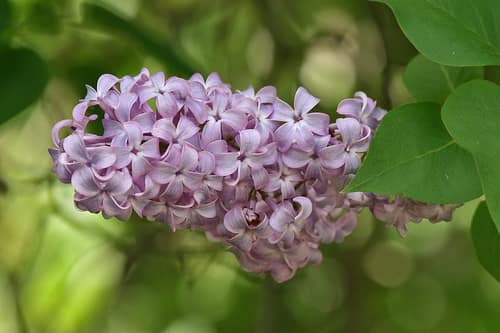
Family Member Jjron / CC BY-SA 3.0 · cc-by-sa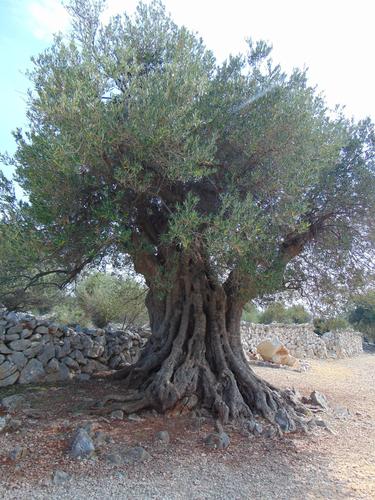
Family Member no rights reserved, uploaded by viridian · cc0
Help improve the field guideSomething wrong?
Checking your Fauna account…Report a name, category, or profile issue for review.