
Plant · GBIF taxon 3170266
Swamp Milkweed
Asclepias incarnataAlso known as Rose Milkweed
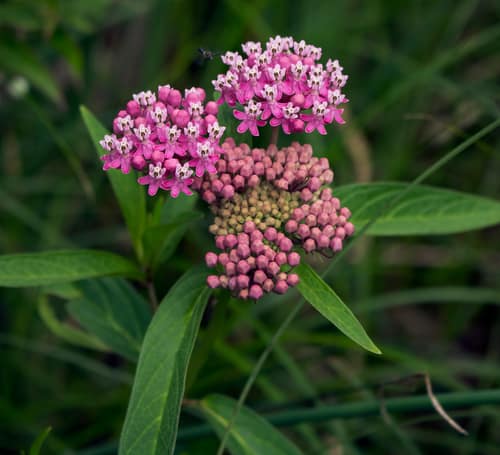
Swamp milkweed is a tall wetland perennial with opposite narrow leaves and rounded clusters of pink to rose flowers. Broken tissues release white latex, and the flowers attract a wide range of butterflies, bees, and other pollinators.
wetland wildflowermilkweedpollinator plant
 1 / 7
1 / 7—observations
—countries
—peak records
Least ConcernConservation statusIUCN Red List categoriesLCNTVUENCREWEXLeast ConcernRed List categories, explained →
Diet & prey
- Produces energy through photosynthesis and draws steady moisture through perennial roots
Predators
- milkweed bugs
- aphids
- deer
ThreatsWetland drainage, herbicides, mowing during bloom, invasive plants, and wild collection
HabitatsMarshes, wet meadows, streambanks, pond margins, swales, and moist open ground
Life spanA perennial herb that can return from its root crown for many growing seasons
Size / weightNot available
Classification
- OrderGentianales
- FamilyApocynaceae
- GenusAsclepias
- SpeciesAsclepias incarnata
Range data is not available yet.
Interaction riskHigh
- Low
- Moderate
- High
- Very high
- Why interaction risk is high
- Milky latex can irritate skin and eyes, and plant tissues are toxic if swallowed.
- Why it is dangerous
- Milkweed latex contains cardiac glycosides and other compounds that can irritate tissue and cause poisoning.
- How to recognize a risky encounter
- Confirm opposite narrow leaves, pink clustered flowers, and white latex from already damaged tissue.
- What to do
- Do not break or ingest the plant; avoid eye contact and wash exposed skin promptly with soap and water.
Responsible observation
- Identify: Look for opposite narrow leaves and rounded pink flower clusters in wet ground.
- Protect: Leave stems intact for pollinators and avoid contact with broken tissues.
Keep collecting in Fauna
Found in Collections
Ecosystem chain Pro
Prairie Plains
Swamp Milkweed is found in this collection. Identify it in Fauna to fill this slot and continue your progress.
Unlock to track progress
Help improve the field guideSomething wrong?
Checking your Fauna account…Report a name, category, or profile issue for review.