
Plant · GBIF taxon 3169137
Fortune's Spindle
Euonymus fortuneiAlso known as Wintercreeper, Winter Creeper, Climbing Euonymus
Fortune's spindle begins life as a prostrate evergreen groundcover before transitioning into a woody climbing vine when it encounters vertical support. Aerial rootlets anchor the stems securely to tree trunks and masonry, allowing plants to ascend over ten meters into forest canopies where mature foliage flowers and fruits. In introduced ranges across North America, dense carpets smother forest floors and overtop mature canopy trees, often weighing them down until limbs snap.
EvergreenInvasiveClimbing Vine
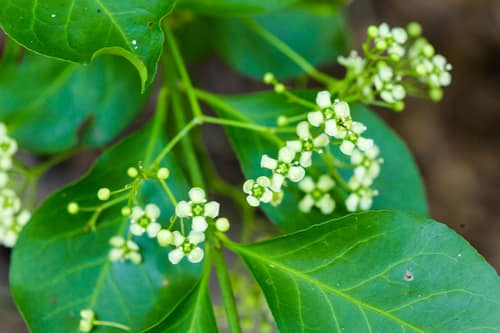
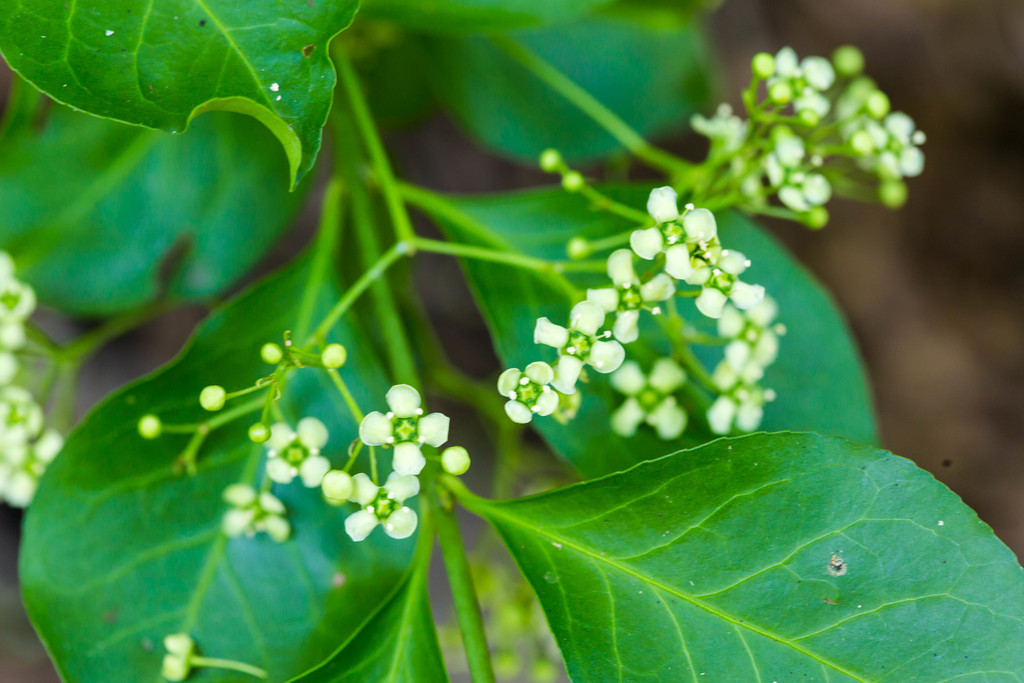
—observations
—countries
—peak records
Least ConcernConservation statusIUCN Red List categoriesLCNTVUENCREWEXLeast ConcernRed List categories, explained →
Diet & prey
- Autotrophic (photosynthetic)
Predators
- Euonymus scale
- Euonymus caterpillar
- White-tailed deer
ThreatsHerbicide treatments, targeted manual clearing, physical cutting
HabitatsDeciduous forests, woodland margins, riparian corridors, urban landscapes
Life span30–50+ years
Classification
- OrderCelastrales
- FamilyCelastraceae
- GenusEuonymus
- SpeciesEuonymus fortunei
Range data is not available yet.
Interaction riskHigh
- Low
- Moderate
- High
- Very high
- Why interaction risk is high
- All parts are toxic to humans and pets; wild berries have toxic look-alikes.
- Why it is dangerous
- Contains cardiac glycosides and alkaloids that induce severe vomiting, diarrhea, weakness, and cardiac abnormalities if ingested.
- How to recognize a risky encounter
- Recognized by opposite, leathery oval leaves on climbing vines that produce small pinkish capsules splitting to reveal orange-coated seeds.
- What to do
- Wear protective gloves when cutting or uprooting thick patches, and prevent pets from chewing the stems or berries.
Responsible observation
- Identification: Look for opposite, glossy dark green leaves with pale veins and lightly scalloped margins.
- Management: Cut climbing stems at the base to kill canopy growth and prevent seed dissemination.
- Landscape Choice: Plant non-invasive native alternatives like American bittersweet or Virginia creeper instead.
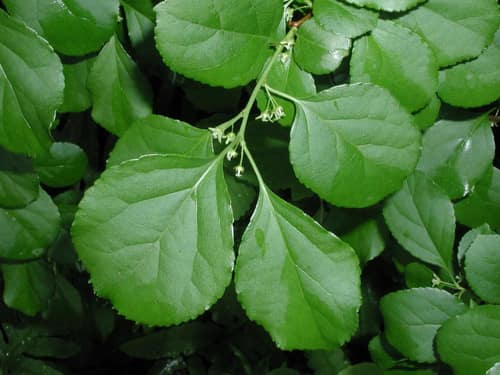
Competitor (c) Leslie J. Mehrhoff, University of Connecticut, Bugwood.org, some rights reserved (CC BY) · cc-by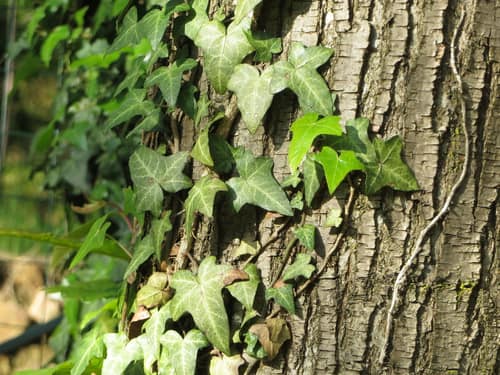
Competitor (c) Marianna Boi, some rights reserved (CC BY), uploaded by Marianna Boi · cc-by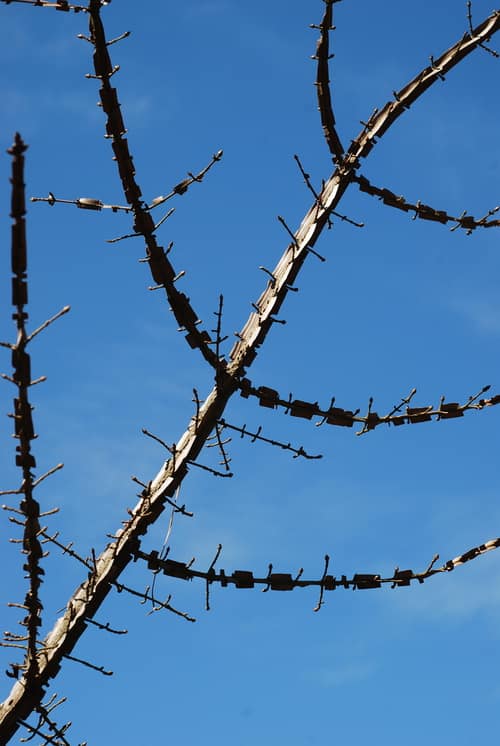
Close Relative (c) Douglas Goldman, some rights reserved (CC BY-SA), uploaded by Douglas Goldman · cc-by-sa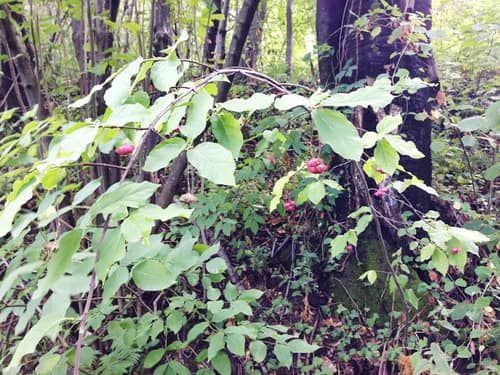
Close Relative (c) Vedran Lastovčić, some rights reserved (CC BY), uploaded by Vedran Lastovčić · cc-by
Help improve the field guideSomething wrong?
Checking your Fauna account…Report a name, category, or profile issue for review.