Also known as Bursting-heart, Hearts-a-bustin, American Strawberry Bush, Hearts-bustin'-with-love
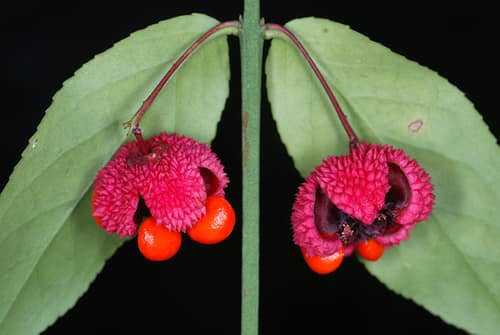
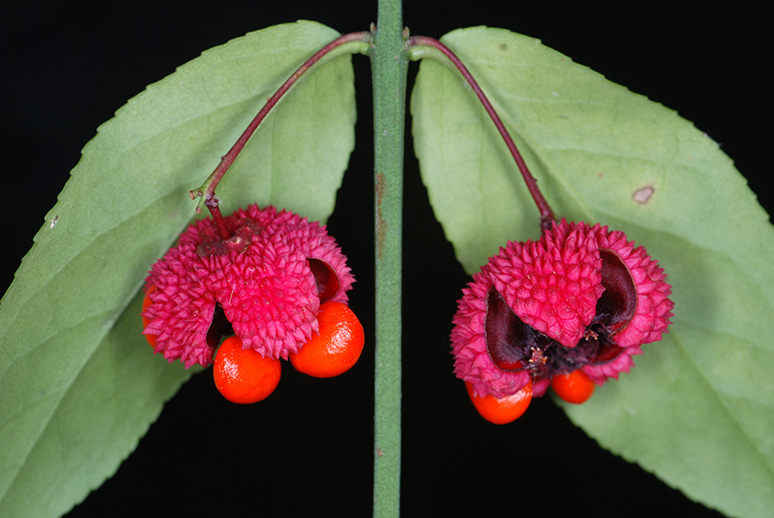
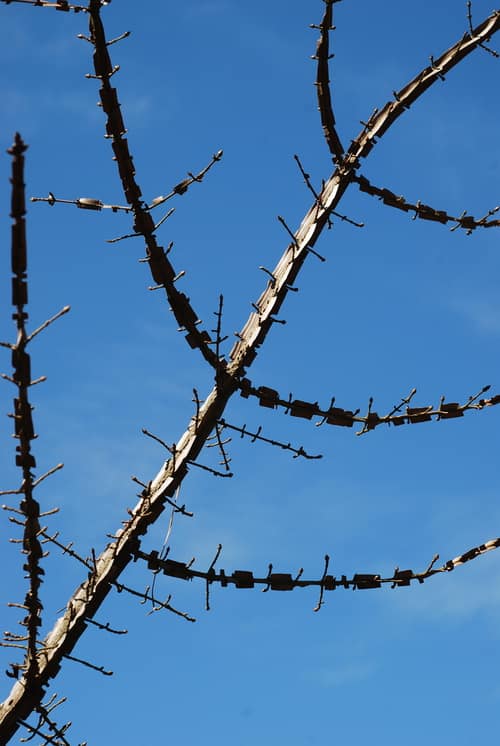
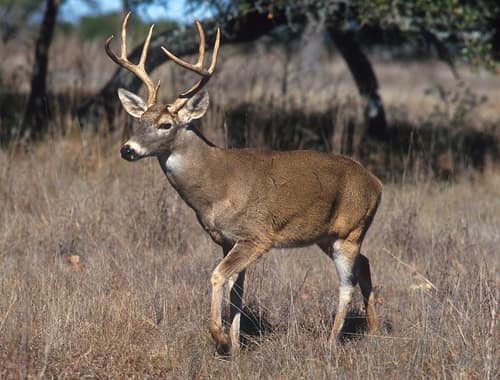
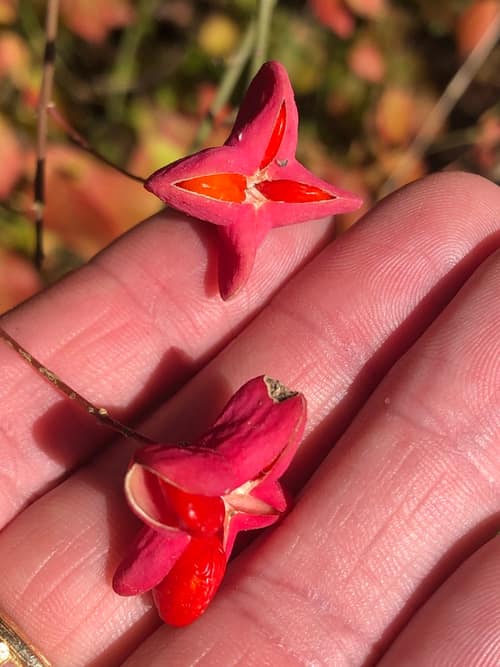
Strawberry bush is a slender deciduous understory shrub best known for its spectacular autumn display, when rough pinkish-red capsules split open to reveal dangling, bright scarlet-orange arils. Its distinctive green, four-angled twigs remain photosynthetic throughout winter, providing subtle woodland color long after leaves drop. Because white-tailed deer find the foliage irresistible, botanists often treat the presence of intact mature shrubs as a reliable indicator of low local deer density.
Wild berries have toxic look-alikes; seeds and bark contain toxic cardiac glycosides and must never be eaten.
Why it is dangerous
Seeds, leaves, and bark contain evonine and cardiac glycosides that cause severe vomiting, diarrhea, abdominal cramps, and irregular heart rhythms if swallowed.
How to recognize a risky encounter
Easily recognized in autumn by bumpy pink capsules splitting to reveal four to five fleshy scarlet-coated seeds.
What to do
Never sample the fruit, and keep pruned branches or fallen seeds away from curious pets and young children.
Responsible observation
Identification: Look for bright green four-sided twigs and tuberculate pink fruit in early autumn.
Cultivation: Plant in moist, rich soil under partial woodland shade for autumn color.
Wildlife Watching: Protect young stems with wire cages in areas with heavy deer pressure.