
Plant
Swamp Rosemallow
Hibiscus grandiflorusAlso known as Large-flowered Hibiscus, Velvet-leaf Rosemallow, Pink Swamp Hibiscus
Swamp Rosemallow rises tall above coastal marshes and lake margins, bearing velvety heart-shaped leaves and massive pale pink blossoms with deep crimson centers. Opening in the warmth of summer mornings, each flower lasts only a day but gives way to a continuous cycle of fresh blooms through early autumn. Its dense, shrubby stems create vital shelter for wetland birds while deep root systems help stabilize soggy shoreline soils.
WetlandShowy BloomNative Plant
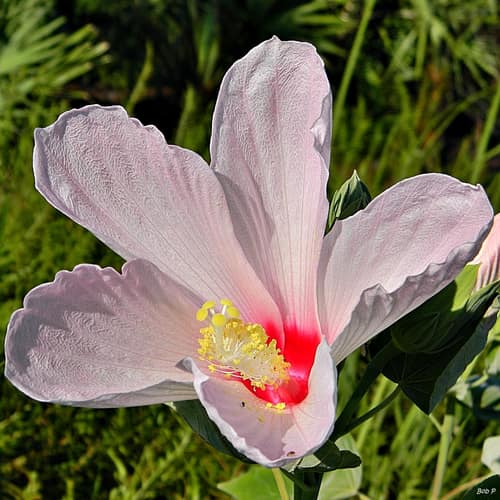
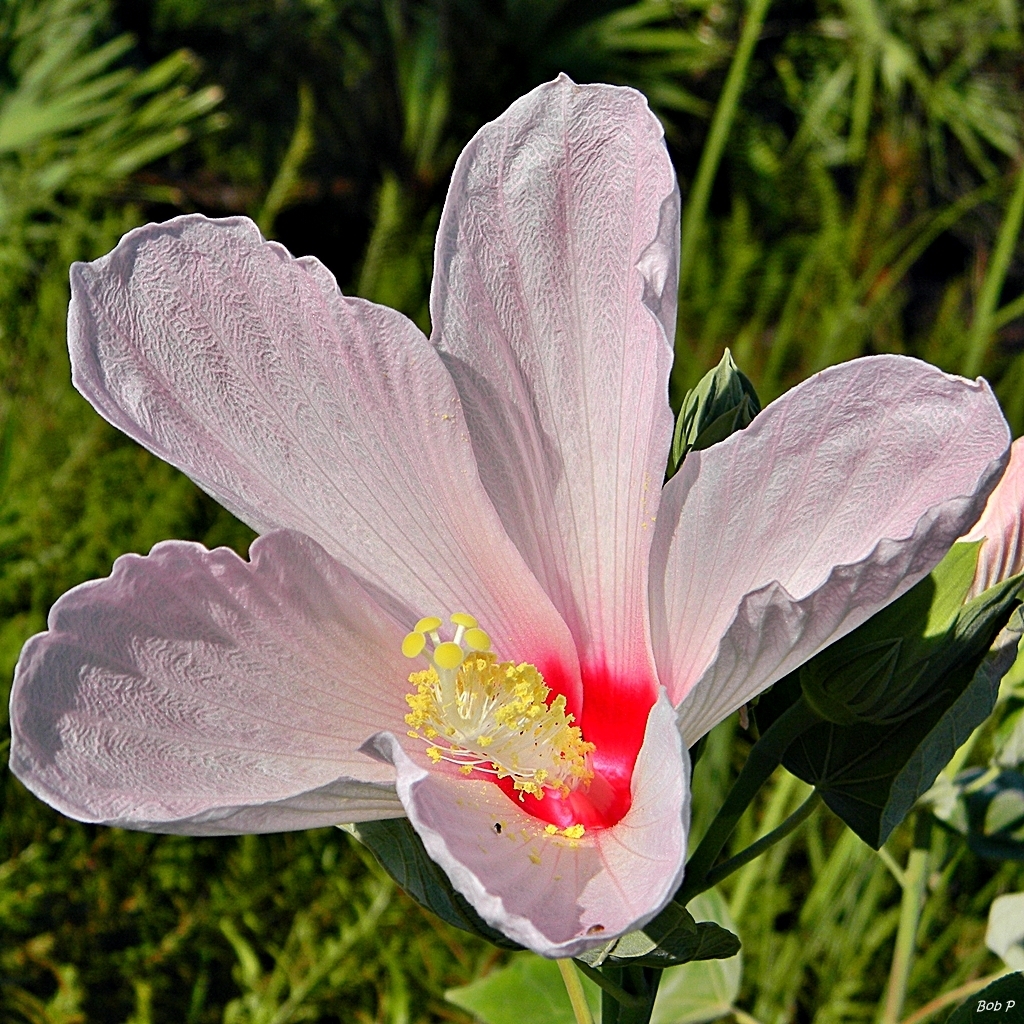
—observations
—countries
—peak records
Least ConcernConservation statusIUCN Red List categoriesLCNTVUENCREWEXLeast ConcernRed List categories, explained →
Diet & preySunlight, Water, Soil Nutrients
Predators
- Deer
- Rosemallow Sawfly Larvae
- Japanese Beetles
ThreatsWetland loss, invasive plant competition, coastal development
HabitatsTidal marshes, lake margins, wet pine savannas, cypress swamps
Life spanPerennial (10+ years)
Classification
- FamilyMalvaceae
- SpeciesHibiscus grandiflorus
Range data is not available yet.
Interaction riskLow
- Low
- Moderate
- High
- Very high
- Why interaction risk is low
- Safe to observe at a normal distance.
Responsible observation
- Timing: Look for newly expanded flowers opening during warm summer mornings.
- Gardening: Plant in full sun with constantly moist or wet soil for optimal growth.
- Wildlife Viewing: Watch quiet marsh edges for hummingbirds sipping nectar at peak bloom.
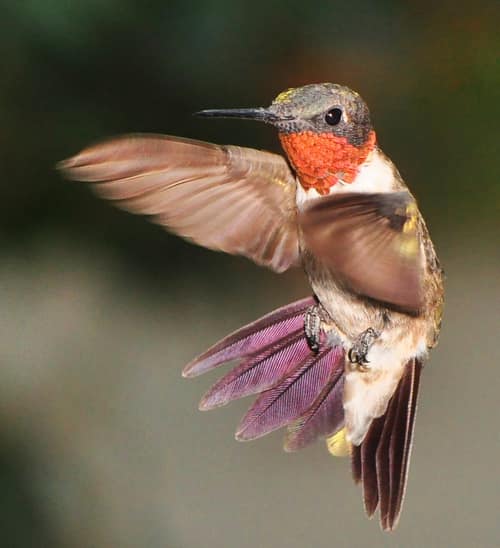
Pollinator jeffreyw / CC BY 2.0 · cc-by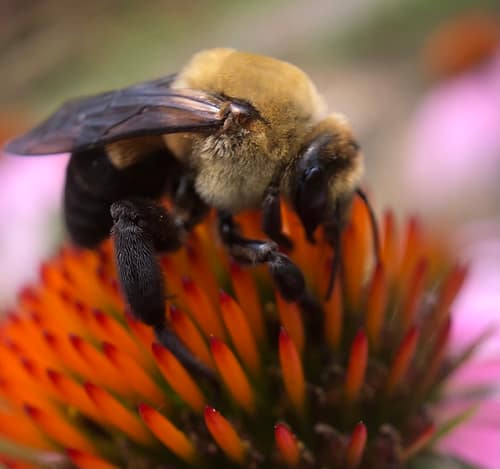
Pollinator (c) James Kindt, some rights reserved (CC BY), uploaded by James Kindt · cc-by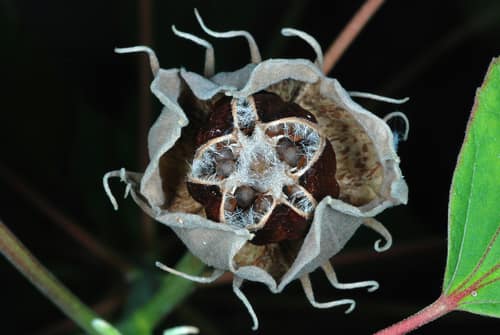
Close Relative (c) Douglas Goldman, some rights reserved (CC BY-SA), uploaded by Douglas Goldman · cc-by-sa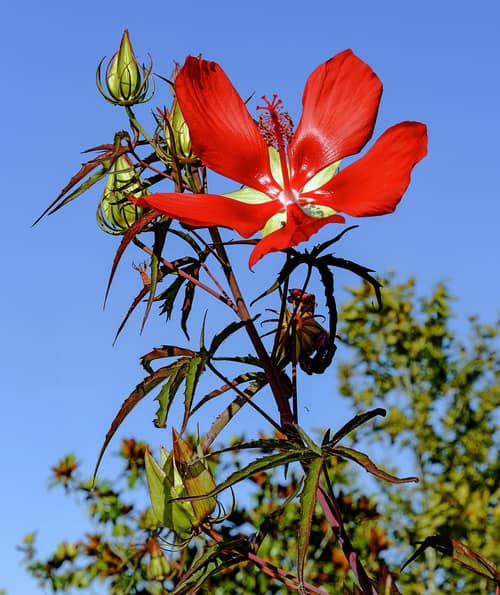
Close Relative Didier Descouens / CC BY-SA 4.0 · cc-by-sa
Help improve the field guideSomething wrong?
Checking your Fauna account…Report a name, category, or profile issue for review.