
Plant · GBIF taxon 3150933
Narrow-leaved Purple Coneflower
Echinacea angustifoliaAlso known as Narrow-leaved Coneflower, Blacksamson Echinacea
Narrow-leaved purple coneflower is a deep-rooted prairie perennial with bristly stems, narrow leaves, and drooping pink-purple rays around a prickly orange-brown disk. Its sturdy taproot helps established plants persist through drought and grassland fire.
Prairie PerennialComposite FlowerDeep Taproot
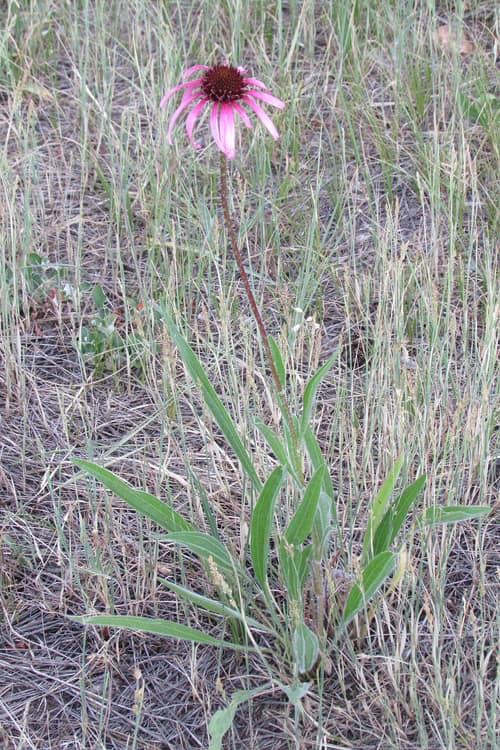
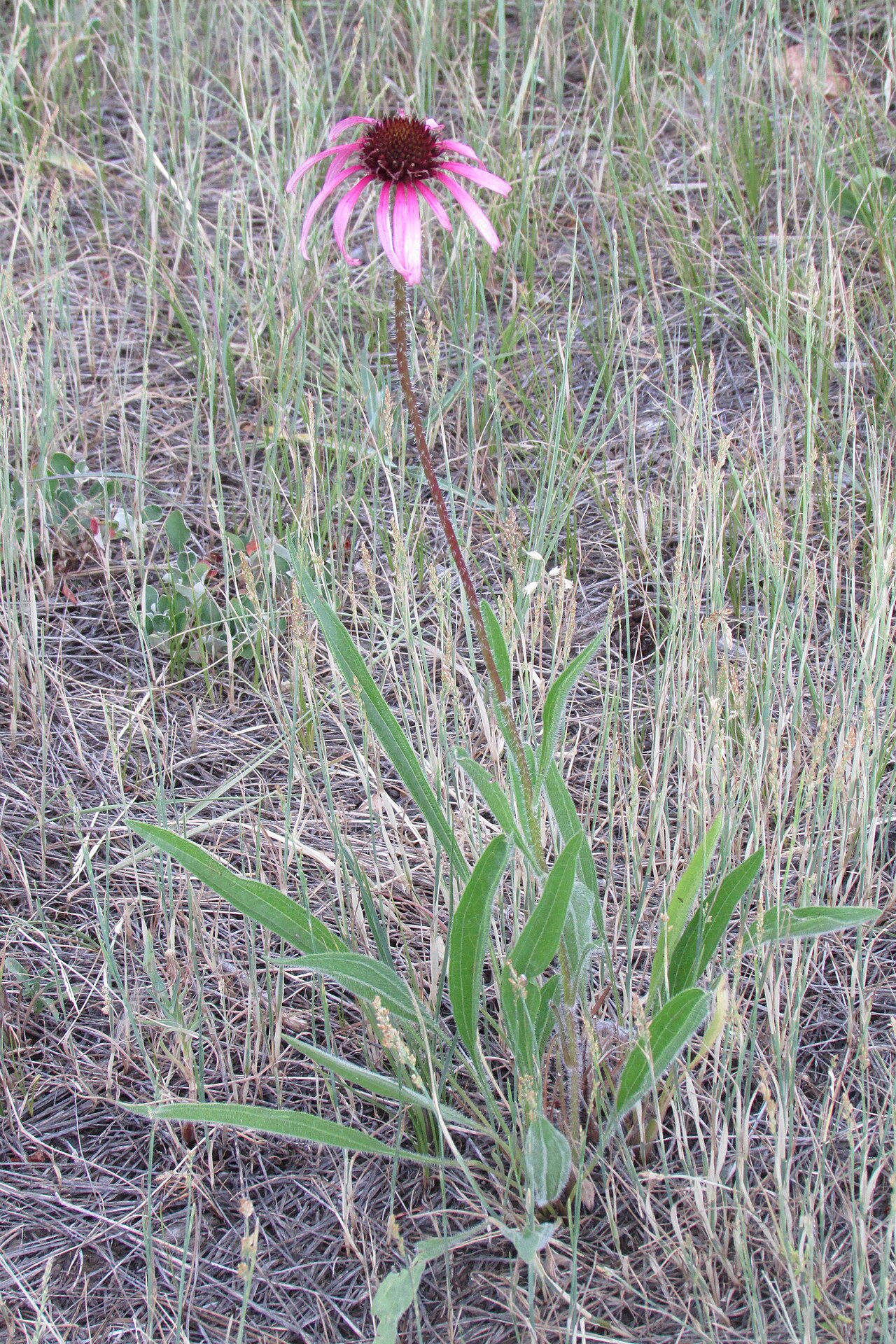
—observations
—countries
—peak records
Not EvaluatedConservation statusIUCN Red List categoriesLCNTVUENCREWEXNot Evaluated — not placed on the risk ladderRed List categories, explained →
Diet & prey
- Produces energy through photosynthesis while a deep taproot absorbs water and mineral nutrients
Predators
- White-tailed deer
- Cottontail rabbits
- Seed-eating finches
ThreatsPrairie conversion, herbicide drift, woody encroachment, excessive root harvest, and loss of natural fire patterns
HabitatsDry mixed-grass and tallgrass prairie, rocky hillsides, open plains, and sunny restoration fields
Life spanA long-lived perennial that can persist for many years from its woody rootstock
Size / weightNot available
Classification
- FamilyAsteraceae
- SpeciesEchinacea angustifolia
Range data is not available yet.
Interaction riskLow
- Low
- Moderate
- High
- Very high
- Why interaction risk is low
- Do not taste or collect roots and flowers from wild prairie populations.
Responsible observation
- Flowers: Look for narrow drooping rays around a raised bristly disk.
- Leaves: Check for narrow rough leaves rather than the broader leaves of garden coneflowers.
- Protect: Stay on durable ground and leave roots, seeds, and flower heads in place.
Help improve the field guideSomething wrong?
Checking your Fauna account…Report a name, category, or profile issue for review.