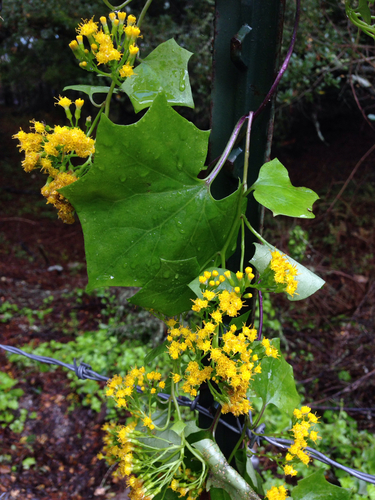
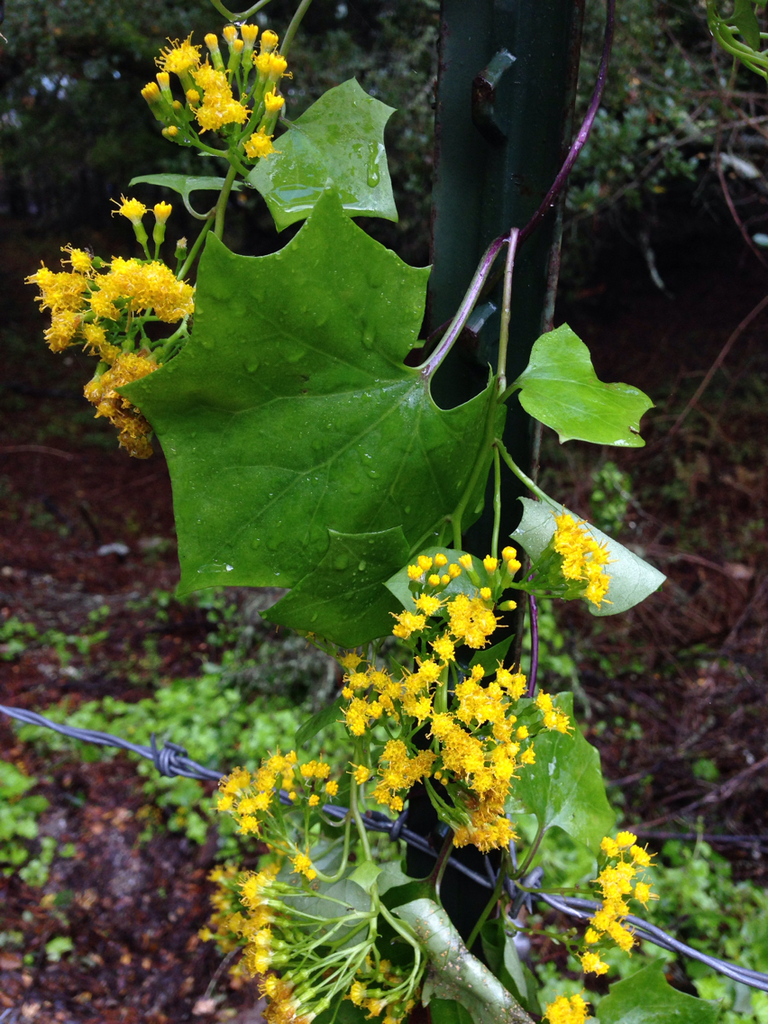
Cape-ivy is a vigorous succulent climbing vine that blankets forest understories and smothers canopy trees across temperate coastal regions. Bright green, glossy leaves resemble true ivy but feel distinctly fleshy and exude a mild scent when crushed. During winter months, terminal clusters of petal-less yellow disk florets appear, though the plant spreads most aggressively through fragmented stems that root at any node.
Toxic to dogs, cats, and livestock if ingested; safe to observe without touching.
Why it is dangerous
Foliage contains toxic pyrrolizidine alkaloids that cause severe hepatic necrosis and chronic liver disease in livestock and domestic pets.
How to recognize a risky encounter
Recognized by fleshy, 5- to 8-lobed ivy-shaped leaves, soft climbing green stems, and tight winter clusters of discoid yellow flowers lacking ray petals.
What to do
Keep pets away from patches and wash hands after handling damaged stems to avoid transferring bitter, toxic saps.
Responsible observation
Disposal: Bag all pulled fragments completely, as even tiny stem pieces root easily in damp soil.
Identification: Look for thin, twining stems and soft foliage without the woody bark or aerial rootlets of English ivy.

 1 / 7
1 / 7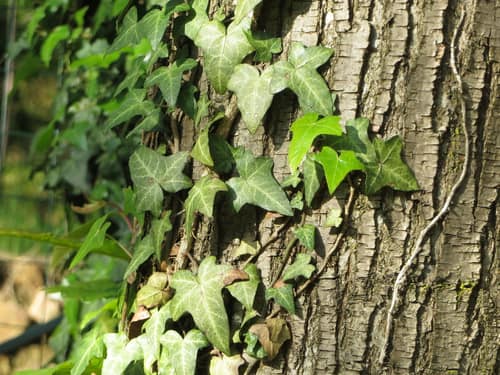
 Image unavailable