
Plant · GBIF taxon 3084036
Mistletoe Cactus
Rhipsalis bacciferaAlso known as Spaghetti Cactus, Coral Cactus
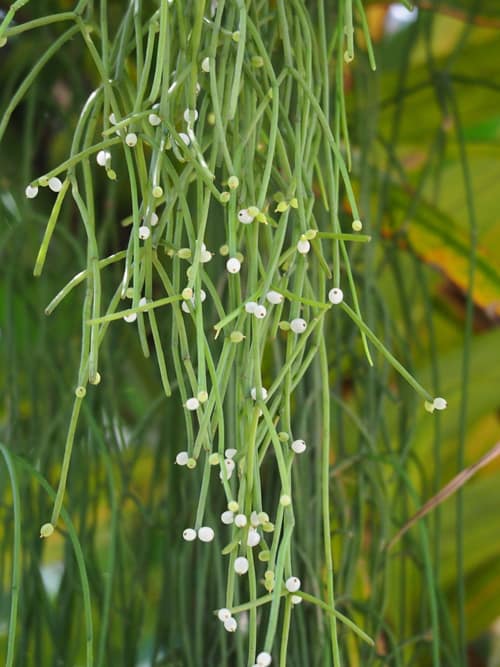
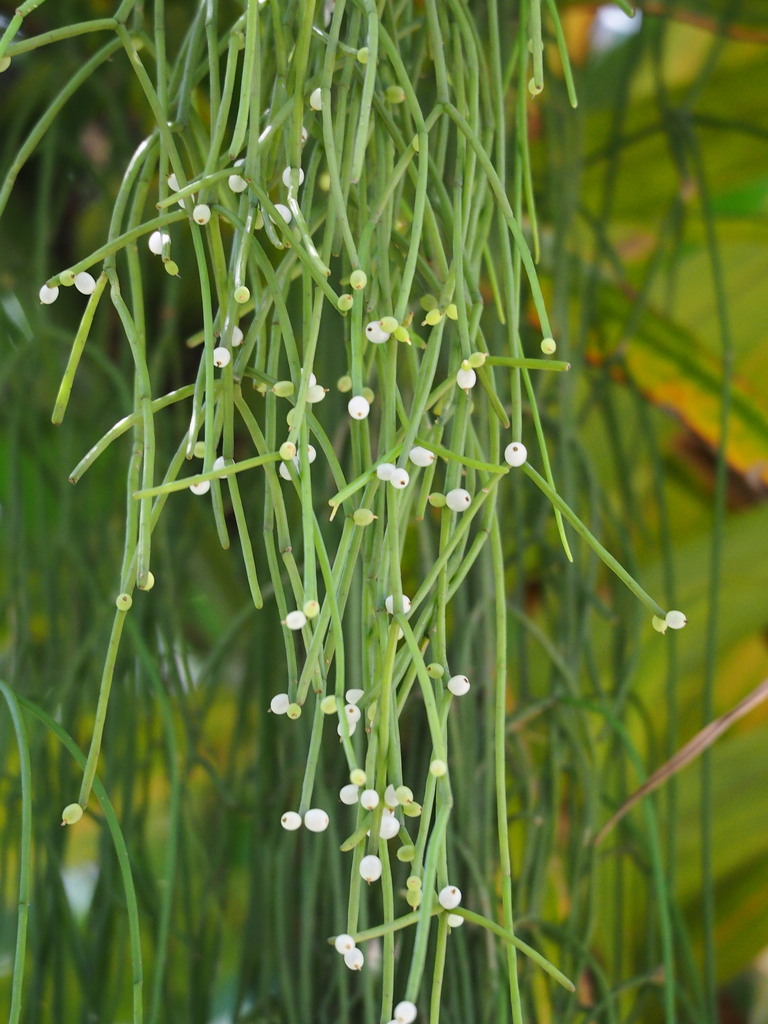
Mistletoe cactus grows as a pendant epiphyte, draping long cylindrical, thread-like stems from tree forks and rock crevices in warm, humid forests. Tiny greenish-white flowers bloom along its slender branching segments and develop into translucent, sticky white berries reminiscent of true mistletoe. It holds a unique biogeographical distinction as the only cactus species established natively outside the Americas, thriving across tropical Africa, Madagascar, and Sri Lanka.
EpiphyteSucculentPendant
—observations
—countries
—peak records
Least ConcernConservation statusIUCN Red List categoriesLCNTVUENCREWEXLeast ConcernRed List categories, explained →
Diet & prey
- Autotrophic (photosynthesis)
Predators
- Scale Insects
- Mealybugs
- Snails
ThreatsDeforestation, forest fragmentation, and overcollection for horticulture
HabitatsTropical rainforests, cloud forests, and subtropical humid hammocks
Life span10 to 30 years
Classification
- OrderCaryophyllales
- FamilyCactaceae
- GenusRhipsalis
- SpeciesRhipsalis baccifera
Range data is not available yet.
Interaction riskLow
- Low
- Moderate
- High
- Very high
- Why interaction risk is low
- Wild berries have toxic look-alikes; never eat based on app identification alone.
Responsible observation
- Field Spotting: Look up into humid forest canopies to spot dense pale-green curtains hanging from tree crotches.
- Cultivation Care: Grow in bright indirect light with well-draining epiphytic bark mix and regular humidity.
- Ethical Viewing: Leave wild specimens anchored to their host trees to protect mature forest ecosystems.
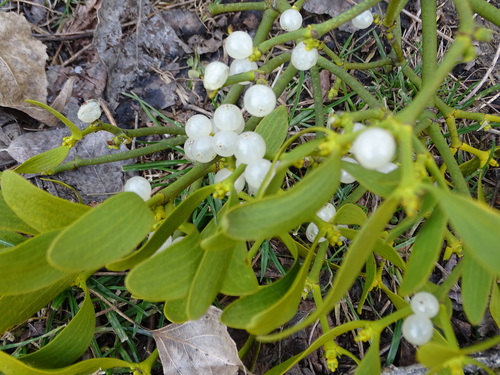
Look-alike (c) Patrick Hacker, some rights reserved (CC BY), uploaded by Patrick Hacker · cc-by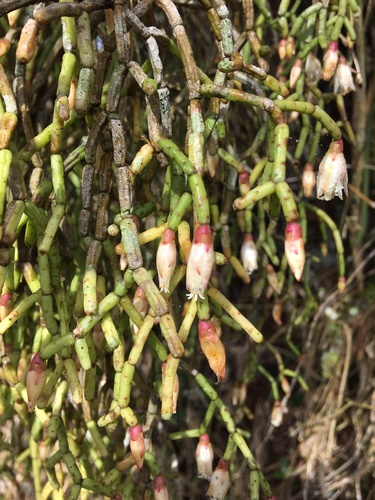
Close Relative (c) B. Phalan, some rights reserved (CC BY), uploaded by B. Phalan · cc-by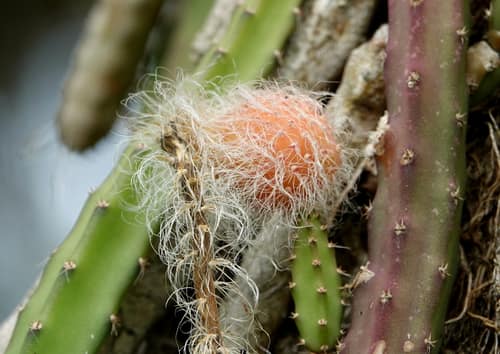
Same Family (c) Claire Herzog, some rights reserved (CC BY), uploaded by Claire Herzog · cc-by
Help improve the field guideSomething wrong?
Checking your Fauna account…Report a name, category, or profile issue for review.