Also known as Spicy Jatropha, Cotton-Leaved Jatropha, Fire-Cracker
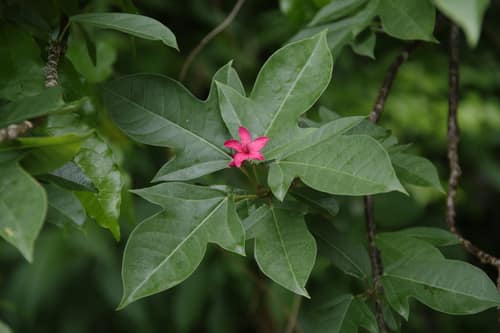
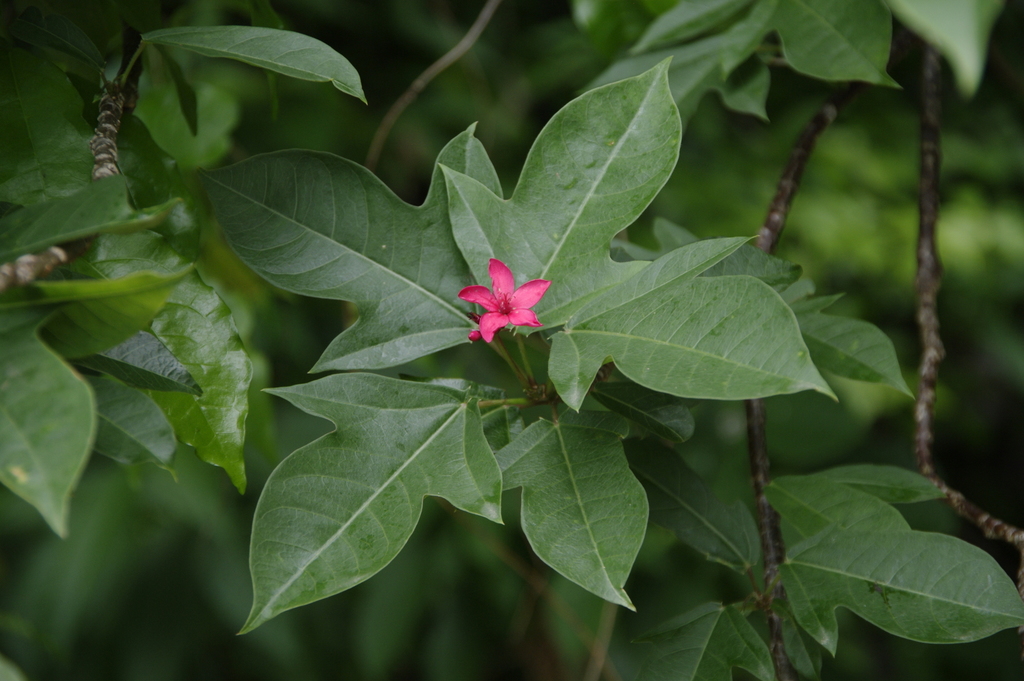
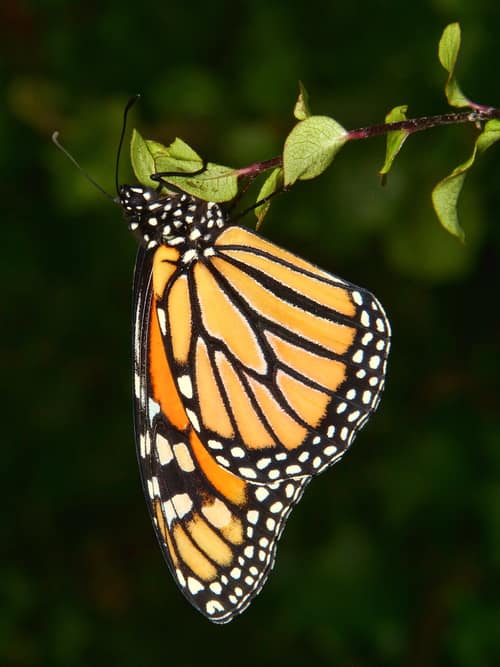
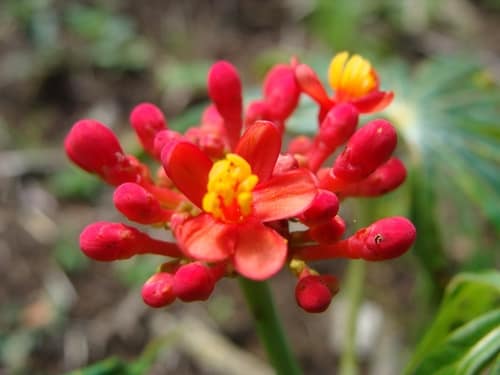
Peregrina is an evergreen shrub or small slender tree renowned for its clusters of vivid scarlet, star-shaped flowers that bloom almost continuously in warm climates. Native to Caribbean dry and coastal forests, it produces glossy, variable foliage ranging from fiddle-shaped to oval and pointed. Hummingbirds and butterflies visit the blossoms steadily throughout the day, while milky latex inside the stems defends the plant against severe insect herbivory.
Not EvaluatedConservation statusIUCN Red List categoriesLCNTVUENCREWEXNot Evaluated — not placed on the risk ladderRed List categories, explained →
Key facts
Diet & preyPhotosynthesis (autotroph)
Predators
Spider Mites
Scale Insects
Mealybugs
ThreatsHabitat loss from coastal development and competition with invasive weeds
HabitatsTropical dry forests, coastal thickets, and disturbed lowland scrub
Life span15–30 years
Classification
OrderMalpighiales
FamilyEuphorbiaceae
GenusJatropha
SpeciesJatropha integerrima
Range & activity
Range data is not available yet.
Safe observation
Interaction riskHigh
Low
Moderate
High
Very high
Why interaction risk is high
Contains toxic curcin and irritant sap; do not ingest any parts and avoid sap contact with skin.
Why it is dangerous
Contains toxic diterpene esters and toxic proteins that cause severe vomiting and gastrointestinal pain if eaten, while milky sap irritates eyes and skin.
How to recognize a risky encounter
Look for glossy multi-lobed or fiddle-shaped leaves, clusters of vivid red five-petaled flowers, and white milky sap when cut.
What to do
Do not touch broken stems with bare skin, wash contaminated tools immediately, and keep curious pets away from pruning debris.
Responsible observation
Viewing flowers: Observe the bright blossoms safely in sunny outdoor locations where butterflies gather.
Handling precautions: Wear protective gloves and wash hands promptly if pruning to avoid sap rashes.