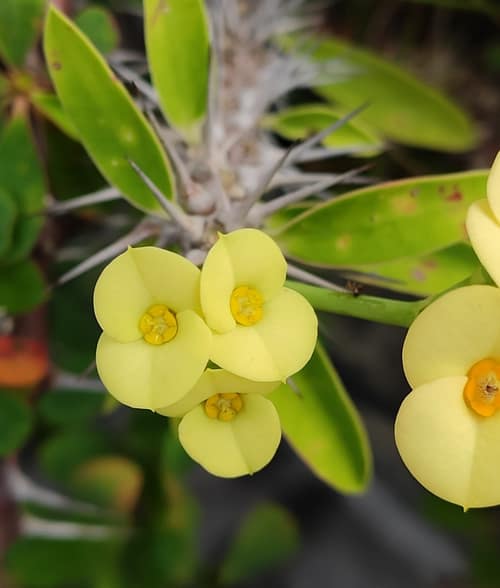
Also known as Dragon Bones, Candelabra Spurge, Milkstripe Euphorbia, False Cactus
Mottled spurge develops into an upright, candelabra-shaped shrub characterized by triangular stems marked with striking silvery-white central marbling and paired spines along scalloped ridges. When punctured or bruised, internal vascular canals rapidly exude copious milky latex packed with caustic esters that deter grazing animals. Widely grown across the tropics and indoors, crested cultivars produce wavy, convoluted fans that resemble colorful sea coral.
Data DeficientConservation statusIUCN Red List categoriesLCNTVUENCREWEXData Deficient — not placed on the risk ladderRed List categories, explained →
Key facts
Diet & preySunlight, Water, Soil Minerals
Predators
Scale Insects
Mealybugs
Spider Mites
ThreatsFreezing temperatures, overwatering in cultivation, and habitat degradation
HabitatsArid scrublands, dry rocky hillsides, and tropical deciduous forests
Life span30–60 years
Classification
OrderMalpighiales
FamilyEuphorbiaceae
GenusEuphorbia
SpeciesEuphorbia lactea
Range & activity
Range data is not available yet.
Safe observation
Interaction riskHigh
Low
Moderate
High
Very high
Why interaction risk is high
Milky sap causes painful skin blisters and severe eye damage; avoid all direct contact.
Why it is dangerous
Tissues contain highly caustic milky latex loaded with diterpene esters that trigger painful skin blistering and severe eye inflammation or temporary blindness upon contact.
How to recognize a risky encounter
Look for three-winged succulent green stems with creamy white central marbling and pairs of short, dark spines along the wavy margins.
What to do
Never touch broken stems without rubber gloves and eye protection; wash exposed skin immediately with cold water and mild soap.
Responsible observation
Protective Wear: Wear thick nitrile gloves and eye protection whenever handling or trimming branches to guard against pressurized sap.
Landscape Placement: Keep well away from garden walkways and out of reach of curious dogs and cats.
Propagation Strategy: Allow freshly severed stem cuttings to dry and callus in dry shade for one week before potting.


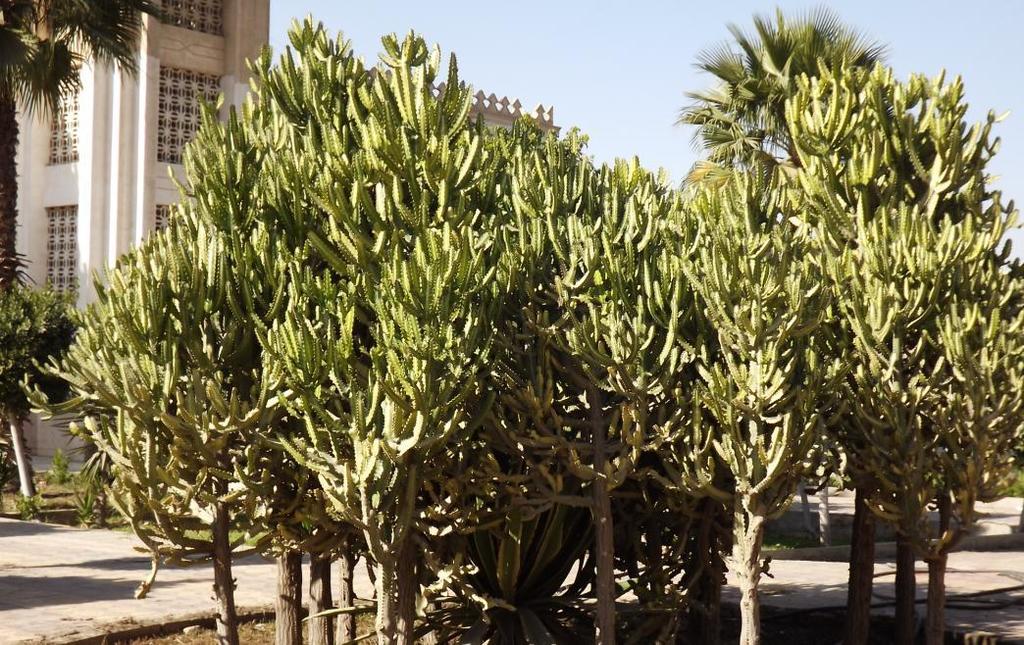
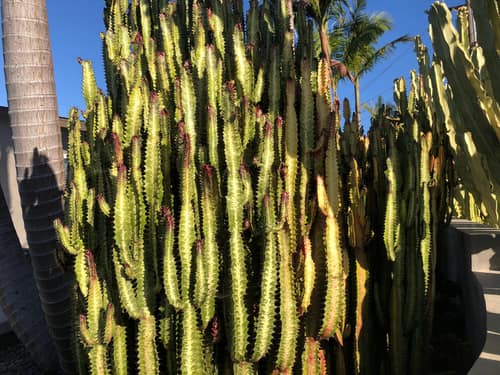
 Image unavailable