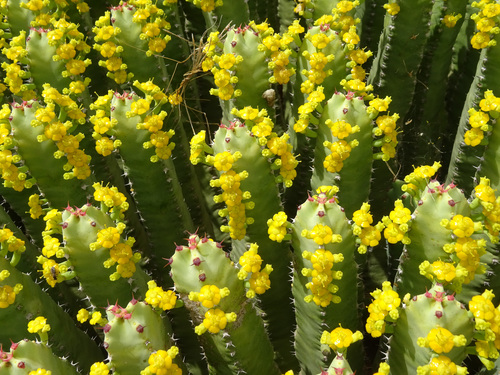
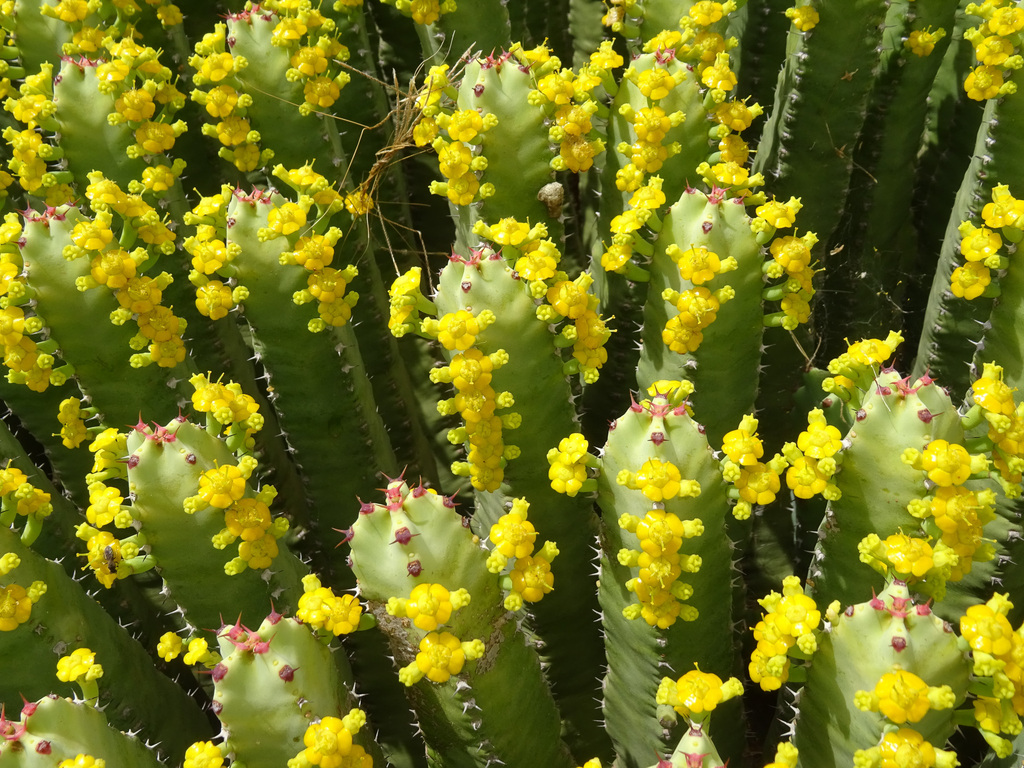
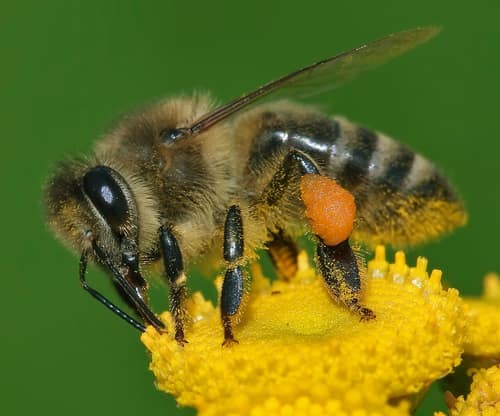
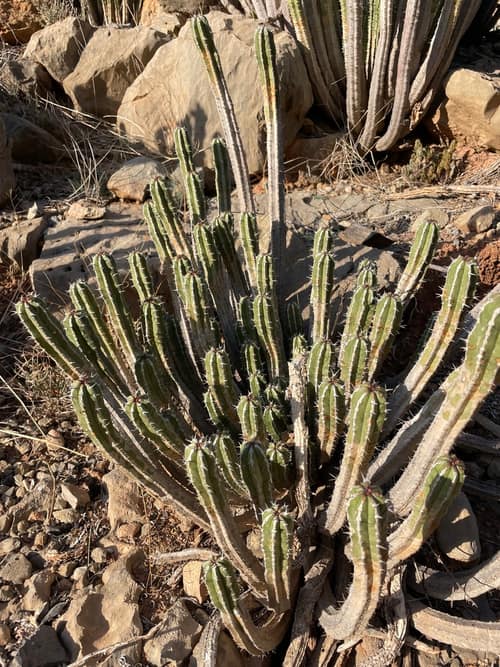
Resin spurge is a cactus-like succulent shrub forming dense, rounded cushions of four-angled, spiny blue-green stems across rocky slopes of Morocco's Atlas Mountains. Tiny yellow-green flowers bloom along the upper stem ridges in spring and summer, attracting bees that produce a distinctive peppery honey. When bruised or cut, the stems exude a milky white latex rich in resiniferatoxin, a compound far more potent than capsaicin that deters browsing herbivores.
ThreatsOverharvesting for traditional medicine, habitat degradation, and grazing pressure
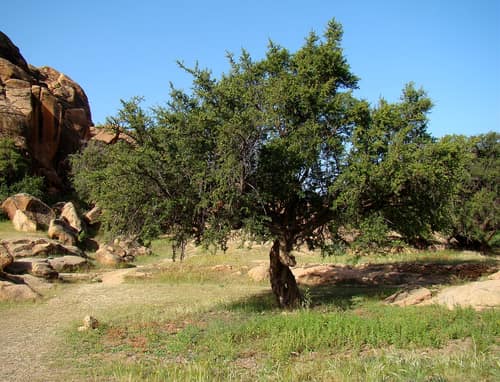
HabitatsArid rocky limestone slopes and scrublands of the Atlas Mountains in Morocco
Life spanSeveral decades in the wild
Classification
OrderMalpighiales
FamilyEuphorbiaceae
GenusEuphorbia
SpeciesEuphorbia resinifera
Range & activity
Range data is not available yet.
Safe observation
Interaction riskHigh
Low
Moderate
High
Very high
Why interaction risk is high
Milky sap causes severe skin, eye, and digestive irritation; admire from a safe distance without touching.
Why it is dangerous
The milky latex contains resiniferatoxin, an extreme capsaicin analog that triggers intense neurogenic inflammation, skin blistering, and severe gastrointestinal distress if swallowed.
How to recognize a risky encounter
Forms dense, mounding cushions of leafless, four-angled blue-green stems lined with pairs of short brown spines along the ridges.
What to do
Keep hands, pets, and children away from broken stems; if sap contacts skin or eyes, flush immediately with plenty of water and seek medical care.
Responsible observation
Sap Safety: Never break stems or touch the milky white latex, which burns skin and eyes.
Spines: Wear thick protective gloves if handling cultivated specimens to avoid sharp paired thorns.
Observation: Photograph the geometric four-angled stems and tiny spring flowers from a comfortable distance.