
Flower
Snow-on-the-prairie
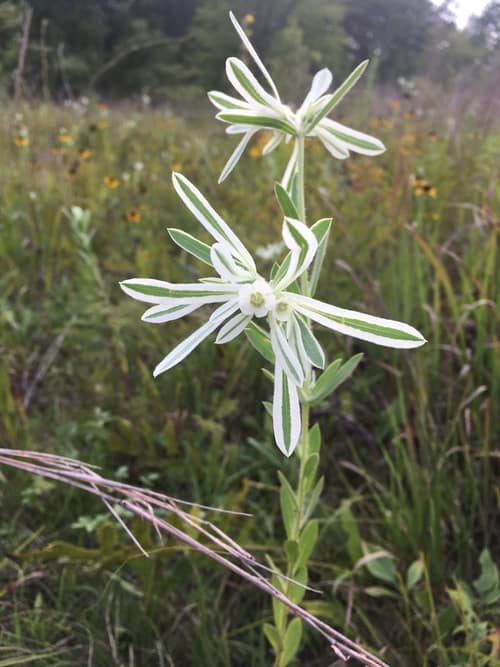
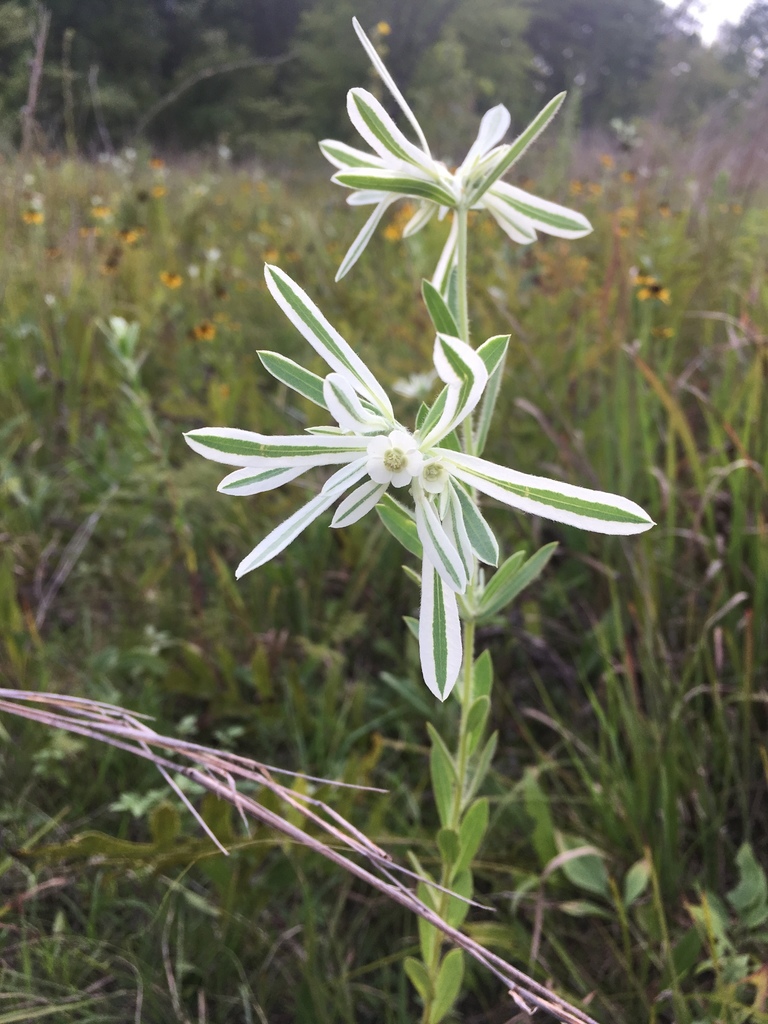
Euphorbia bicolorSnow-on-the-prairie paints late-summer grasslands in bright shades of cream and green when its upper leaves and floral bracts develop broad, vivid white margins. Clusters of tiny, nectar-rich cyathia attract a lively variety of native bees, wasps, and beetles during the hottest weeks of the year. Like many members of its genus, it defends itself against herbivory by weeping a caustic, milky white latex whenever stems are broken.
WildflowerPrairieLate Bloomer
—observations
—countries
—peak records
Not EvaluatedConservation statusIUCN Red List categoriesLCNTVUENCREWEXNot Evaluated — not placed on the risk ladderRed List categories, explained →
Diet & preySunlight, Water, Soil nutrients
ThreatsHabitat conversion, intensive mowing before seed set, and overgrazing
HabitatsPrairies, rangelands, pastures, roadsides, and open woodland margins with heavy clay soils
Life spanAnnual (1 growing season)
Classification
- OrderMalpighiales
- FamilyEuphorbiaceae
- GenusEuphorbia
- SpeciesEuphorbia bicolor
Range data is not available yet.
Interaction riskHigh
- Low
- Moderate
- High
- Very high
- Why interaction risk is high
- Milky sap irritates skin and eyes and is toxic if ingested; admire without breaking stems.
- Why it is dangerous
- Milky latex sap contains diterpene esters that cause blistering skin irritation, corneal inflammation, and gastrointestinal distress if ingested.
- How to recognize a risky encounter
- Recognizable by upright, leafy stems capped with dense clusters of narrow bracts edged boldly in bright white.
- What to do
- Avoid picking stems or crushing foliage, and immediately wash skin with soapy water if latex contact occurs.
Responsible observation
- Photography: Best photographed in morning light during August and September when white floral bracts peak.
- Handling: Wear protective gardening gloves if removing plants to avoid corrosive milky sap contacting skin.
- Pasture management: Keep grazing livestock away from dense stands, as grazing animals can suffer mouth sores.
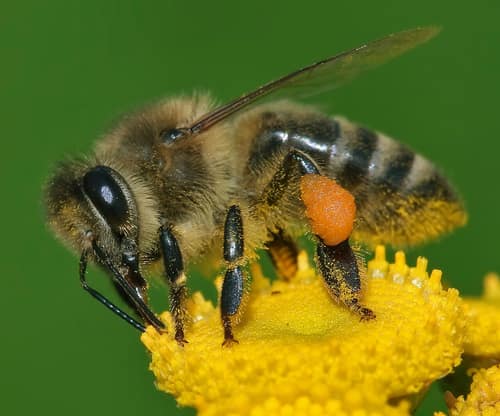
Pollinator Andreas Trepte / CC BY-SA 2.5 · cc-by-sa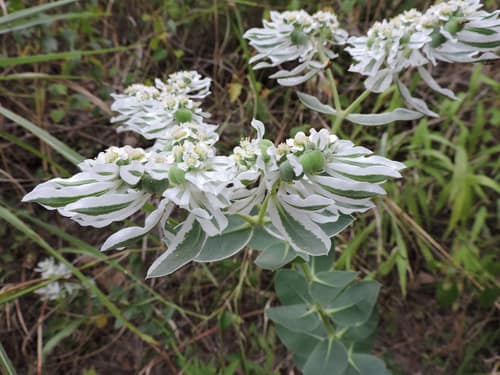
Close Relative (c) Sam Kieschnick, some rights reserved (CC BY), uploaded by Sam Kieschnick · cc-by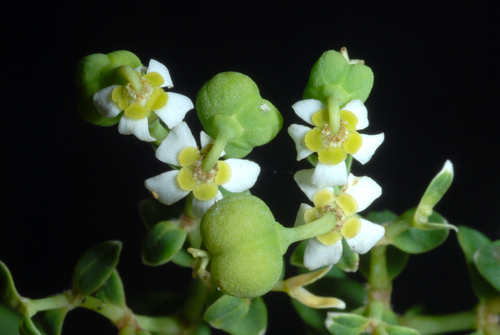
Close Relative (c) Douglas Goldman, some rights reserved (CC BY-SA), uploaded by Douglas Goldman · cc-by-sa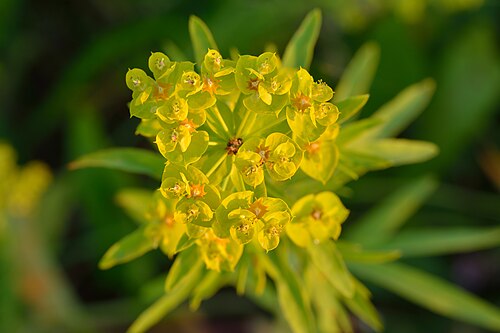
Close Relative Ivar Leidus / CC BY-SA 3.0 · cc-by-sa
Help improve the field guideSomething wrong?
Checking your Fauna account…Report a name, category, or profile issue for review.