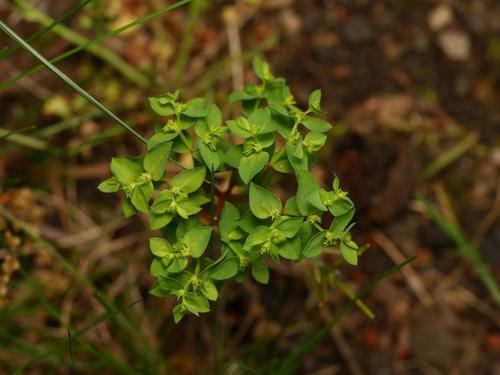
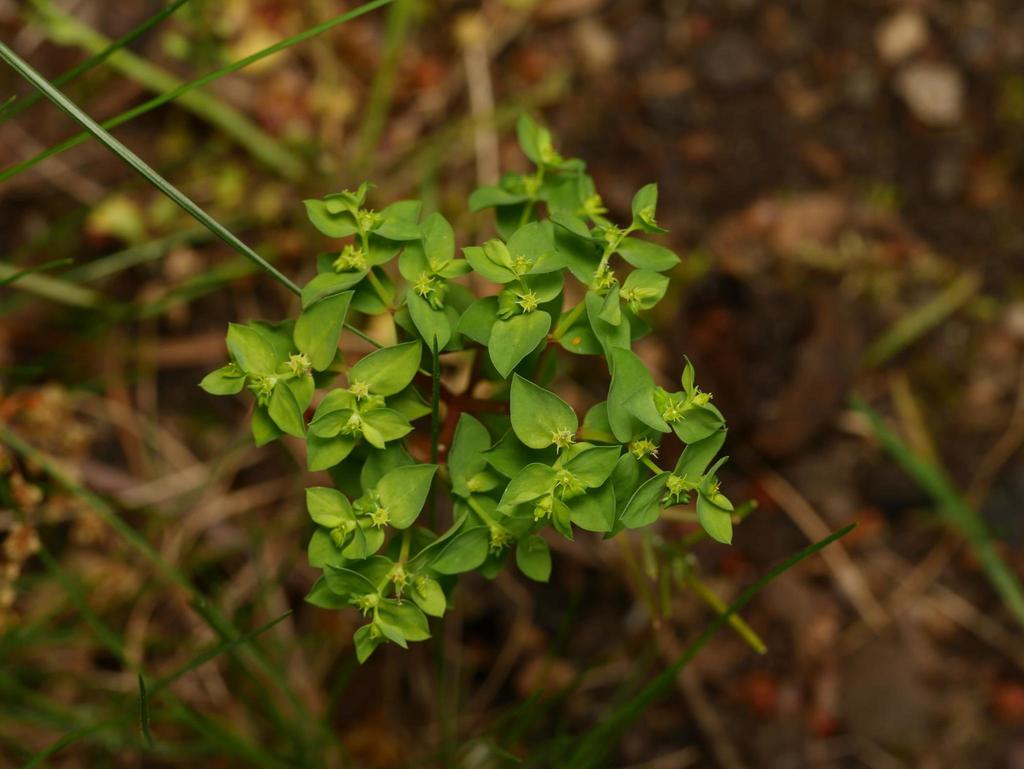
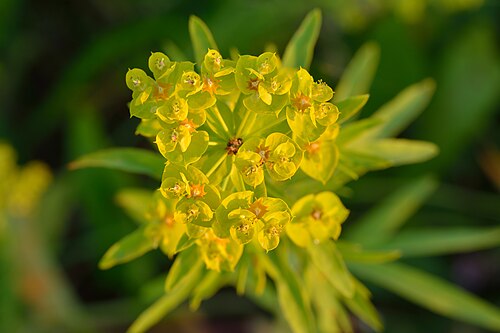
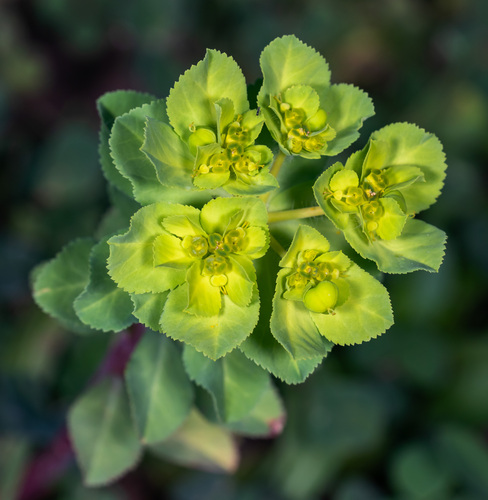
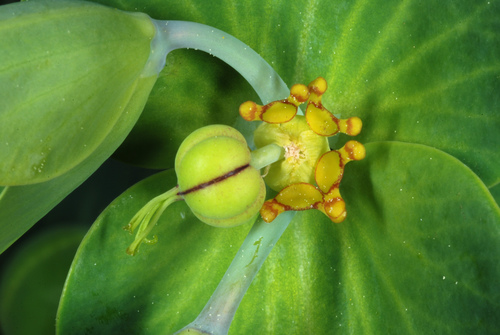
Petty spurge is a delicate, pale-green annual weed common in disturbed ground, flowerbeds, and vegetable gardens. Its small greenish-yellow cyathia, or false flowers, produce tiny three-valved capsule fruits that split explosively to disperse seeds across garden plots. When stems or leaves break, the plant immediately bleeds a bitter, caustic white latex loaded with diterpene esters designed to deter grazing insects and herbivores.
Produces acrid milky latex that blisters skin and irritates eyes; wear gloves when weeding.
Why it is dangerous
The milky white latex contains ingenol mebutate and related diterpene esters, which cause severe chemical dermatitis, blistering, and intense eye inflammation.
How to recognize a risky encounter
Look for a smooth, pale-green erect stem that branches near the top into a three-rayed umbel and exudes sticky white milk when torn.
What to do
Do not touch broken stems with bare hands; if sap gets on skin, wash immediately with cool water and mild soap.
Responsible observation
Wear Gloves: Always wear protective garden gloves when hand-pulling to prevent sap from contacting skin.
Eye Protection: Avoid touching your face or eyes after brushing against or snapping stems.
Root Removal: Pull gently from the soil base before seed capsules mature to prevent rapid spread.