Also known as Blue Spurge, Broad-Leaved Glaucous-Spurge, Creeping Spurge
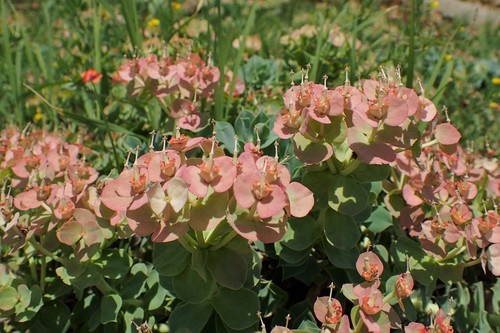
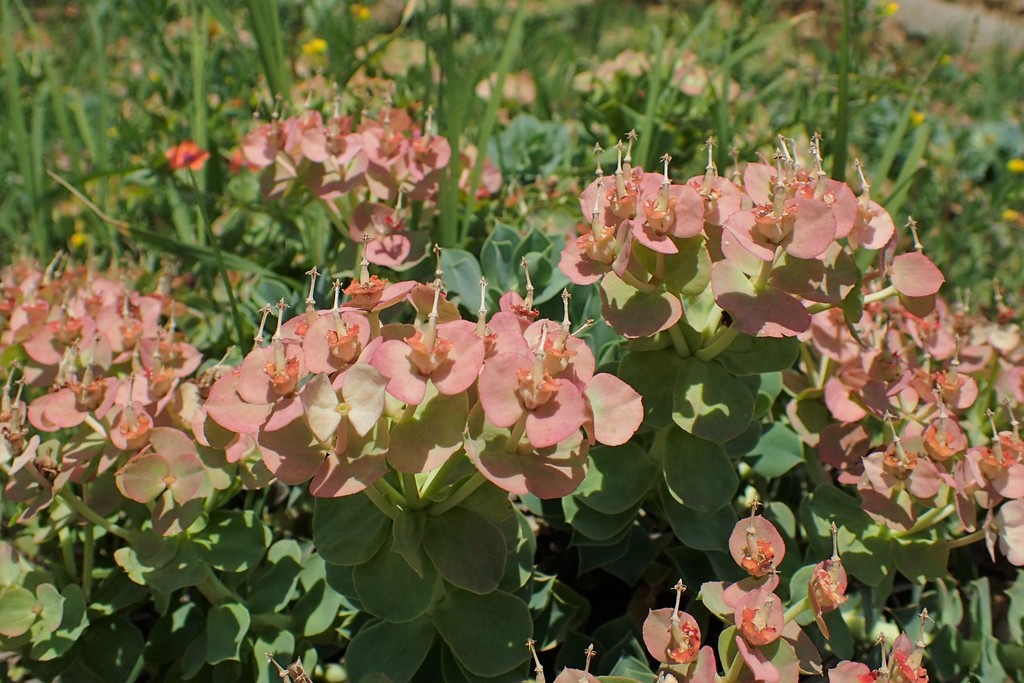
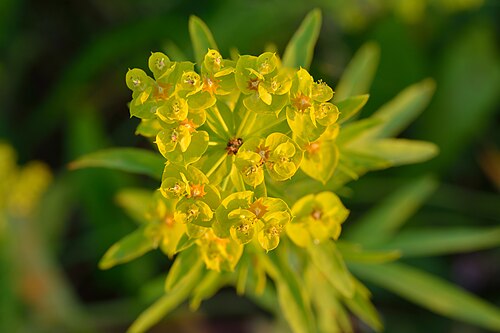
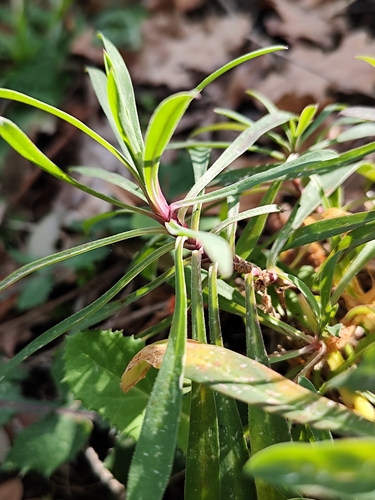
Myrtle spurge features sprawling, trailing stems wrapped in dense spirals of succulent, powder-blue leaves. Bright yellow-green floral bracts top the stem tips in early spring, attracting early pollinators while producing a high-pressure explosive seed discharge. Originally cultivated for rock gardens, its caustic milky sap deters herbivores, allowing it to escape cultivation and invade dry, rocky hillsides.
Milky latex sap causes severe skin blistering and eye damage; wear heavy gloves and eye protection.
Why it is dangerous
Contains caustic milky latex rich in diterpene esters that cause painful skin blistering, severe eye damage or temporary blindness, and intense gastrointestinal distress if swallowed.
How to recognize a risky encounter
Look for trailing stems clad in tight spirals of fleshy, blue-grey leaves crowned by bright yellow-green spring bracts.
What to do
Wear heavy chemical-resistant gloves and eye protection when pulling plants, and wash exposed skin immediately with cold soap and water.
Responsible observation
Protective gear: Always wear heavy gloves, long sleeves, and safety goggles before touching or pulling this plant.
Disposal method: Bag up pulled plants completely and avoid burning them, as toxic sap smoke irritates lungs.
Safe viewing: Observe the striking geometric leaf spirals from a safe distance without snapping the stems.