
Flower
European Searocket
Cakile maritimaAlso known as Sea Rocket, European Sea-Rocket, Common Sea Rocket
European searocket colonizes upper beach driftlines and sandy dunes, where few other plants can survive the salt spray and shifting sands. Thick succulent leaves store fresh water while small pale lavender or white blossoms attract pollinators throughout the warm summer months. Its segmented corky seed pods break apart and float across ocean currents, establishing new colonies along distant shorelines.
CoastalSucculentBeach Dweller
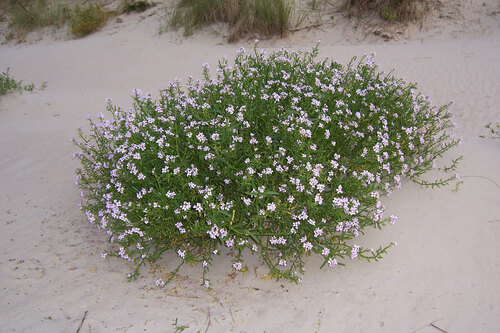
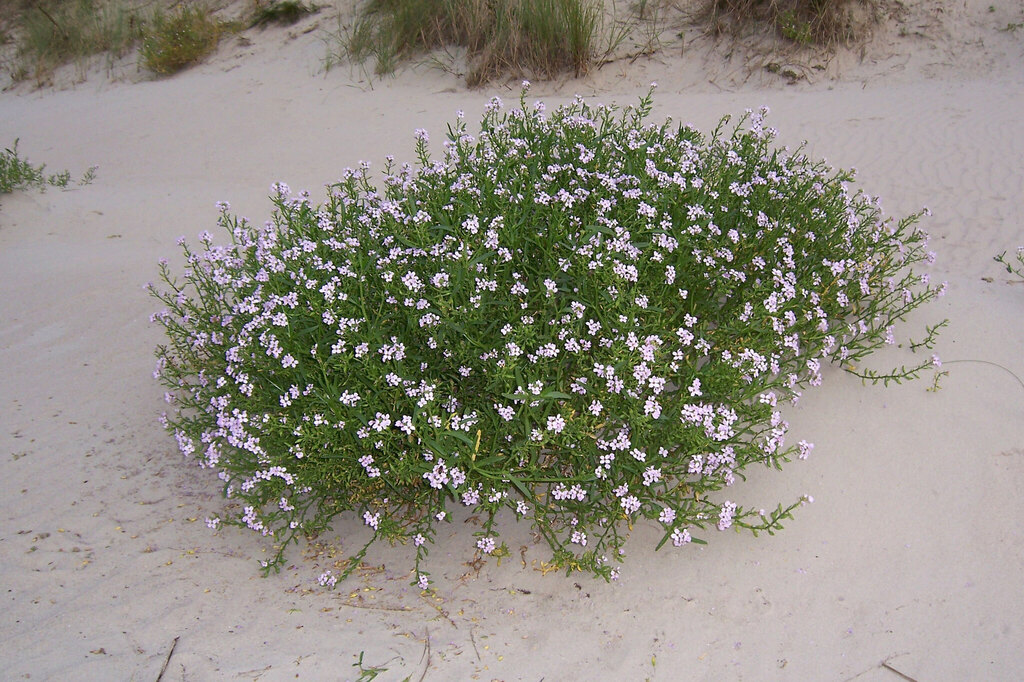
—observations
—countries
—peak records
Least ConcernConservation statusIUCN Red List categoriesLCNTVUENCREWEXLeast ConcernRed List categories, explained →
Diet & preySunlight, Water, Soil Minerals
Predators
- Coastal Herbivores
- Beach Beetles
- Aphids
ThreatsCoastal development, shoreline stabilization, beach grooming
HabitatsCoastal dunes, sandy beaches, maritime bluffs, strandlines
Life spanAnnual (1 year)
Classification
- OrderBrassicales
- FamilyBrassicaceae
- GenusCakile
- SpeciesCakile maritima
Range data is not available yet.
Interaction riskLow
- Low
- Moderate
- High
- Very high
- Why interaction risk is low
- Safe to observe at a normal distance.
Responsible observation
- Observation: Look for fleshy leaves and four-petaled lavender flowers along upper driftlines.
- Habitat Respect: Stay on established coastal paths to avoid eroding fragile sand dunes.
- Identification: Examine the corky two-jointed fruits designed to float away in seawater.
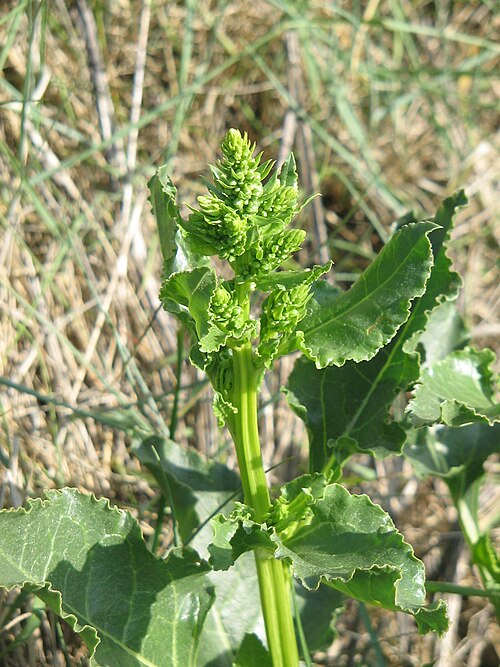
Co-Habitant Meneerke bloem / CC BY-SA 3.0 · cc-by-sa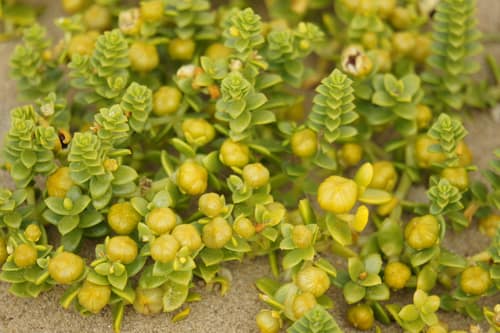
Co-Habitant (c) Alex Press, some rights reserved (CC BY), uploaded by Alex Press · cc-by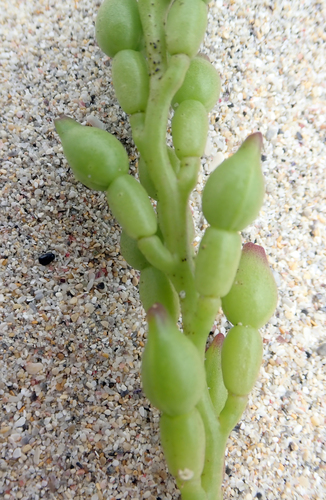
Close Relative no rights reserved, uploaded by Peter de Lange · cc0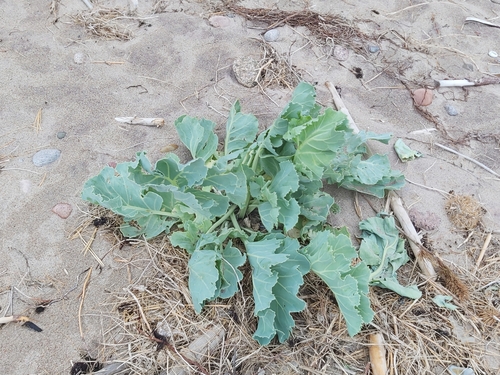
Family Relative no rights reserved · cc0
Help improve the field guideSomething wrong?
Checking your Fauna account…Report a name, category, or profile issue for review.