
Plant · GBIF taxon 3039491
Common Buckthorn
Rhamnus catharticaAlso known as European Buckthorn, Purging Buckthorn
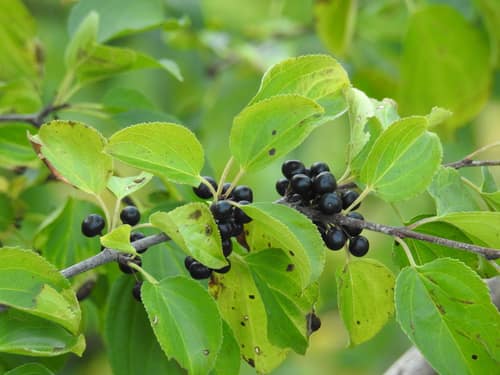
Common buckthorn forms dense thickets that leaf out early in spring and hold green foliage late into autumn, effectively shading out native wildflowers and tree seedlings. Its dark purple fruits contain a potent laxative compound that forces birds to disperse seeds rapidly before digesting them fully. Sharp spine-tipped twigs and aggressive stump-sprouting make established infestations remarkably difficult to eradicate.
InvasiveWoody PlantDeciduous
—observations
—countries
—peak records
Least ConcernConservation statusIUCN Red List categoriesLCNTVUENCREWEXLeast ConcernRed List categories, explained →
Diet & prey
- Sunlight
- Water
- Soil nutrients
Predators
- Birds (seed dispersers)
- Small mammals
- Caterpillars
ThreatsMinimal natural threats in introduced range; managed through herbicide and pulling
HabitatsDeciduous forests, woodland edges, open fields, disturbed sites
Life spanUp to 50 years
Size / weightNot available
Classification
- OrderRosales
- FamilyRhamnaceae
- GenusRhamnus
- SpeciesRhamnus cathartica
Range data is not available yet.
Interaction riskHigh
- Low
- Moderate
- High
- Very high
- Why interaction risk is high
- Wild berries have toxic look-alikes and buckthorn fruits cause severe stomach cramps; never ingest any part.
- Why it is dangerous
- Berries and bark contain anthraquinone glycosides that cause severe gastrointestinal distress, vomiting, and cramps if eaten.
- How to recognize a risky encounter
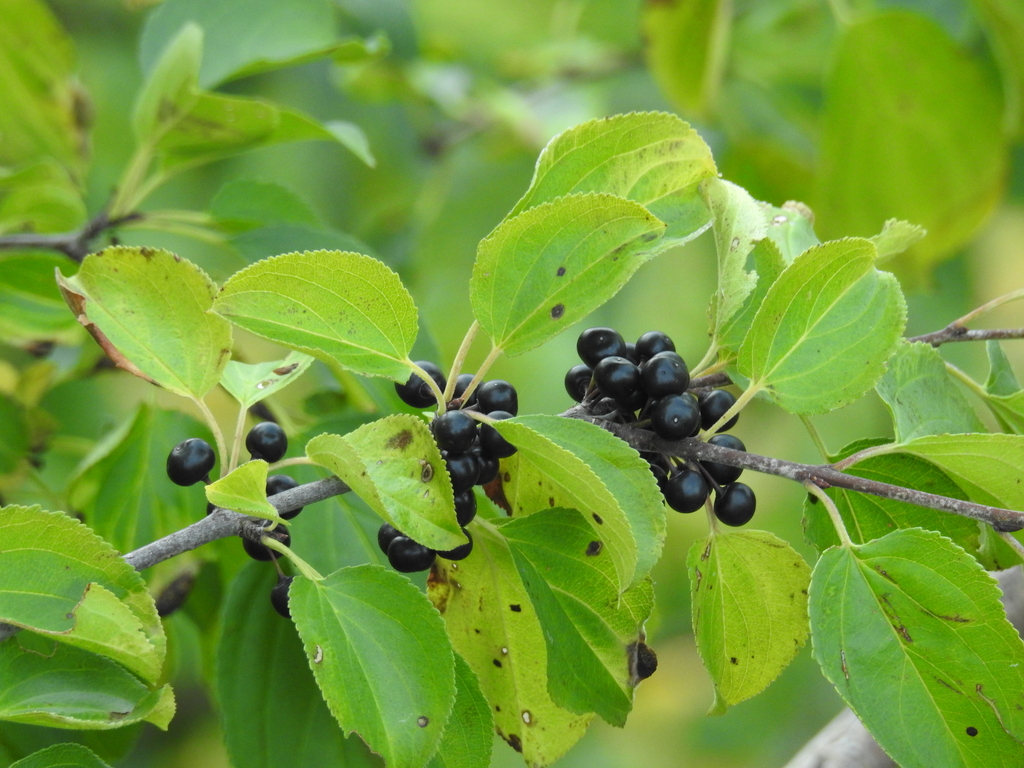
- Recognized by egg-shaped leaves with distinct curved veins, spine-tipped twigs, and clusters of black berries.
- What to do
- Wear heavy work gloves to protect hands from sharp twig tips and avoid consuming any wild berries.
Responsible observation
- Identification: Look for dark purple berries and twig tips ending in tiny sharp spines.
- Management: Pull young saplings in moist soil or treat cut stumps to block re-sprouting.
- Observation: Look for yellowing leaves in late autumn when native trees have shed.
 Image unavailable
Insect Host 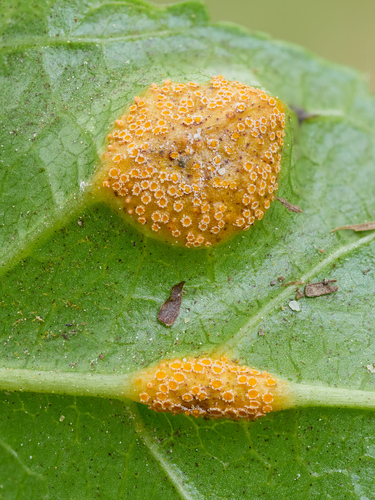
Fungal Host (c) Justin Paulin, some rights reserved (CC BY), uploaded by Justin Paulin · cc-by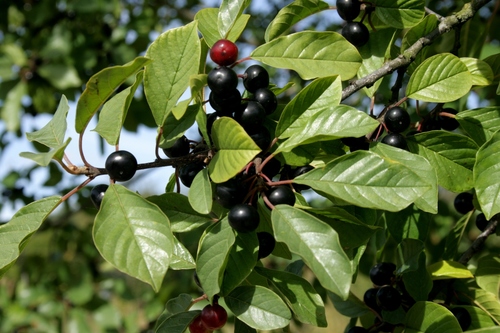
Close Relative (c) Sten Porse, some rights reserved (CC BY-SA) · cc-by-sa
Help improve the field guideSomething wrong?
Checking your Fauna account…Report a name, category, or profile issue for review.