
Plant
Autumn Olive
Elaeagnus umbellataAlso known as Japanese Silverberry, Umbellata Oleaster, Autumn Elaeagnus, Spreading Oleaster
Autumn olive forms dense, arching thickets characterized by leaves with shimmering silver undersides and pale yellow fragrant flowers in spring. Abundant silver-speckled red berries ripen in late summer, attracting birds that spread seeds across open landscapes. Specialized root nodules fix atmospheric nitrogen, allowing this shrub to thrive in barren soils where it rapidly outcompetes native flora.
InvasiveDeciduousNitrogen-Fixer
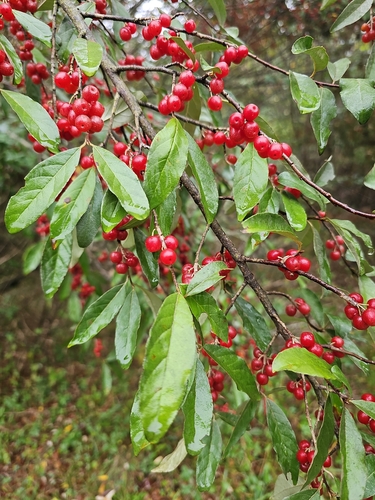
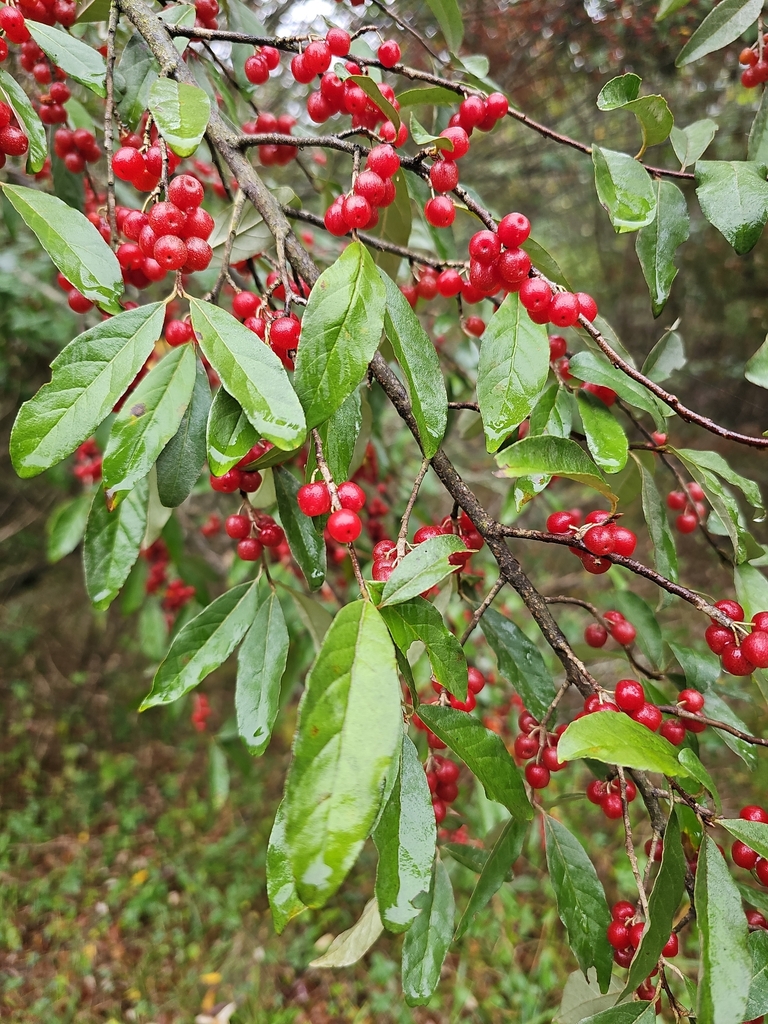
—observations
—countries
—peak records
Least ConcernConservation statusIUCN Red List categoriesLCNTVUENCREWEXLeast ConcernRed List categories, explained →
Diet & preyAutotrophic (Photosynthetic)
Predators
- Songbirds
- White-Tailed Deer
- Small Mammals
ThreatsTargeted mechanical clearing, herbicide application
HabitatsFields, pastures, forest edges, roadsides, disturbed land
Life span30–50 years
Classification
- OrderRosales
- FamilyElaeagnaceae
- GenusElaeagnus
- SpeciesElaeagnus umbellata
Range data is not available yet.
Interaction riskLow
- Low
- Moderate
- High
- Very high
- Why interaction risk is low
- Wild berries have toxic look-alikes; never eat based on app identification alone.
Responsible observation
- Foliage Identification: Look for the intense silvery sheen on leaf undersides caused by microscopic scales.
- Spread Prevention: Avoid planting near natural areas and report invasive stands to local land management groups.
- Wildlife Observation: Watch dense stands in autumn, which draw migrating songbirds foraging on mature fruit.
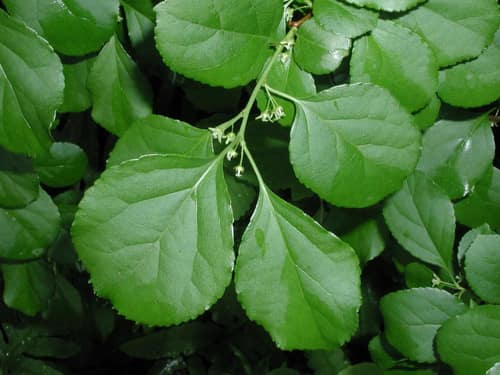
Co-occurring Invasive (c) Leslie J. Mehrhoff, University of Connecticut, Bugwood.org, some rights reserved (CC BY) · cc-by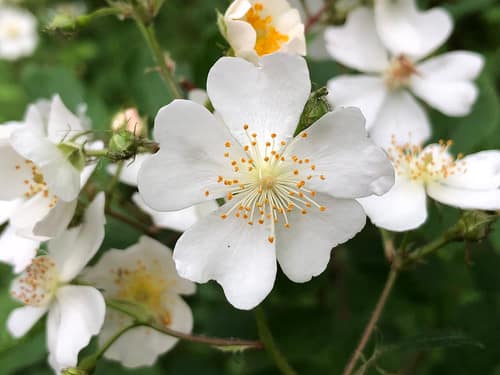
Co-occurring Invasive Famartin / CC BY-SA 4.0 · cc-by-sa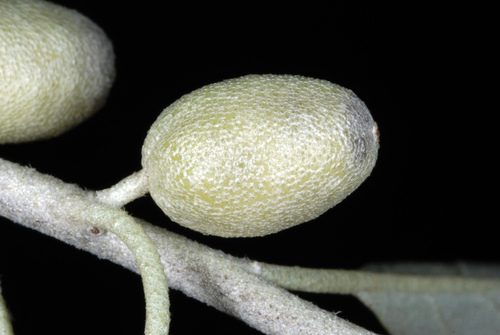
Close Relative (c) Douglas Goldman, some rights reserved (CC BY-SA), uploaded by Douglas Goldman · cc-by-sa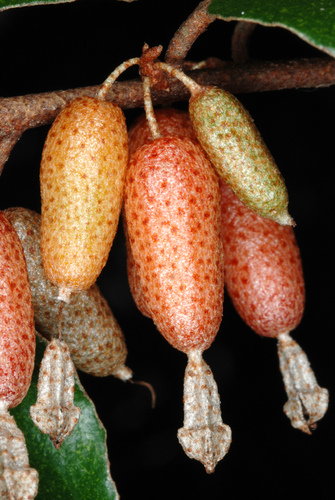
Close Relative (c) Douglas Goldman, some rights reserved (CC BY-SA), uploaded by Douglas Goldman · cc-by-sa
Help improve the field guideSomething wrong?
Checking your Fauna account…Report a name, category, or profile issue for review.