
Plant
Japanese Angelica Tree
Aralia elataAlso known as Chinese Angelica-Tree, Korean Angelica-Tree, Angelica Tree
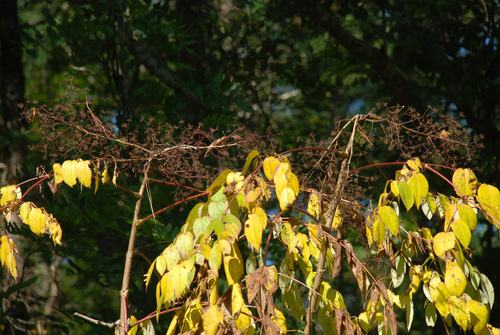
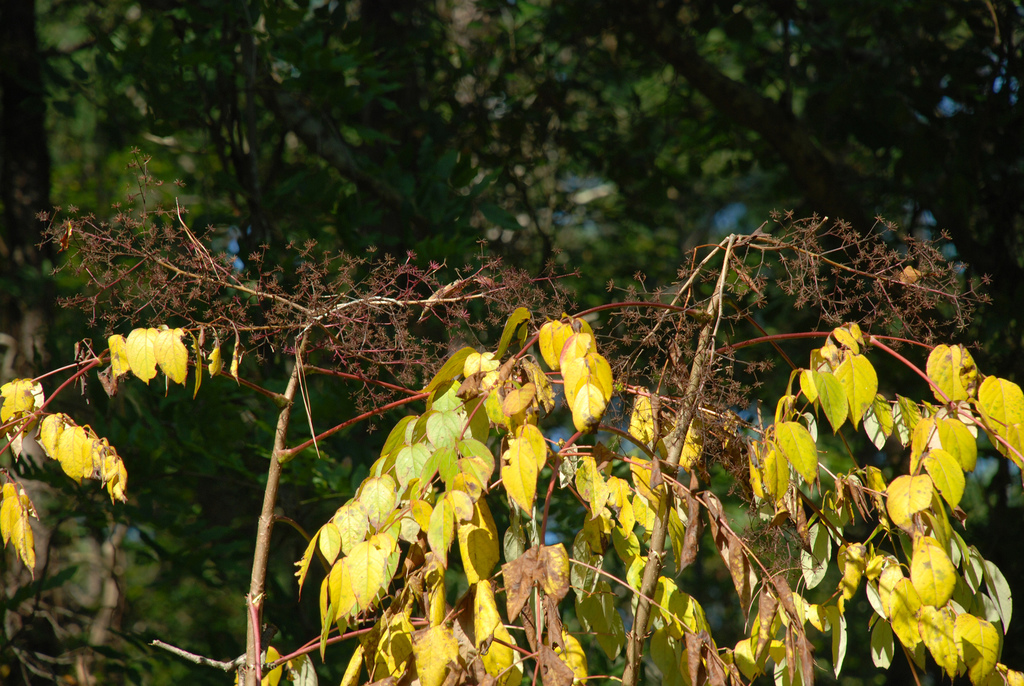
Japanese angelica tree grows as a sparsely branched shrub or small tree, distinguished by stout stems clad in sharp prickles and crowned with enormous double-compound leaves. Late summer brings broad, airy panicles of white blooms that attract dense swarms of pollinators, followed by clusters of small purple-black autumn fruits. Native to mountain woods and clearings across East Asia, it colonizes disturbed soil rapidly and has established opportunistic wild populations in eastern North America.
Spiny StemWhite FlowersDeciduous Tree
—observations
—countries
—peak records
Least ConcernConservation statusIUCN Red List categoriesLCNTVUENCREWEXLeast ConcernRed List categories, explained →
Diet & preyPhotosynthetic
Predators
- Japanese beetle
- White-tailed deer
- Wood-boring beetles
ThreatsNon-native invasion management in North America, localized habitat conversion
HabitatsForest margins, mountain slopes, road verges, disturbed clearings
Life span30–50 years
Classification
- OrderApiales
- FamilyAraliaceae
- GenusAralia
- SpeciesAralia elata
Range data is not available yet.
Interaction riskHigh
- Low
- Moderate
- High
- Very high
- Why interaction risk is high
- Sharp prickles can pierce skin and wild berries have toxic look-alikes; never ingest wild plant parts based on app identification alone.
- Why it is dangerous
- Contains raw plant saponins that irritate the digestive system, while sharp prickles along the bark easily puncture bare skin.
- How to recognize a risky encounter
- Recognized by thick grey stems covered in sharp spines and huge bipinnate leaves clustered near branch tips.
- What to do
- Wear heavy work gloves and thick sleeves when clearing or pruning stems, and never consume wild plant tissues.
Responsible observation
- Spine Warning: Wear thick leather gloves when handling stems to avoid painful punctures from sharp prickles.
- Identify Flowers: Look for massive panicles of creamy white flowers blooming at the branch tips in late summer.
- Distinguish Relatives: Compare with native devil's walkingstick, which has fully stalked leaflets and a ring-like floral arrangement.
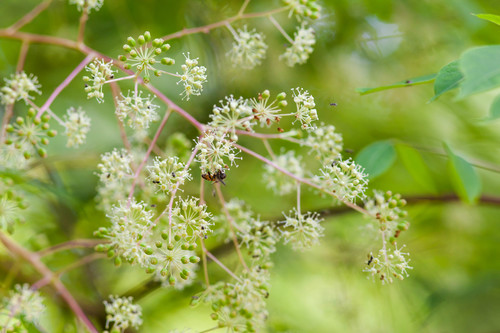
Close Relative (c) Melissa McMasters, some rights reserved (CC BY) · cc-by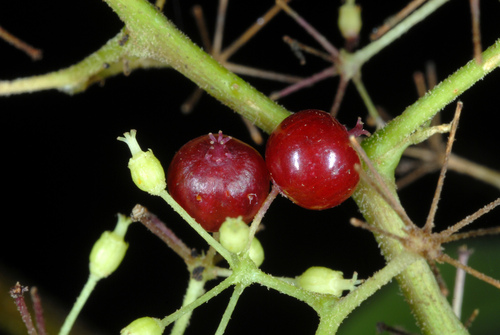
Close Relative (c) Douglas Goldman, some rights reserved (CC BY-SA), uploaded by Douglas Goldman · cc-by-sa Image unavailable
Family Member 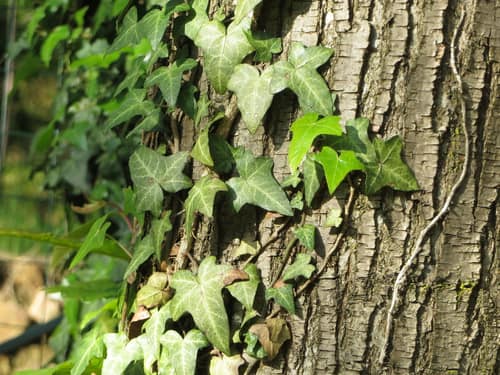
Family Member (c) Marianna Boi, some rights reserved (CC BY), uploaded by Marianna Boi · cc-by
Help improve the field guideSomething wrong?
Checking your Fauna account…Report a name, category, or profile issue for review.