Also known as Celery-leaved Buttercup, Cursed Buttercup, Blister Buttercup
Cursed crowfoot thrives along muddy pond margins and shallow ditches, sending up hollow, fleshy stems lined with glossy, three-lobed leaves that resemble celery. Small pale-yellow flowers bloom from late spring into autumn, each maturing into a distinctive elongated, thimble-shaped cluster of seeds. Crushed tissues release a potent blistering toxin that deters grazing animals and earned the plant its ominous common name.
ThreatsWetland drainage, habitat alteration, and agricultural runoff
HabitatsShallow ponds, marshes, ditches, mudflats, and streambanks across temperate and boreal regions
Life spanAnnual (occasionally biennial)
Classification
FamilyRanunculaceae
SpeciesRanunculus sceleratus
Range & activity
Range data is not available yet.
Safe observation
Interaction riskHigh
Low
Moderate
High
Very high
Why interaction risk is high
Sap causes painful skin blisters and all parts are toxic if ingested; admire without touching or picking.
Why it is dangerous
Crushed stems and leaves release protoanemonin, an acrid compound that blisters skin and mucous membranes on contact and causes severe mouth pain, vomiting, and gastrointestinal distress if swallowed.

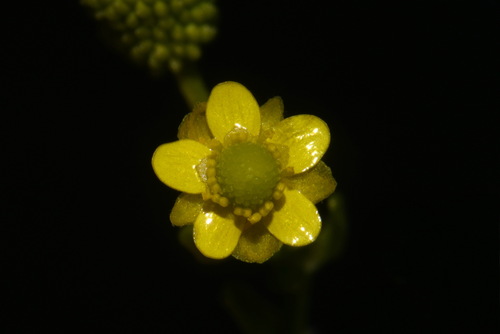
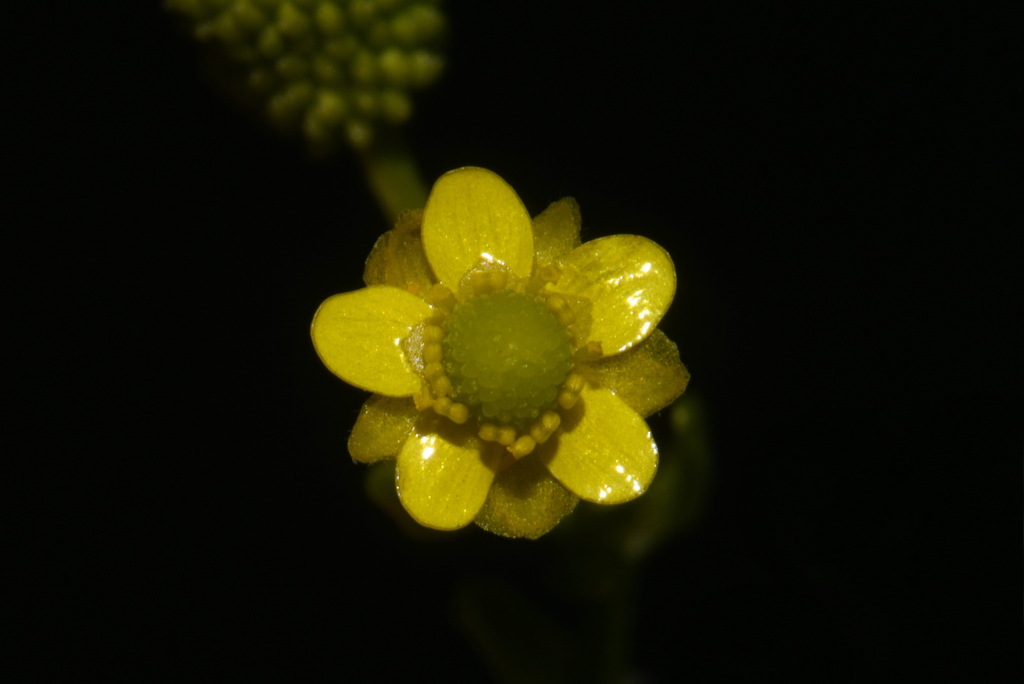
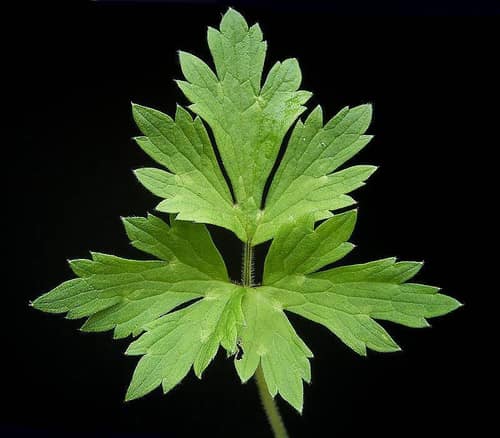
 Image unavailable