
Plant
Coast Silk Tassel
Garrya ellipticaAlso known as Silk Tassel Bush, Wavyleaf Silktassel
Coast silk tassel lights up winter hillsides with pendant, silver-grey male catkins that sway in coastal winds like delicate strands of braided silk. Dioecious by nature, male and female flowers grow on separate shrubs, with females later producing clusters of spherical dark purple berries that nourish foraging songbirds and small rodents. Thick, leathery leaves with distinctly wavy margins and woolly undersides help this hardy evergreen endure harsh salt spray, seasonal drought, and thin coastal soils.
EvergreenWinter BloomingCoastal Shrub
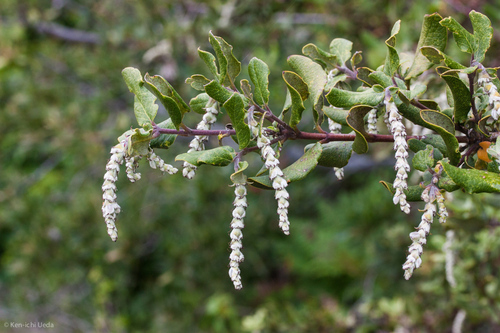
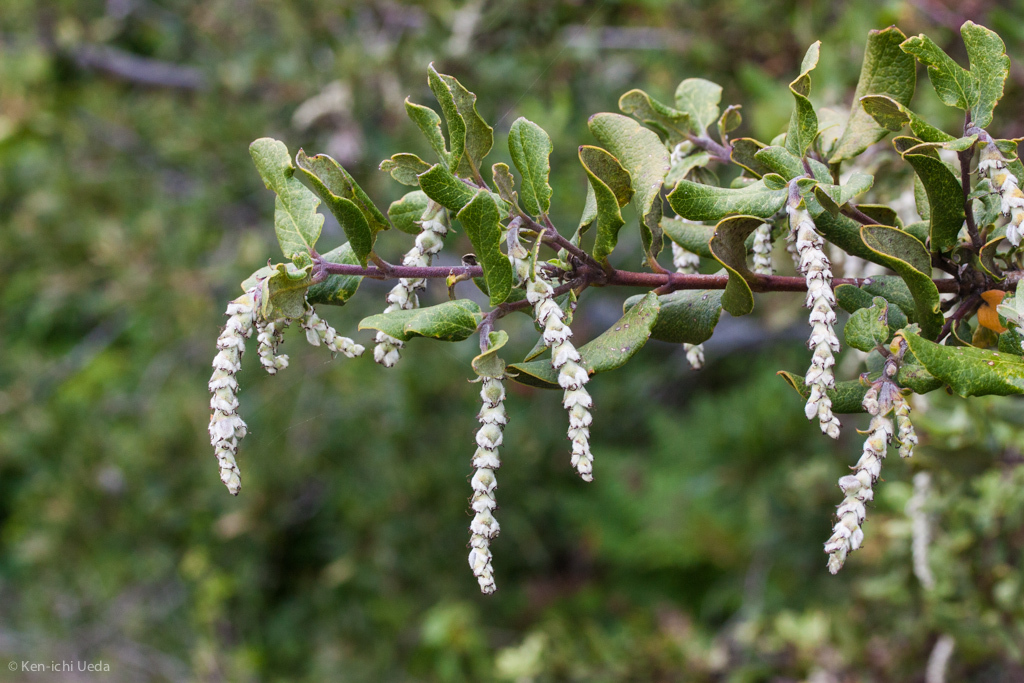
—observations
—countries
—peak records
Least ConcernConservation statusIUCN Red List categoriesLCNTVUENCREWEXLeast ConcernRed List categories, explained →
Diet & preyAutotrophic (photosynthesis)
Predators
- Black-tailed deer
- Brush rabbit
- Dusky-footed woodrat
ThreatsCoastal development, habitat fragmentation, and altered wildfire frequencies
HabitatsCoastal scrub, chaparral, and coastal mixed evergreen woodland margins
Life span30–60 years
Classification
- FamilyGarryaceae
- SpeciesGarrya elliptica
Range data is not available yet.
Interaction riskHigh
- Low
- Moderate
- High
- Very high
- Why interaction risk is high
- Contains bitter alkaloids and wild berries have toxic look-alikes; never ingest wild fruit or foliage.
- Why it is dangerous
- Contains diterpene alkaloids such as garryine and veatchine, which cause severe nausea, digestive upset, and muscle weakness if eaten.
- How to recognize a risky encounter
- Recognized by opposite, wavy-edged leathery leaves with dense pale wool underneath, bearing dangling silver catkins or dark berries.
- What to do
- Admire flowers and foliage on the stem; wash hands after touching sap and keep pets from chewing on branches.
Responsible observation
- Seasonal bloom: Visit coastal bluffs between December and February to view the spectacular hanging catkins.
- Leaf inspection: Turn over a leaf to feel the felt-like woolly hairs that distinguish it from interior species.
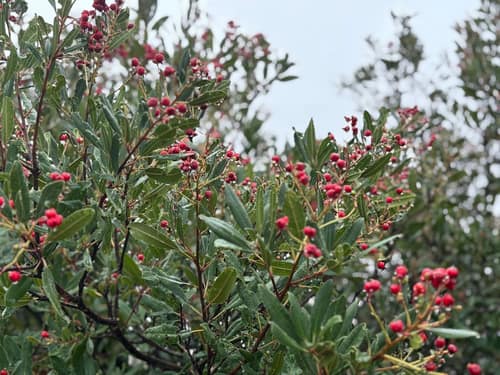
Frequent Companion (c) Skyler K, some rights reserved (CC BY), uploaded by Skyler K · cc-by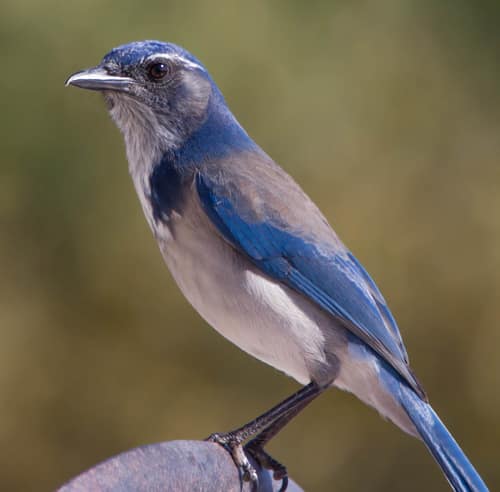
Seed Disperser (c) Dawn Beattie, some rights reserved (CC BY) · cc-by Image unavailable
Frequent Companion Close Relative
Help improve the field guideSomething wrong?
Checking your Fauna account…Report a name, category, or profile issue for review.