
Plant
American Alumroot
Heuchera americanaAlso known as Rock Geranium, Coral Bells
American alumroot forms tidy basal mounds of scalloped, heart-shaped foliage across rocky hillsides and open deciduous woodlands. In late spring, slender wiry stalks elevate loose airy clusters of tiny bell-shaped, cream-to-greenish blooms that attract small native bees and syrphid flies. Valued for its robust cold tolerance and intricate leaf veining, the wild species serves as a foundational parent for dozens of popular ornamental coral bell cultivars.
PerennialNative FloraWoodland
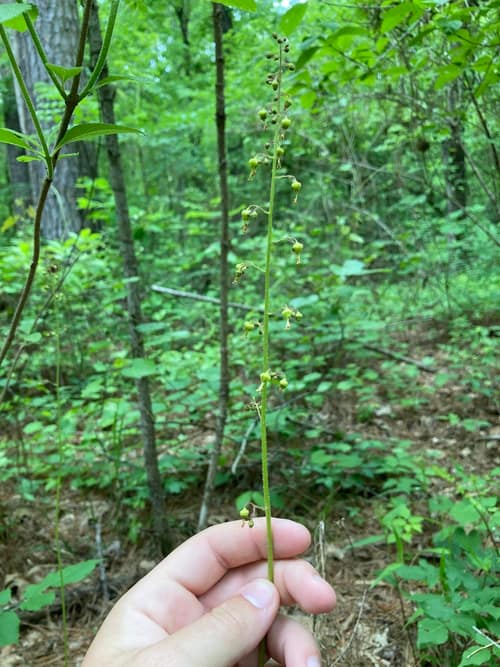
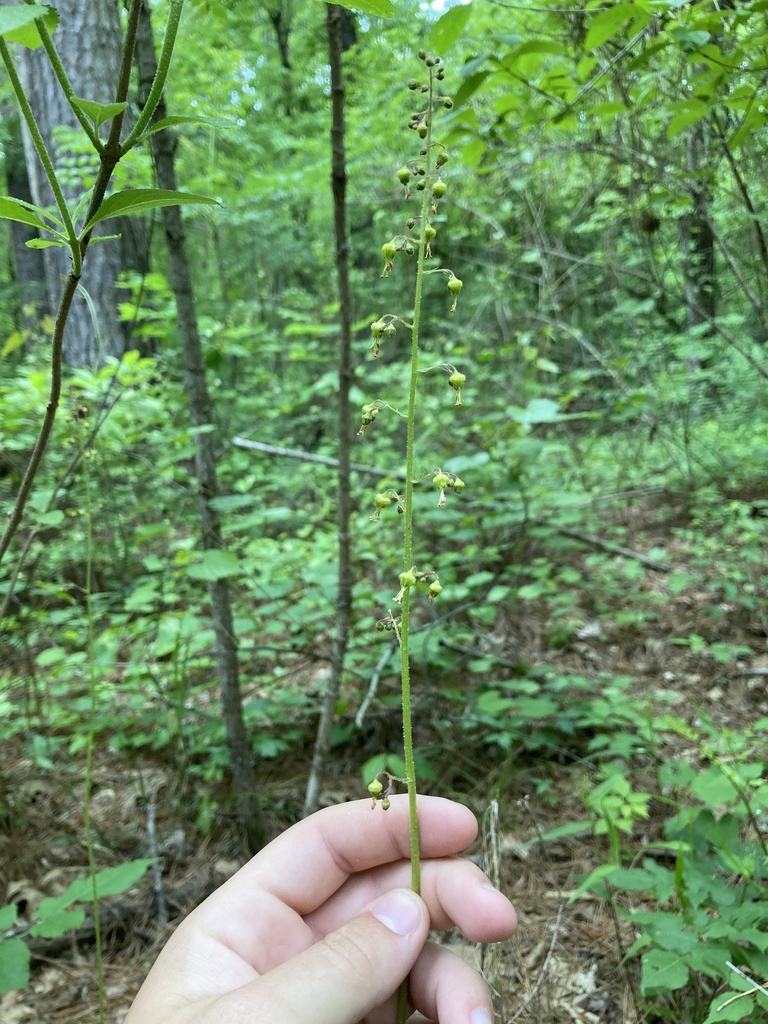
—observations
—countries
—peak records
Least ConcernConservation statusIUCN Red List categoriesLCNTVUENCREWEXLeast ConcernRed List categories, explained →
Diet & preyPhotosynthetic
Predators
- White-tailed Deer
- Eastern Cottontail
- Garden Slugs
ThreatsHabitat clearing, smothering by invasive groundcovers, and severe deer browsing
HabitatsRocky slopes, dry to mesic deciduous forests, shaded ledges, and ravines
Life span5–10 years
Classification
- OrderSaxifragales
- FamilySaxifragaceae
- GenusHeuchera
- SpeciesHeuchera americana
Range data is not available yet.
Interaction riskLow
- Low
- Moderate
- High
- Very high
- Why interaction risk is low
- Safe to observe at a normal distance.
Responsible observation
- Foliage Inspection: Examine leaf undersides and veins for purple or bronze marbling, especially prominent in cool weather.
- Habitat Spotting: Search steep, well-drained rocky banks and open cliff bases where roots anchor into shallow pockets.
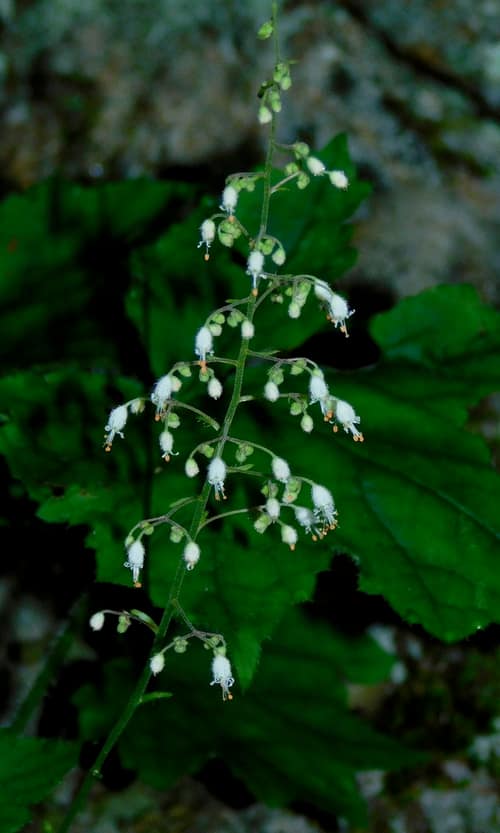
Close Relative (c) Michael J. Papay, some rights reserved (CC BY), uploaded by Michael J. Papay · cc-by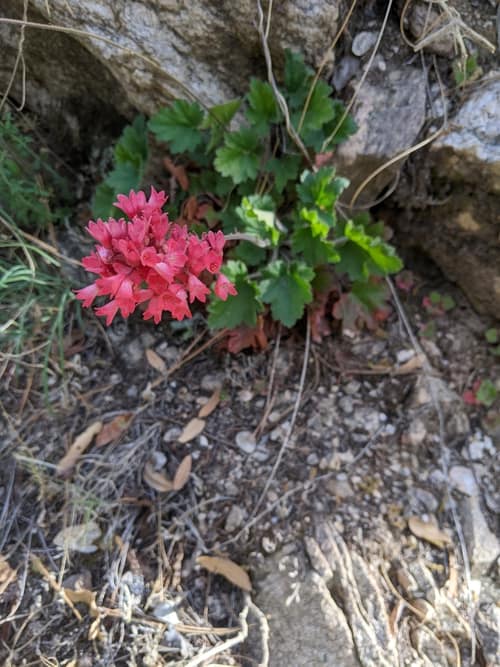
Close Relative (c) Elliot Kulakow, some rights reserved (CC BY) · cc-by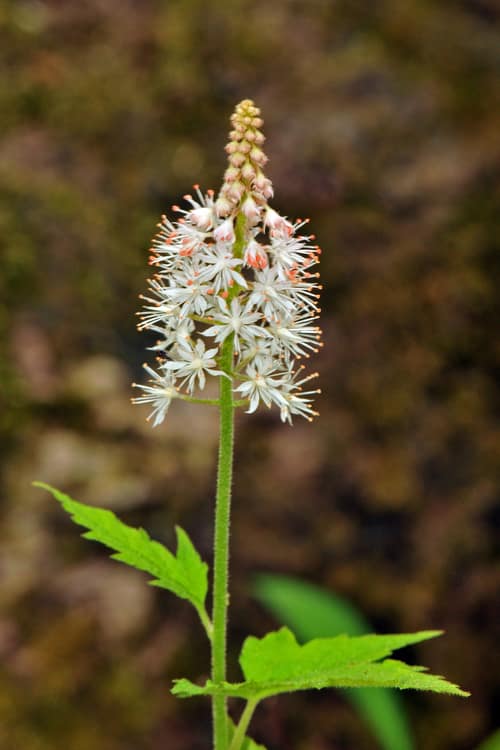
Same Family (c) Tom Kennedy, some rights reserved (CC BY), uploaded by Tom Kennedy · cc-by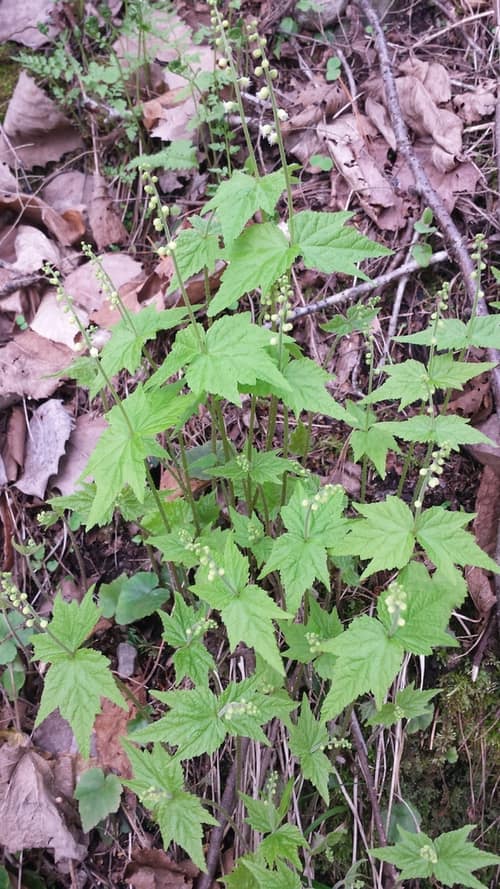
Same Family (c) Tom Norton, some rights reserved (CC BY), uploaded by Tom Norton · cc-by
Help improve the field guideSomething wrong?
Checking your Fauna account…Report a name, category, or profile issue for review.