
Plant
Chamise
Adenostoma fasciculatumAlso known as Greasewood
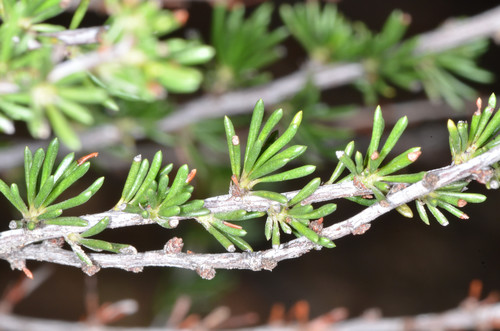
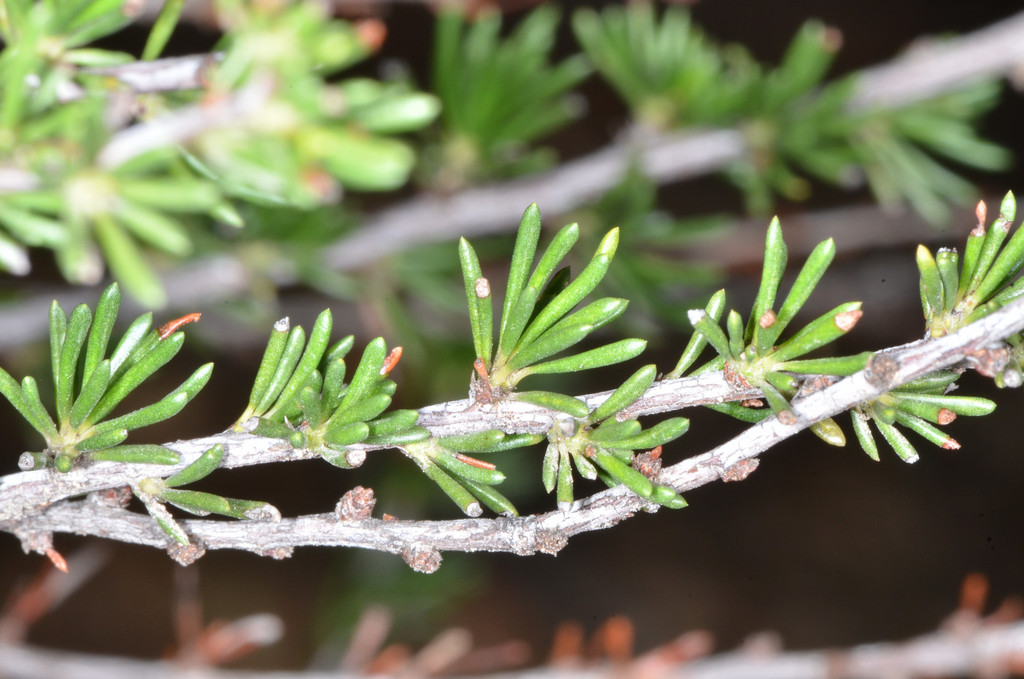
Chamise dominates millions of acres of sun-baked California and Baja California slopes, forming dense, almost impenetrable chaparral thickets. Its tiny, resin-coated needle-like leaves conserve moisture during prolonged summer droughts while emitting a distinctive pungent aroma on hot afternoons. After recurrent wildfires burn away the canopy, the shrub swiftly regenerates from a subterranean woody burl called a lignotuber.
ChaparralEvergreenDrought-Tolerant
—observations
—countries
—peak records
Least ConcernConservation statusIUCN Red List categoriesLCNTVUENCREWEXLeast ConcernRed List categories, explained →
Diet & preyAutotrophic (photosynthetic)
Predators
- Mule deer
- Brush rabbit
- Dusky-footed woodrat
ThreatsExcessively frequent wildfires, land clearing, and invasive annual grasses
HabitatsChaparral slopes, dry ridges, and coastal sage scrub
Life span50–100+ years (lignotubers can survive for centuries)
Classification
- FamilyRosaceae
- SpeciesAdenostoma fasciculatum
Range data is not available yet.
Interaction riskLow
- Low
- Moderate
- High
- Very high
- Why interaction risk is low
- Safe to observe at a normal distance.
Responsible observation
- Foliage Inspection: Look for tiny, needle-like leaves clustered in tight fascicles along reddish branches.
- Blooming Season: Search for dense sprays of minute white flowers from late spring to midsummer.
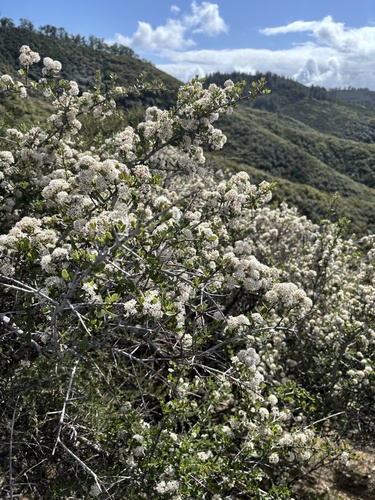
Frequent Companion (c) Skyler K, some rights reserved (CC BY), uploaded by Skyler K · cc-by Image unavailable
Frequent Companion Close Relative 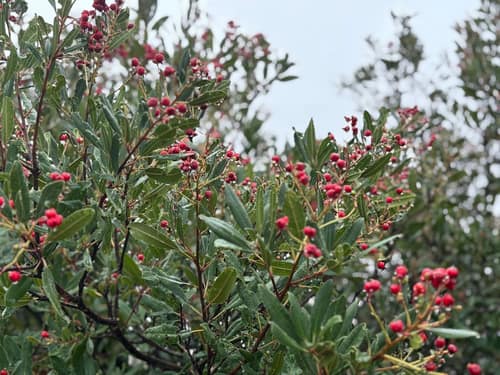
Same Family (c) Skyler K, some rights reserved (CC BY), uploaded by Skyler K · cc-by
Help improve the field guideSomething wrong?
Checking your Fauna account…Report a name, category, or profile issue for review.