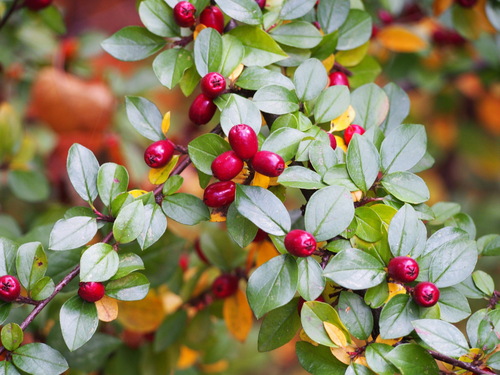
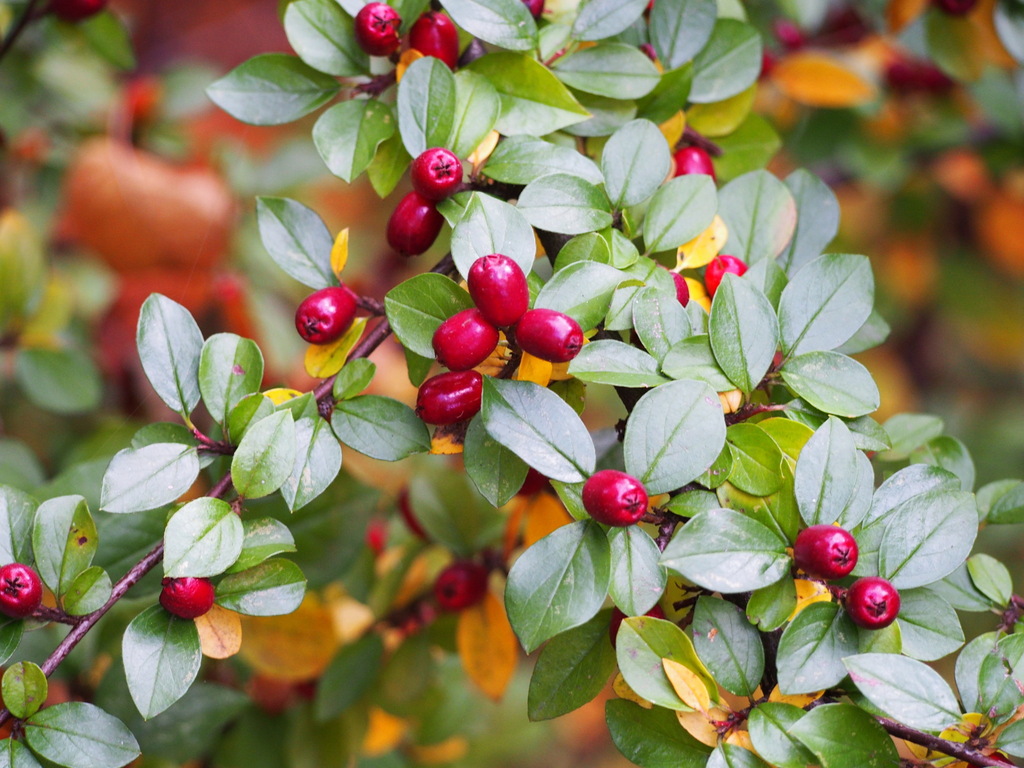
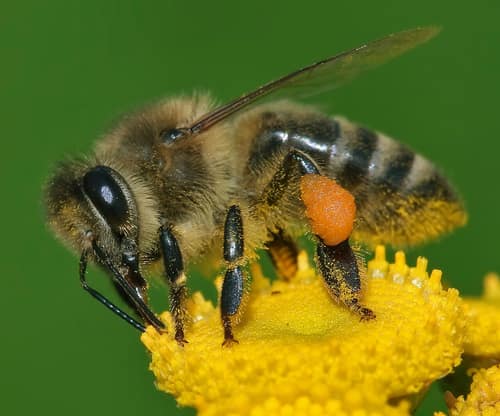
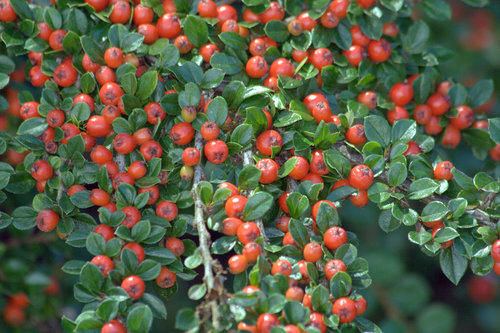
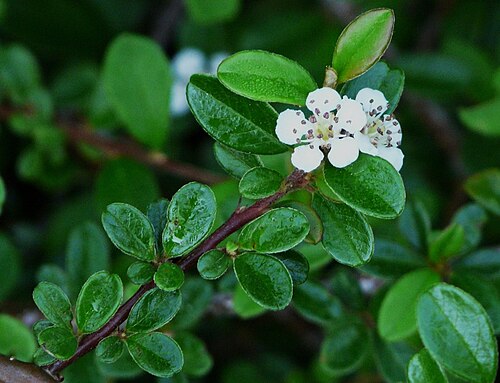
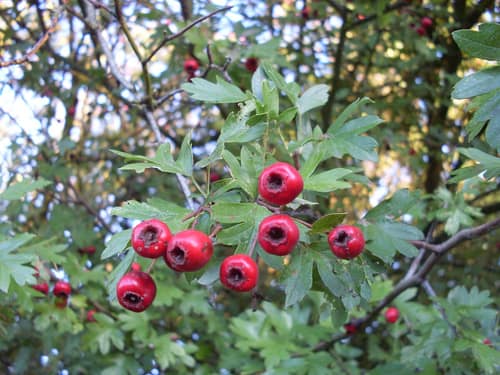
Spreading cotoneaster forms a dense shrub with arching, intricately branched stems that spread wider than its height. Small pink-tinted white flowers bloom clustered along the branches in late spring, drawing numerous pollinating bees before giving way to vibrant red, cranberry-like pomes. The dark green, glossy leaves shift to brilliant shades of fiery orange and purple in autumn, persisting late into the season alongside fruit that feeds overwintering songbirds.
Not EvaluatedConservation statusIUCN Red List categoriesLCNTVUENCREWEXNot Evaluated — not placed on the risk ladderRed List categories, explained →
Key facts
Diet & prey
Autotrophic (photosynthetic)
Predators
White-tailed Deer
Cedar Waxwing
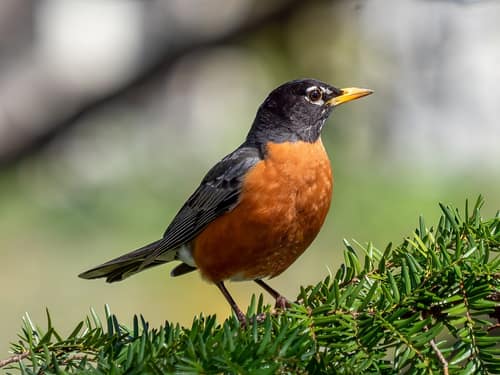
American Robin
ThreatsHabitat disruption in native ranges and targeted eradication where naturalized as an invasive species
HabitatsRocky mountain slopes, open scrublands, forest edges, and suburban plantings
Life span20–40 years
Size / weightNot available
Classification
OrderRosales
FamilyRosaceae
GenusCotoneaster
SpeciesCotoneaster divaricatus
Range & activity
Range data is not available yet.
Safe observation
Interaction riskHigh
Low
Moderate
High
Very high
Why interaction risk is high
Berries contain cyanogenic glycosides and wild fruit has toxic look-alikes; never eat based on app identification alone.
Why it is dangerous
Leaves and berries contain cyanogenic glycosides that release toxic hydrogen cyanide when chewed, causing vomiting, lethargy, and abdominal pain in pets and children.
How to recognize a risky encounter
Recognizable by its wide-arching branches, glossy dark-green ovate leaves, and clusters of egg-shaped red pomes.
What to do
Wear protective gloves when pruning dense thickets, and prevent companion animals from ingesting fallen fruit.
Responsible observation
Landscape Management: Check regional invasive species lists prior to planting, as birds readily disperse viable seeds into fragile native woods.
Pruning Technique: Prune older, crossing branches in late winter while the shrub is dormant to preserve its natural fountain-like arch.