
Plant · GBIF taxon 3021408
Taiwan Cherry
Prunus campanulataAlso known as Formosan Cherry, Bellflower Cherry, Taiwan Flowering Cherry
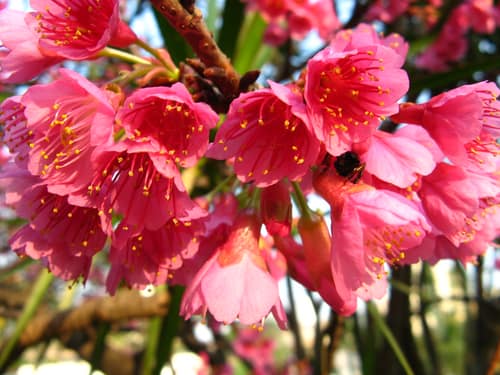
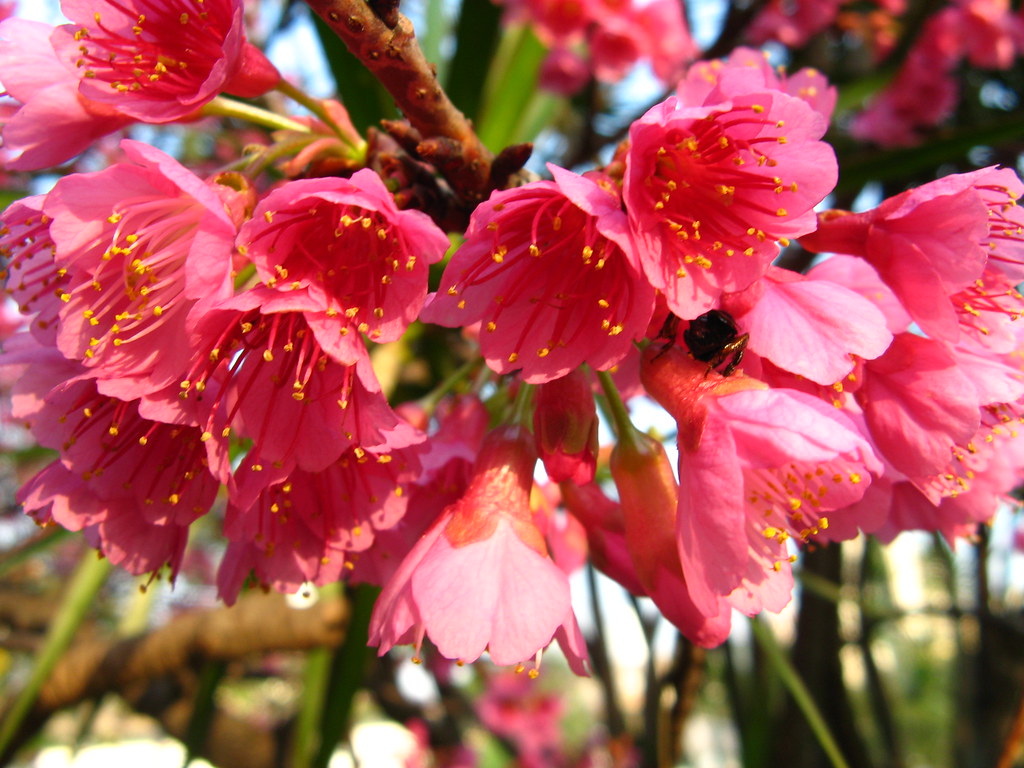
Taiwan cherry produces brilliant crimson to deep pink bell-shaped flowers that dangle in small clusters before the tree leafs out in late winter. Native to subtropical East Asia, this fast-growing ornamental tree attracts swarms of pollinators and nectar-feeding birds like white-eyes to its rich blossom supply. As flowers fade, dark reddish-black drupes form along the branches, providing vital seasonal food for resident wildlife.
DeciduousSpring BloomerOrnamental
—observations
—countries
—peak records
Least ConcernConservation statusIUCN Red List categoriesLCNTVUENCREWEXLeast ConcernRed List categories, explained →
Diet & prey
- Sunlight
- Water
- Soil Nutrients
Predators
- Caterpillars
- Aphids
- Wood-boring beetles
ThreatsHabitat fragmentation in native range, localized invasive spread
HabitatsSubtropical forests, mountain slopes, urban gardens, parks
Life span40–60 years
Size / weightNot available
Classification
- OrderRosales
- FamilyRosaceae
- GenusPrunus
- SpeciesPrunus campanulata
Range data is not available yet.
Interaction riskHigh
- Low
- Moderate
- High
- Very high
- Why interaction risk is high
- Seeds and foliage contain cyanogenic glycosides, and wild berries have toxic look-alikes; never ingest wild plant parts.
- Why it is dangerous
- Seeds, stems, and leaves contain cyanogenic glycosides, which break down into lethal hydrogen cyanide if chewed or ingested in quantity.
- How to recognize a risky encounter
- Look for drooping, vibrant magenta bell-shaped blossoms on bare branches followed by small dark reddish-black fruits.
- What to do
- Observe blossoms safely from a distance and keep pets from chewing on fallen branches, foliage, or fruit pits.
Responsible observation
- Best Viewing Time: Visit during late winter or early spring when trees burst into bright magenta blooms before leaves appear.
- Bird Watching: Position yourself quietly nearby to photograph nectar-feeding birds fluttering around the blossoms.
- Garden Care: Plant in well-drained soil with full sun exposure for the most intense blossom displays.
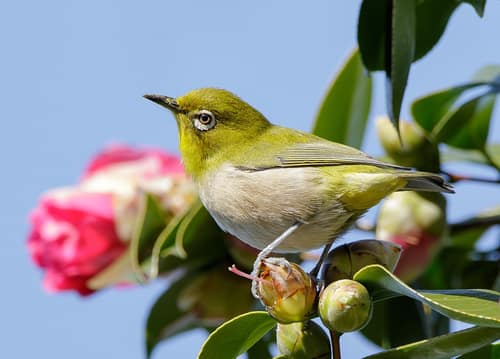
Pollinator Laitche / CC BY-SA 4.0 · cc-by-sa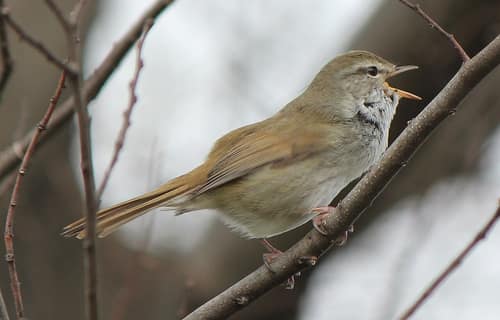
Frequent Companion Alpsdake / CC BY-SA 3.0 · cc-by-sa Image unavailable
Close Relative 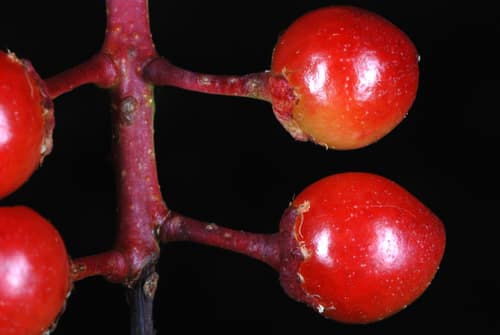
Close Relative (c) Douglas Goldman, some rights reserved (CC BY-SA), uploaded by Douglas Goldman · cc-by-sa
Keep collecting in Fauna
Found in Collections
Ecosystem chain Pro
Secret Garden
Taiwan Cherry is found in this collection. Identify it in Fauna to fill this slot and continue your progress.
Unlock to track progress
Help improve the field guideSomething wrong?
Checking your Fauna account…Report a name, category, or profile issue for review.