
Plant
Portuguese Laurel
Prunus lusitanicaAlso known as Portugal Laurel, Portuguese Laurel Cherry
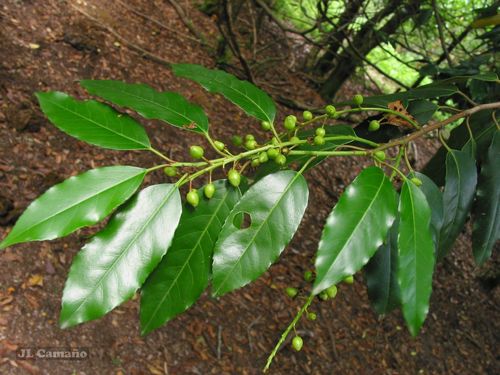
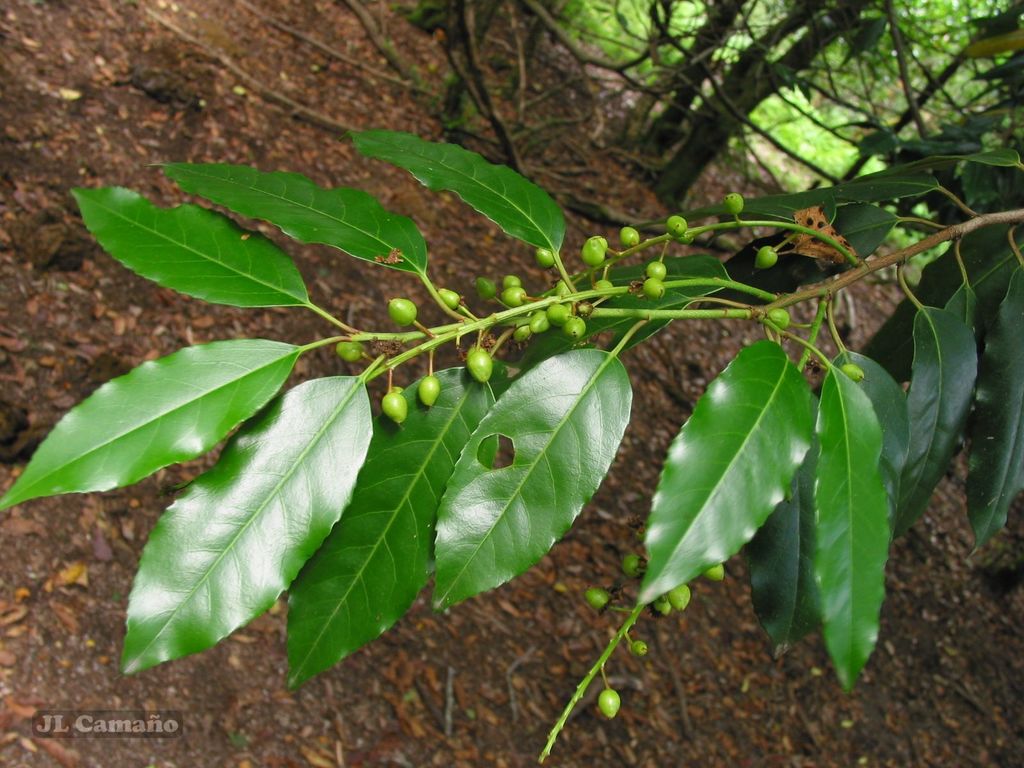
Portuguese laurel forms dense evergreen thickets featuring deep glossy foliage supported by vibrant reddish leaf stems. Slender racemes of fragrant white blossoms open in late spring, giving way to clusters of small, dark purple fruits that birds spread across woodland edges. While native to moist ravines of the Iberian Peninsula and Macaronesia, it has naturalized as an ornamental escape in cool, maritime climates worldwide.
EvergreenFlowering TreeToxic Plant
—observations
—countries
—peak records
Least ConcernConservation statusIUCN Red List categoriesLCNTVUENCREWEXLeast ConcernRed List categories, explained →
Diet & preySunlight, Water, Soil Minerals
Predators
- Foliar Insects
- Browsing Deer
- Slugs and Snails
ThreatsHabitat fragmentation in native ranges and invasive removal in introduced regions
HabitatsLaurel forests, mountain ravines, coastal woodlands, and cultivated hedges
Life span50–150 years
Classification
- OrderRosales
- FamilyRosaceae
- GenusPrunus
- SpeciesPrunus lusitanica
Range data is not available yet.
Interaction riskHigh
- Low
- Moderate
- High
- Very high
- Why interaction risk is high
- Leaves and seeds contain cyanogenic glycosides, making them toxic if ingested; wild berries have toxic look-alikes.
- Why it is dangerous
- Contains cyanogenic glycosides in its leaves, bark, and seed pits that break down into toxic hydrogen cyanide if chewed or ingested.
- How to recognize a risky encounter
- Identify by its rich red-tinted leaf stems, dark glossy evergreen leaves with small teeth, and upright spikes of tiny white flowers.
- What to do
- Wear gloves when heavy pruning to avoid minor skin irritation, and ensure children and pets do not consume the dark purple berries or seeds.
Responsible observation
- Garden Culture: Plant in well-drained soil in full sun or partial shade where deep green foliage and red stems provide structural hedging.
- Safety Caution: Keep pruned leaves and fallen seeds away from grazing livestock and pets, as damaged foliage concentrates toxins.
- Pruning Time: Trim immediately after flowering in early summer to maintain shape without shearing off next season's bloom buds.
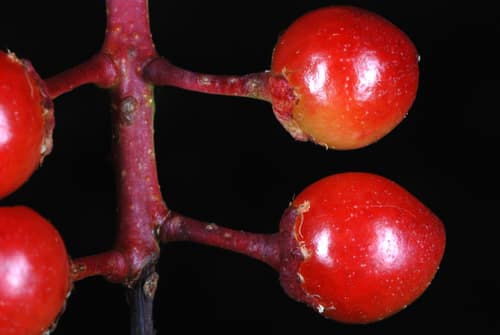
Genus Member (c) Douglas Goldman, some rights reserved (CC BY-SA), uploaded by Douglas Goldman · cc-by-sa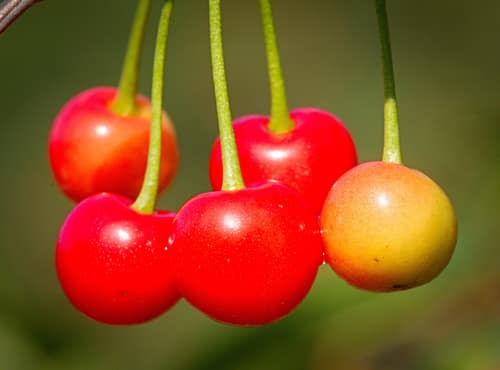
Genus Member (c) hedera.baltica, some rights reserved (CC BY-SA) · cc-by-sa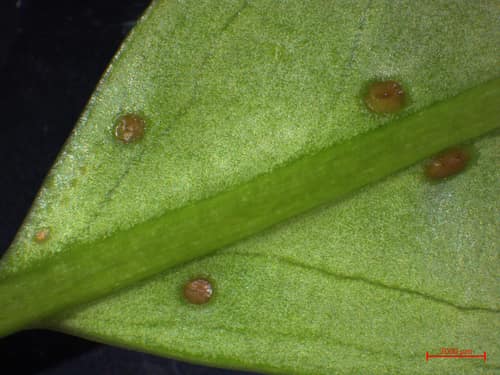
Close Relative (c) Plant Image Library, some rights reserved (CC BY-SA) · cc-by-sa Image unavailable
Close Relative
Help improve the field guideSomething wrong?
Checking your Fauna account…Report a name, category, or profile issue for review.