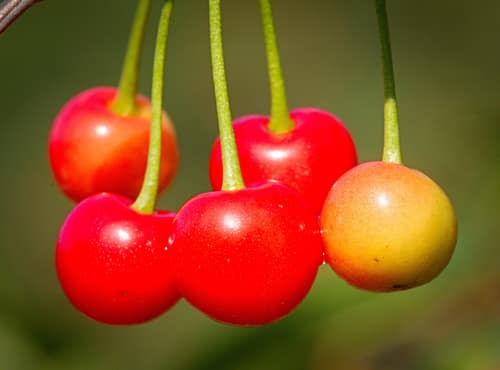
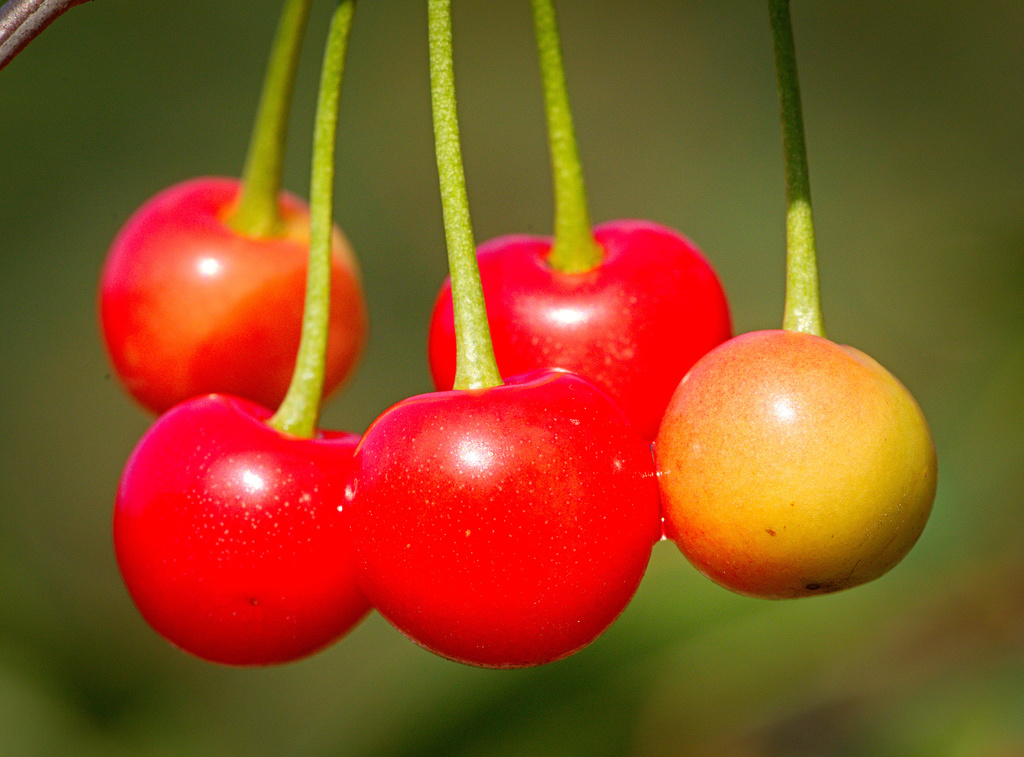
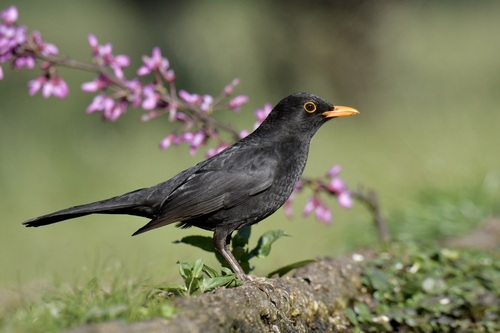
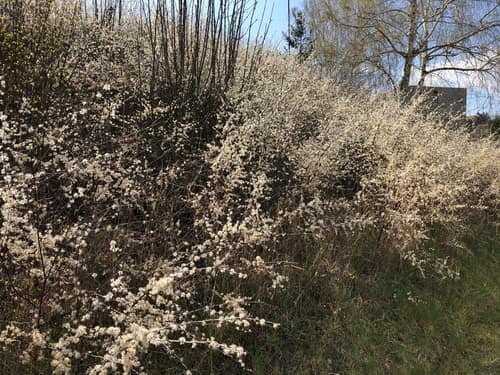
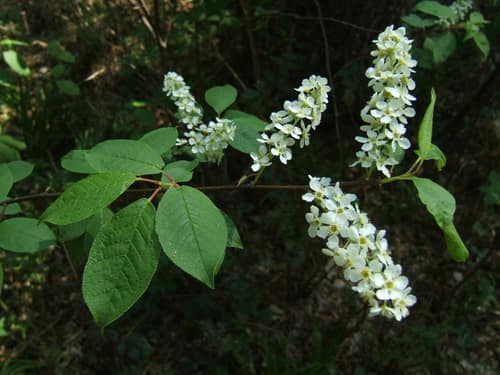
Wild cherry crowns European temperate forests with brilliant white spring blossoms that unfold just as new leaves emerge. Birds such as thrushes and starlings eagerly consume the deep red summer fruit, acting as primary seed dispersers across woodlands and hedgerows. Beyond its vital ecological role as an early-season nectar source for pollinators, its smooth, reddish-brown bark with prominent horizontal lenticels makes it easily recognizable year-round.
ThreatsBacterial canker, habitat fragmentation, and competition from invasive species
HabitatsDeciduous woodlands, forest edges, hedgerows, and open hillsides
Life span60–100 years
Size / weightNot available
Classification
OrderRosales
FamilyRosaceae
GenusPrunus
SpeciesPrunus avium
Range & activity
Range data is not available yet.
Safe observation
Interaction riskHigh
Low
Moderate
High
Very high
Why interaction risk is high
Seeds and wilted leaves contain cyanogenic compounds, and wild fruit has toxic look-alikes; never eat based on app identification alone.
Why it is dangerous
Pits, stems, and wilted foliage contain cyanogenic glycosides that convert to hydrogen cyanide upon digestion, posing a toxic risk to humans and livestock.
How to recognize a risky encounter
Recognize by reddish bark with horizontal lines and small red-to-black cherry fruit on long stems.
What to do
Enjoy photographing flowers and foliage, but avoid chewing seeds or consuming wild plant parts.
Responsible observation
Spring Identification: Look for clusters of white five-petaled flowers hanging from long stems alongside young unfolding leaves.
Bark Cues: Identify mature trees by their smooth, reddish-brown bark marked with prominent horizontal lines called lenticels.
Wildlife Watching: Position yourself near fruiting trees in midsummer to observe feeding songbirds.