
Plant · GBIF taxon 2996525
Armenian Blackberry
Rubus armeniacusAlso known as Himalayan Blackberry, Armenian Bramble
Armenian blackberry forms massive, impenetrable thickets that choke out native vegetation along stream banks, roadsides, and woodland margins. Stout five-angled canes arch over surrounding brush, taking root wherever shoot tips touch moist ground to create vast clonal colonies. Birds and mammals feed on the late-summer dark purple aggregate fruits, rapidly spreading seeds across surrounding watersheds.
InvasivePerennialSpiny
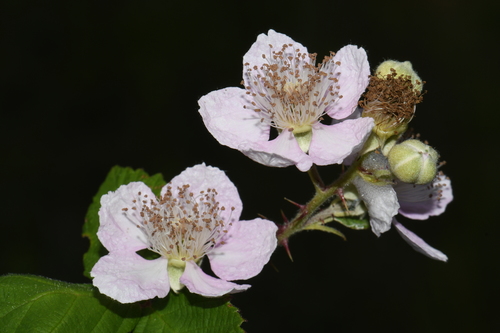
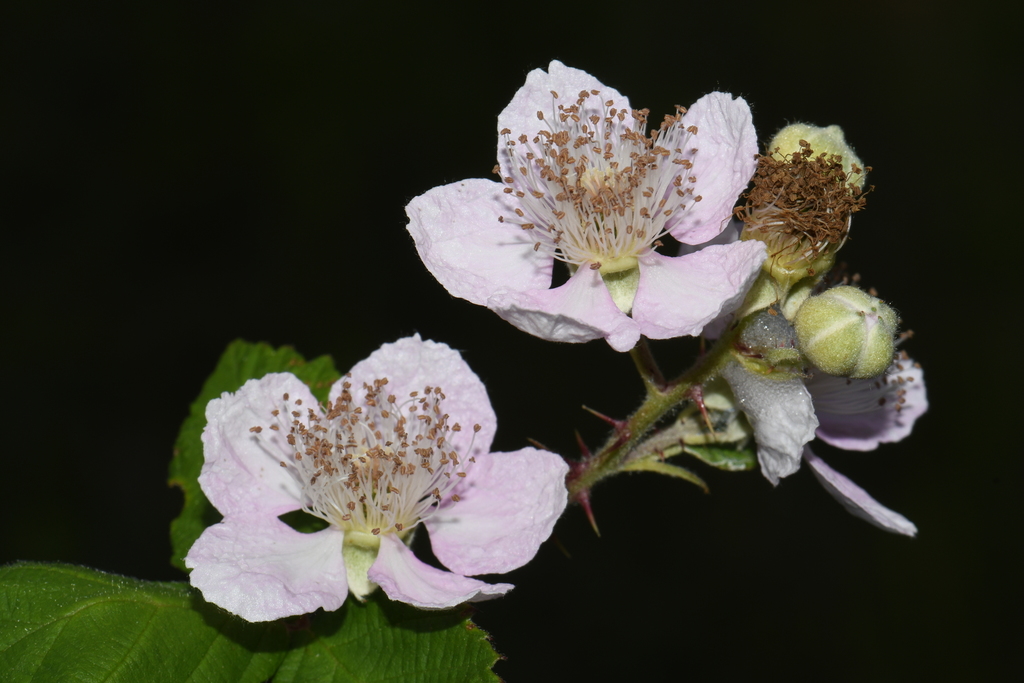 1 / 7
1 / 7—observations
—countries
—peak records
Not EvaluatedConservation statusIUCN Red List categoriesLCNTVUENCREWEXNot Evaluated — not placed on the risk ladderRed List categories, explained →
Diet & prey
- Sunlight
- Water
- Soil Nutrients
Predators
- Domestic Goats
- Blackberry Leaf Rust
- Spider Mites
ThreatsHerbicide treatments, targeted mechanical removal, biocontrol agents
HabitatsRiparian corridors, forest edges, roadsides, disturbed ground
Life spanPerennial rootstock, biennial canes
Size / weightNot available
Classification
- OrderRosales
- FamilyRosaceae
- GenusRubus
- SpeciesRubus armeniacus
Range data is not available yet.
Interaction riskLow
- Low
- Moderate
- High
- Very high
- Why interaction risk is low
- Wild berries have toxic look-alikes; never eat based on app identification alone.
Responsible observation
- Thicket Caution: Wear heavy canvas clothing and leather gloves when working around these thorny canes.
- Field ID: Look for ridged, arching stems with stout prickles and leaves with white fuzzy undersides.
- Management: Repeated cutting at ground level before seed set helps weaken the perennial root mass.
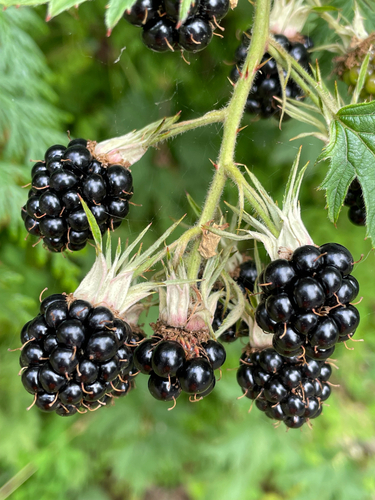
Invasive Competitor no rights reserved, uploaded by Tom Erler · cc0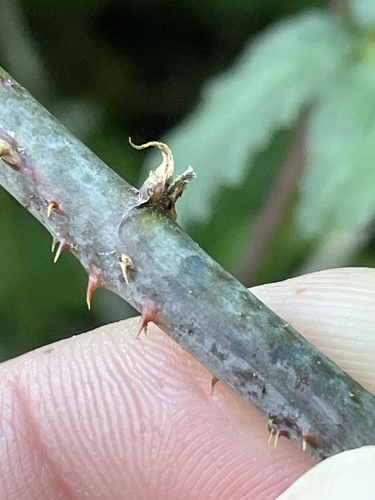
Native Relative no rights reserved, uploaded by Tom Erler · cc0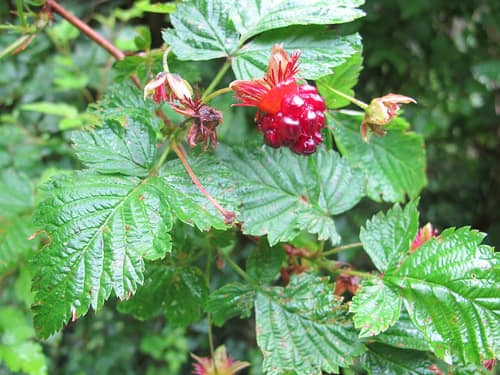
Close Relative Margalob / CC BY-SA 4.0 · cc-by-sa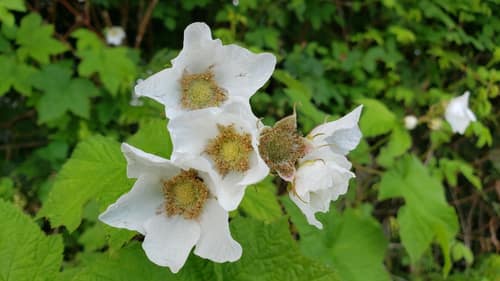
Close Relative (c) Gavin Slater, some rights reserved (CC BY), uploaded by Gavin Slater · cc-by
Help improve the field guideSomething wrong?
Checking your Fauna account…Report a name, category, or profile issue for review.