
Plant
Karo
Pittosporum crassifoliumAlso known as Stiffleaf Cheesewood, Kaikaro, Kihiki
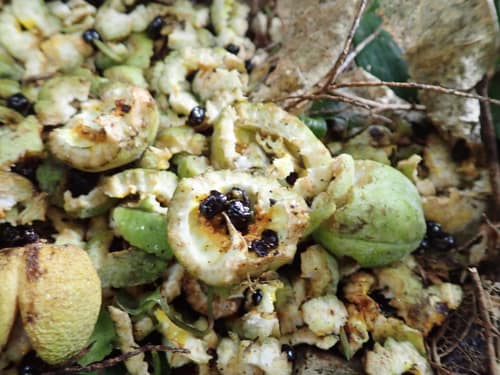
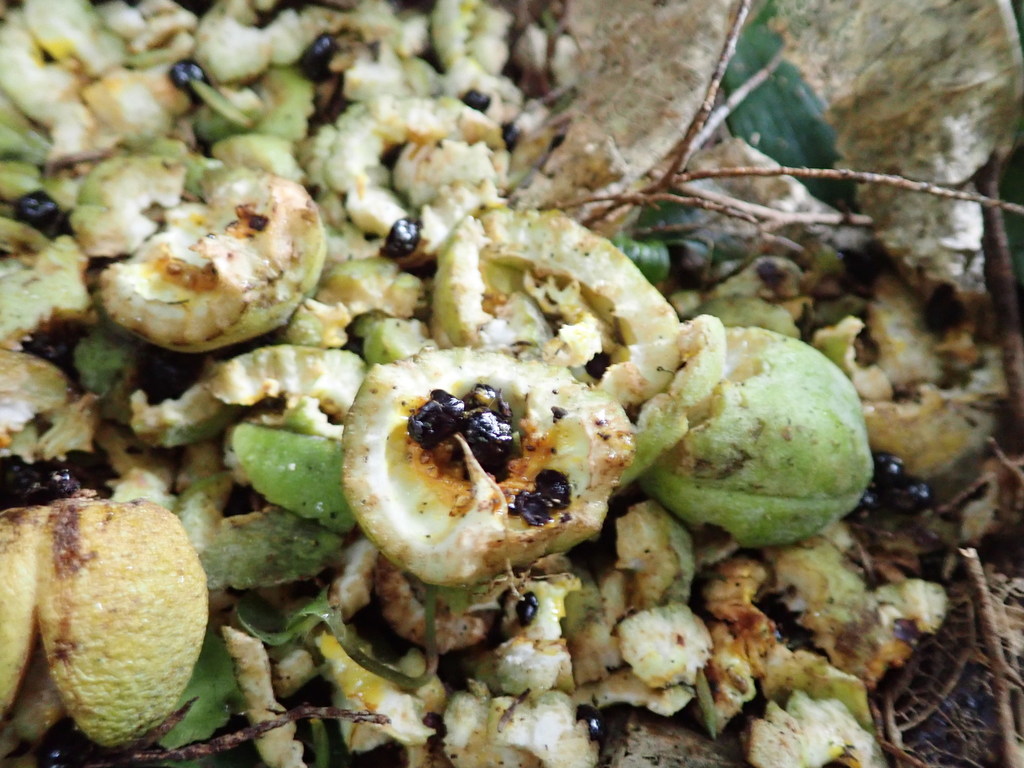
Karo thrives on windswept coastal cliffs and headlands, where its thick, leathery leaves and dense silvery-white leaf undersides shield it from salt spray and drying gales. In spring, clusters of fragrant, dark maroon bell-shaped flowers open at the branch tips, attracting nectar-feeding birds and insects. By autumn, large woody capsules split into three valves to reveal glossy black seeds coated in sticky resinous pulp.
EvergreenCoastalSalt-Tolerant
—observations
—countries
—peak records
Least ConcernConservation statusIUCN Red List categoriesLCNTVUENCREWEXLeast ConcernRed List categories, explained →
Diet & preyPhotosynthetic autotroph; absorbs water and mineral nutrients from soil
Predators
- Common Brushtail Possum
- Scale Insects
ThreatsCoastal development, invasive weeds, and browsing by introduced mammals
HabitatsCoastal cliffs, scrubland, forest margins, and rocky headlands in northern New Zealand
Life span30–60 years
Classification
- OrderApiales
- FamilyPittosporaceae
- GenusPittosporum
- SpeciesPittosporum crassifolium
Range data is not available yet.
Interaction riskLow
- Low
- Moderate
- High
- Very high
- Why interaction risk is low
- Safe to observe at a normal distance.
Responsible observation
- Leaf Check: Feel the thick, leathery leaves and look for dense silvery-white hairs coating the undersides.
- Spring Blooms: Look in spring for clusters of small, bell-shaped dark maroon flowers near the branch tips.
- Seed Capsules: Inspect the woody, three-valved pods in autumn that split open to expose glossy black seeds in sticky resin.
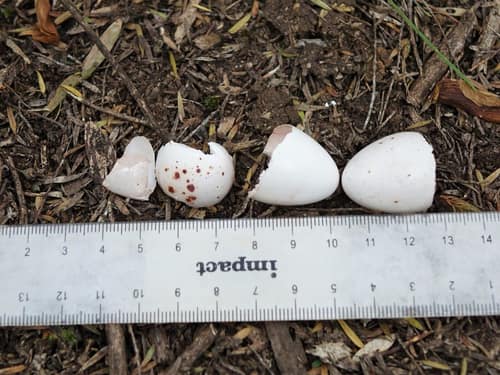
Pollinator (c) Jacqui Geux, some rights reserved (CC BY), uploaded by Jacqui Geux · cc-by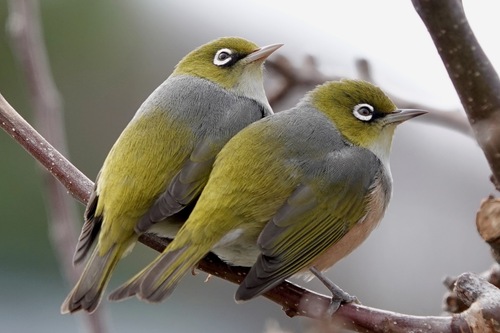
Seed Disperser (c) BIHNZ, some rights reserved (CC BY), uploaded by BIHNZ · cc-by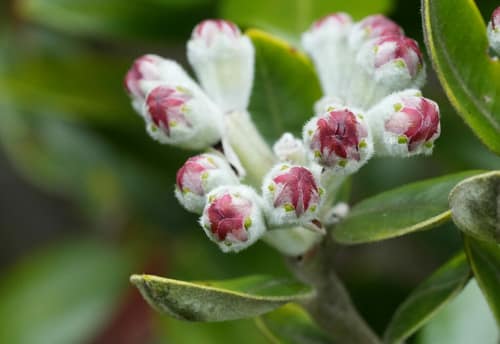
Frequent Companion (c) William Harland, some rights reserved (CC BY), uploaded by William Harland · cc-by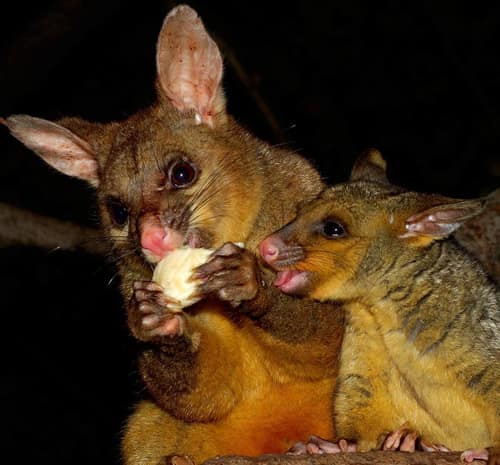
Browser (c) Jes, some rights reserved (CC BY-SA) · cc-by-sa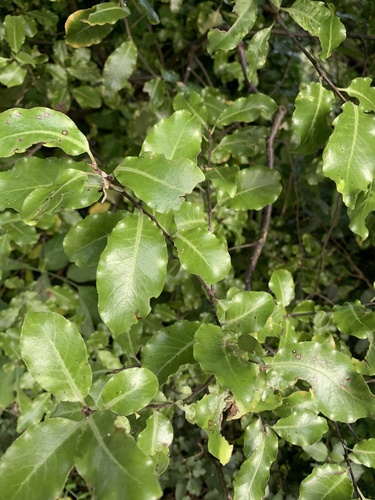
Close Relative (c) David Orlovich, some rights reserved (CC BY), uploaded by David Orlovich · cc-by
Close Relative (c) Colin Meurk, some rights reserved (CC BY-SA), uploaded by Colin Meurk · cc-by-sa
Help improve the field guideSomething wrong?
Checking your Fauna account…Report a name, category, or profile issue for review.